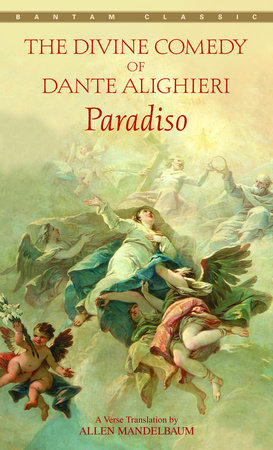
The Divine Comedy: Part 3 Paradiso by Dante Alighieri
1472 / 368 pgs Classic
The Divine Comedy isa very long poem broken into three parts Inferno, Purgatorio, and Paradiso. Dante and his guide Virgil, another poet who wrote the classic Aeneid, travels through Hell, Purgatory, and Heaven to reunite Dante with his dead girlfriend, Beatrice in Heaven. Essentially, The Divine Comedy is a love poem full of horror, brimstone, and punishment.
Paradiso is Heaven. There are ten hemispheres, each called Heaven, to Paradise based on the celestial skies believed to exist at the time. Otherwise, trying to understand why the Sun is the 4th Heaven would make absolutely no sense.
Paradiso is Dante meeting all those important souls who reside in the different levels of Paradise and listening to what they think is wrong with the Church. Like St Peter, St Thomas, and St Bernard, many of these people go on long diatribes about their disappointments with the current state of the Church and what needs to change to get it back to where they envisioned it. Dante and Beatrice leave the earth and explore the solar system and visit the Heavens before meeting with God himself.
Heaven I. The Moon
Heaven II. Mercury
Heaven III. Venus: The Lovers
Heaven IV. The Sun: Theologians and Fathers of the Church
Circle I. St Thomas of Aquinas
Circle II. The Franciscan Order
Circle III. The Resurrection of the Flesh
Heaven V. Mars. Martyrs and Crusaders that died fighting for the True Faith
Heaven VI. Jupiter. Righteous Kings and Rulers
Heaven VII. Saturn. The Contemplative
Heaven VIII. Fixed Stars
Heaven IX. Primum Mobible
Heaven X. Empyrean River of LIght
Much more, naturally, is in this book, the Angels’ hierarchy, a description of God himself…which is three rings representing the Trinity.
This book, like the others, is a long poem. Very dense and hard to follow. I’ve had to take my notes a few times and compare them to other reviews to see if I’m on the right track because sections in each of the books become very weird. For example, the Garden visit at the end of Purgatorio, which has to do with a chariot that gets smashed and attacked by an eagle with a fox eating the smashed wood, made me wonder what drugs I needed to understand this scene. However, I also understand that many symbolic representations made more sense when this was written than today.
If I had to make a recommendation, I would only read Dante’s Inferno. That one was fascinating and not as challenging to read as the other two. I’m very glad that I read this classic, and looking forward to another classic soon. For tomorrow, I’m going to enjoy something a little more modern.
Enjoy a good cup of coffee and a good book!
Lopaka
 nyghteulen
Pingback: The Divine Comedy: Part 1 Dante’s Inferno | nyghteulen
Pingback: The Divine Comedy: Part 2 Purgatorio | nyghteulen
Pingback: 2021 Reading List | nyghteulen