A Farewell to Arms

Tags

, , , ,

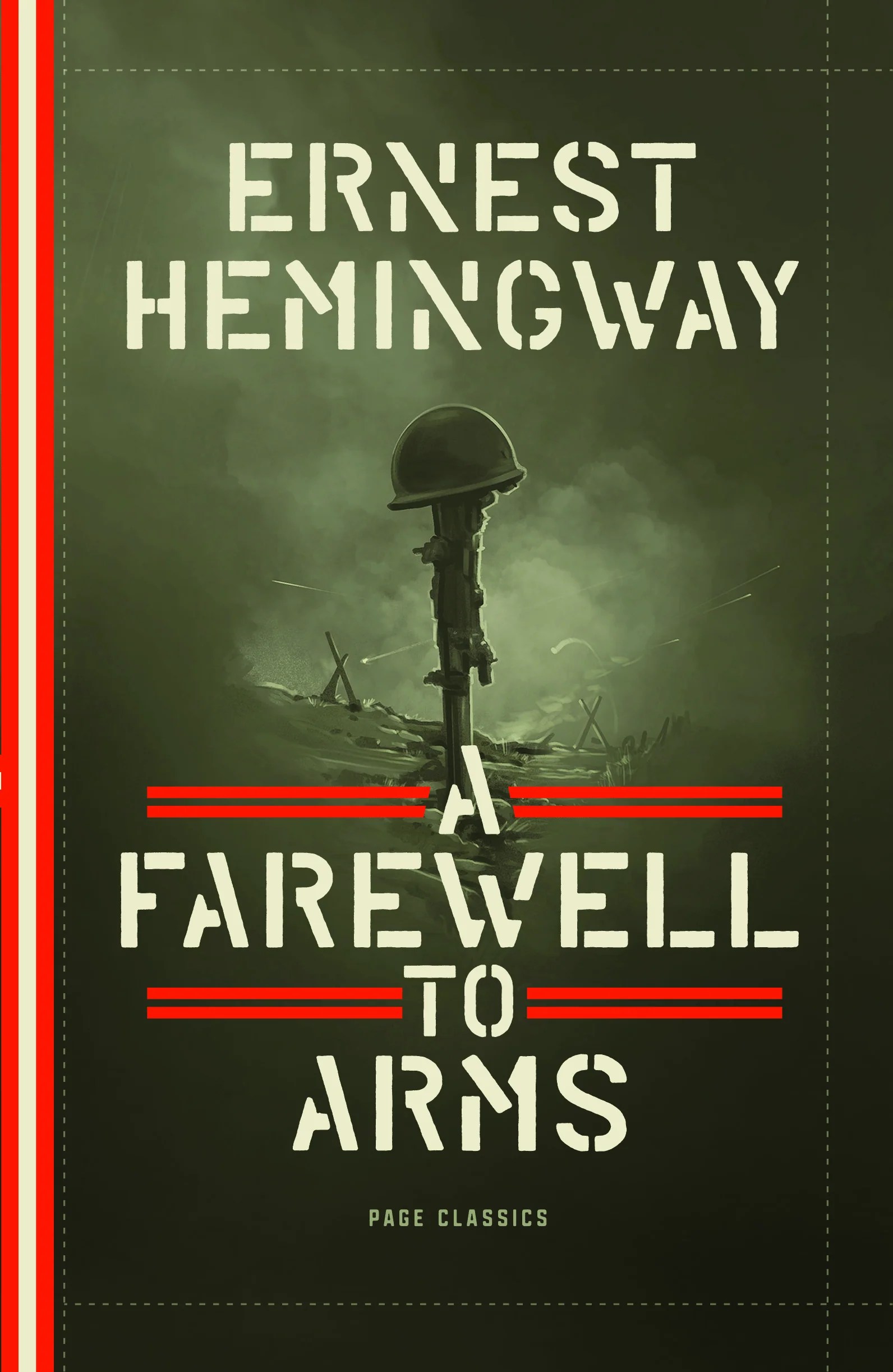
A Farewell to Arms – Ernest Hemingway
1929 355pgs. ( ~ 73,000 words)  Realism

A Farewell to Arms is a classic by Ernest Hemingway, inspired by his experience as an ambulance driver for the Italian Red Cross in World War One and his real-life love affair with Agnes von Kurowsky, a Red Cross nurse.

Frederick Henry, an American serving in the Italian Army as a Lieutenant and director of ambulance drivers, is injured during an attack and taken to a hospital. While recovering, he falls in love with a British nurse. He returns to the front line to continue his duty, and when the Italian army retreats in 1917, he is captured by battle police and escapes. He reunites with Catherine and the two flee to Switzerland to escape the Italian army.

This is considered one of Hemingway’s classics and was his first bestseller — yet I cannot figure out why. The dialogue is sometimes difficult to follow. As Frederick collaborates with his Italian medics and doctors, much of the chatter feels disjointed. Perhaps that’s the appeal — that the confusion mirrors the experience of war itself. I also encountered, for the first time, sentences loaded with far more commas than I thought were allowed, and I often felt that Hemingway was describing things in way too much detail. That said, the overall story is easy to follow.

The way it ends is almost melodramatic. The final section follows Frederick and Catherine — who is pregnant with their child — as they wait in Switzerland for the birth. As the birth unfolds, you can feel what is coming. It’s almost as if Hemingway wrote the ending as a man whose inspiration had died, given that Agnes chose to marry someone else instead of him.

Would I recommend this book? It is not a horrible book, but it never gripped me enough to keep coming back to it. I actually read another book alongside it over two weeks before finally sitting down and finishing it in two hours just to have it done. I would recommend reading it in one or two sittings if you can. I’ve been told that For Whom the Bell Tolls is the best Hemingway — and I have already added that to my reading list.

Enjoy a cup of coffee and a good book!

Lopaka

The Only Woman in the Room

Tags

, , , ,

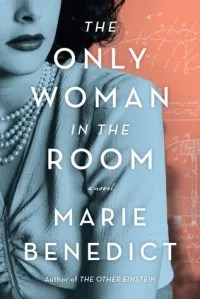
The Only Woman in the Room – Marie Benedict
 2019 / 272 pgs. ( ~ 76,000 words) Historical Fiction

The Only Woman in the Room is a work of historical fiction centered on Hedwig Eva Maria Kiesler, better known as Hedy Lamarr — a Jewish actress. It concentrates on her years married at 18 to an Austrian arms dealer and the wealthiest man in Austria at the time, Fritz Mandl. Her husband was abusive and obsessive, using Hedy’s fame and beauty to his advantage when hosting high-ranking officials. Eventually, as the Germans take over Austria, Hitler comes to her home and Hedy overhears details of the Final Solution. The story ends with Hedy escaping her abusive husband and fleeing to America, where she launches her acting career and invents frequency hopping.

I wish I could tell you there is more depth to the book, yet there is not. It reads like a biography, yet it is historical fiction. There is no real complexity to the narration. Even with the story of Hedy’s abusive marriage to Fritz Mandl, there is not enough to make you truly feel for her — you simply cannot form an emotional attachment to the story. It feels like you are reading a broad outline, and the vital, gritty details were never filled in. It is a very easy read and you can get through it in a few hours. After reading the book for three days, I finished it in one sitting of about two hours, mostly just to move on to the next book.

Would I recommend this book? No. I was interested in reading about Hedy Lamarr, but this book feels very empty — like too much is missing to give it a satisfying narrative. The worst part is that the book just ends with no satisfying conclusion. On my coffee scale, this lands at 2 cups — and honestly, I was being generous. It’s a light, easy read with not much to think about along the way.

Enjoy a good cup of coffee and good book!

Lopaka

The Count of Monte Cristo

Tags

, , , ,

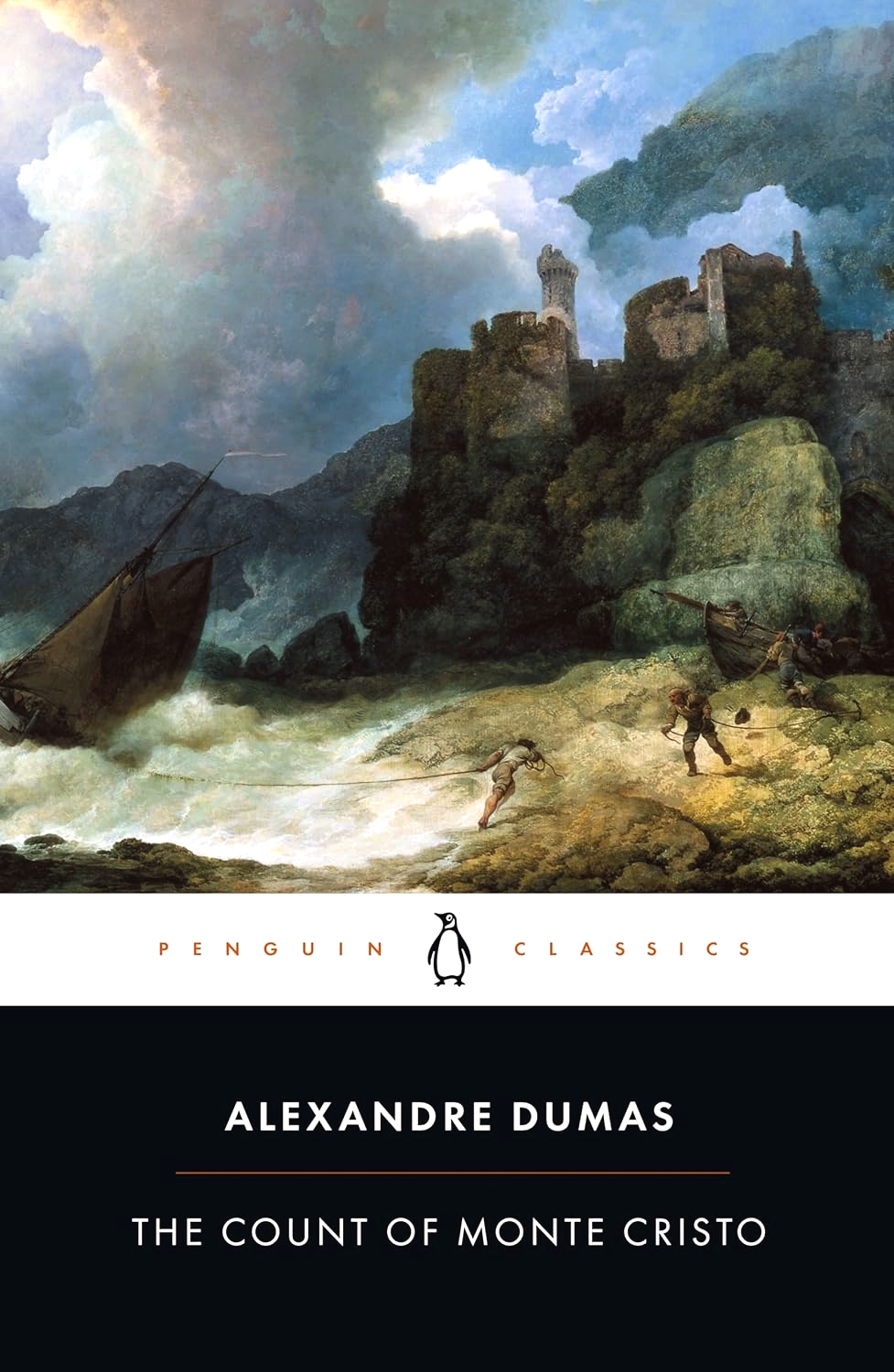
The Count of Monte Cristo by Alexandre Dumas
1846 / 1,596 pgs. ( ~ 464,000 words) Adventure/Classic

The Count of Monte Cristo is an epic novel, and I’m not just referring to the vast size of this book. At its core, it is a book about a prison break and vengeance for the wrongdoing done to the main character. That is so simplified — where the story is amazing is the characters themselves that allow the building of the story. The size of the novel does tempt even some seasoned readers, yet I can say that the story is easy to follow. Sometimes the challenge is trying to figure out who is who, as some characters get titles that change their name versus what it was at the start of the novel. However, never in the entire time while reading the book did I ask how much longer I have in the novel. Every chapter felt like a story that leaves you wanting more. In fact, if you understand that this book was serialized, then you can understand why it’s written the way it is.

From start to finish, I was asking just how is this going to end! What amazed me was that the prison break is so early in the book — I was thinking, what are we about to embark on for the next 1,200+ pages that are left? It didn’t disappoint either! It does take a long time for the story to build to the revenge section. Also, after the prison break, there is a large section that takes place from another character’s view where you wonder why are we reading about this, and that’s when you realize that all the other characters are now the main players and the Count is the character that comes into play when needed. That anticipation was gnawing at me the whole time I read it. I was looking forward to each revenge plot and how it was going to play out.

As each plot builds and we see the effects of his revenge, it’s sweeter than the last. Although, for the first time in a long time, I read a scene that stood my hair on end — I was floored and started to cry. The visual was amazing! To date, this was one of the most amazing lines I’ve read that sent chills down my spine:

“‘Héloïse! Héloïse!” he said, “what is the matter? Speak!” The young woman extended her stiff white hand toward him. “It is done, sir!” she said, with a rattling which seemed to tear her throat. “What more do you want?” and she fell full length on the floor.” – The Count of Monte Cristo

The image after this made me cry and even scream something that I don’t want to ruin for the dear reader.

Would I recommend this book? YES! I couldn’t put this book down. It is amazing. I haven’t read a book this gripping since I read Stephen King’s IT.

Enjoy a cup of coffee and a good book!

Lopaka

Note: After I finished this novel, I did a little research — I would recommend not doing that before reading. I’m sure I would have viewed the book differently had I known this information beforehand. Also, some say this is not the best book by Alexandre Dumas, and that The Three Musketeers is better. I’ve already added that to my future reading list!

The Fall of the Dynasties

Tags

, , , ,

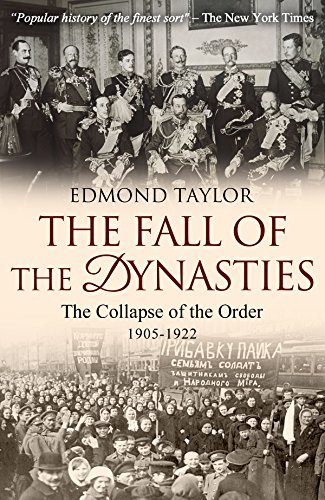
The Fall of the Dynasties: The Collapse of the Old Order: 1905-1922 by Edmond Taylor
1962 / 432 pgs. ( ~ 120,000 words) History

The Fall of the Dynasties chronicles the collapse of four great empires at the end of World War One: the Ottoman, Hohenzollern, Habsburg, and Romanov dynasties. Taylor begins with the assassination of Franz Ferdinand in Sarajevo, then systematically examines each empire’s structure and internal weaknesses. He explores fascinating details like the lack of formal education among Ottoman sultans and the brutal palace competition among women vying for their sons to inherit the throne. For the Austrians, he reveals how Franz Ferdinand was widely disliked within his own empire, and even more striking, how cruelly his wife Sophie was treated by the royal court.

The narrative builds toward the outbreak of World War One, though Taylor notably doesn’t focus on the war itself. Instead, he examines how each empire crumbled under the war’s pressures.

The Romanovs receive the most extensive coverage, from the family’s deteriorating situation through the Russian Revolution to their execution in 1918. The German Empire’s fall follows, with the Kaiser’s abdication coming just one day before the war’s end. By contrast, the Habsburg collapse feels rushed, and the Ottoman Empire section seems hastily tacked on to complete the book’s premise.

While reading, I kept wondering why this book isn’t standard reading for World War One students—until the editorial issues became apparent. Taylor has a frustrating habit of briefly mentioning a historical figure, then reintroducing them chapters later with fuller context, presumably hoping readers will have an “aha” moment. Instead, I constantly flipped back through my notes to confirm whether I’d encountered someone before. This made following each empire’s narrative unnecessarily challenging.

The Kindle edition I read suffered from numerous spelling and punctuation errors, including missing periods that disrupted the flow. Taylor’s vocabulary is undeniably expansive, but the dense prose sometimes obscured rather than clarified his arguments. I lost count of how many paragraphs I reread trying to decipher his meaning—and sometimes I simply gave up. The narrative also contains contradictions that an editor should have caught.

Would I recommend this book? Only if you’re genuinely interested in this period of history. I hope the errors plagued only my digital edition and not the printed version. Despite its significant flaws, I did enjoy the book and found myself fascinated by this pivotal moment when the old world order collapsed forever.

Enjoy a good cup of coffee and a excellent book!

Lopaka

Stranger in a Strangland

Tags

, , , ,

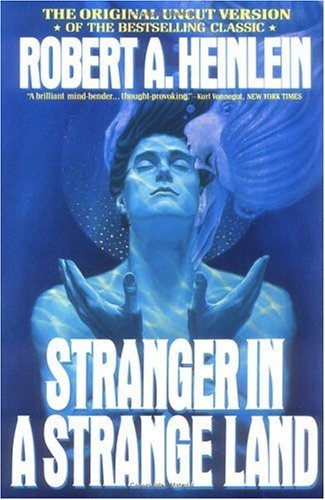
Stranger in a Strangeland by Robert A. Heinlien
1961 / 663 pgs. ( ~ 220,000 words) Sci-Fi Classic

Robert A. Heinlein’s Stranger in a Strange Land is a truly unusual book. The narrative follows Valentine Michael Smith, an orphan born on Mars during the first human expedition. Because the original crew consisted of married couples who engaged in “open relationships” during the journey, Mike’s parentage is unique. He ends up as the sole survivor of the mission, raised entirely by Martians and immersed in their language and culture. Twenty years later, a second mission discovers him and brings him back to Earth. As a man who has never experienced human life, Mike is the ultimate “Stranger in a Strange Land.”

From Narrative to Pontification

Early on, I expected a fascinating exploration of how Mike would perceive and experience our world. Unfortunately, that isn’t quite the book I got. Instead, the narrative often takes a backseat to other characters pontificating about the rights and wrongs of society. While the plot circles around Mike, the pages are dominated by lengthy debates on various social challenges.

A central figure in this is Jubal Harshaw (M.D., LL.B., Sc.D.). After Mike is essentially kidnapped by a nurse named Jill and taken to Jubal’s home, the story shifts. It quickly becomes clear that Jubal is a stand-in for Heinlein himself. Much of the book consists of Jubal engaging in discussions where he clearly holds the “correct” answer and must convince everyone else of his perspective.

The “MacGuffin” Protagonist

One notable example is the debate between Jubal and Duke regarding Mike’s Martian views on cannibalism. While humans find the practice atrocious, Jubal argues that it is an honorable Martian tradition. This pattern repeats throughout the book; Mike often feels more like a MacGuffin—an object used to trigger situations so the author can lecture on religion, money, property, gambling, and sexuality.

Eventually, Mike establishes the Church of All Worlds. Though framed as a mega-church, it functions more like a language school where students learn Martian and embrace its culture, including polygamy. The book feels like a “what if” scenario for someone with unlimited money and a clean slate. Mike begins the story with a child-like innocence, and when he encounters “wrongness,” he simply makes it vanish—much like a child’s fantasy of wishing problems away.

Would I recommend it? It’s an okay book, but I frequently found myself checking the timer to see how much of the story was left. The philosophical debates are incredibly long-winded. I read the uncut version released after Heinlein’s death, and I suspect the shorter, original version might be a tighter, better read. I’m glad I read it for its place in sci-fi history, but it certainly won’t be on my “read again” list.

Enjoy a cup of coffee and good book!

Lopaka

Dune Messiah

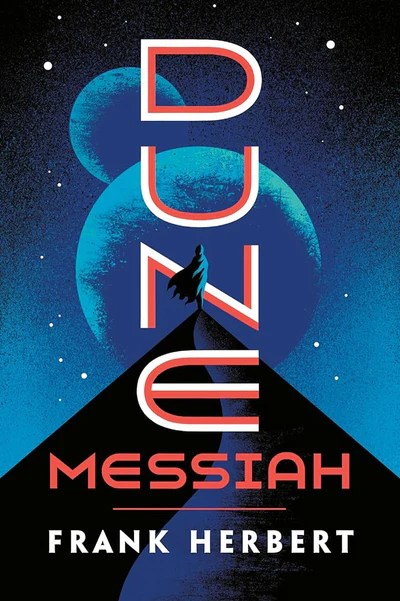
Dune Messiah by Frank Herbert
1969 / 338 pgs. ( ~ 70,000 words) Science Fiction

Dune Messiah is a starkly different experience from the original. While it lacks the fast-paced “page-turner” energy of the first book, it serves as a fascinating bridge to Children of Dune.

In the introduction, Brian Herbert notes that many readers disliked this sequel because of Paul’s trajectory. I suspect Frank Herbert realized he had created a character so powerful that Paul had essentially become a narrative dead end. How do you challenge a man who has the power of prescience, the abilities of a Reverend Mother, and a loyal following conducting a bloody Jihad in his name?

The heart of the book is the conspiracy to take Paul down. Even though the Emperor knows it’s coming, he is trapped by his own foresight. The most striking moment for me was Paul’s conversation with Stilgar, where he compares his “statistics” to the dictators of Ancient Earth:

“I’ve killed sixty-one billion… I’ve wiped out the followers of forty religions… We’ll be a hundred generations recovering from Muad’Dib’s Jihad.”

This quote perfectly captures the “darkness” Paul has brought to the universe. While the ending for Paul and Chani might be polarizing, I found it satisfying. It felt like a necessary way for Herbert to move the story forward, removing an all-powerful lead so we can explore the Dune universe without Paul seeing every outcome before it happens.

Would I recommend it? Absolutely. It’s a really good book. If you are in love with the first book and don’t want anything to change in the world of Dune. I would recommend not reading Dune Messiah.

Lopaka

The Nine

Tags

, , , ,

The Nine by Gwen Strauss
2021 / 317 pgs. (84,000~ words) History

This is a deeply emotional narrative. It is a true account of the lives of nine young women, aged 18-26, who served in the French Resistance, were captured, and then sent to the Ravensbrück concentration camp—only to escape during a death march at the end of the war.

The book is not just about their survival; it is a deep dive into who each of these women were. It explores why they joined the Resistance, how they were captured, and the torture they endured at the hands of the SS. It details how they kept their spirits and morale as high as possible in the camps, and how they formed their bond, as they didn’t all meet until they arrived at Ravensbrück.

There is also a wonderful narration of their escape—journeying through village after village, constantly fearing discovery by German soldiers or the SS, which would mean execution. The final section covers their lives after the war and how they were treated—or often forgotten—by the French Government despite their service.

The story is fascinating because, while many have heard of the Holocaust, people often forget the sheer variety of people put into concentration camps. The book mentions several groups often lost to history: the asozial (prostitutes, homosexuals, Sinti and Roma, and common criminals). It describes how this group survived in the same block and how they interacted.

As a person who has visited Dachau, this book really brings into perspective the number of people that Nazi Germany didn’t want in society.

Would I recommend it? Absolutely. It’s a really good book. Just be mentally prepared for what these women went through to survive. It can be heartbreaking.

Enjoy a good cup of coffee and a delightful book!

Lopaka

How to read Literature like a Professor

Tags

, , , ,

How to read Literature like a Professor by Thomas C. Foster
2003 / 314 pgs. (84,000~ words) Literary Criticism

When I started this book, I expected something entirely different. I honestly thought it would be a guide to reading professional documents effectively or finding key points in technical writing. It wasn’t that at all. However, I was pleasantly surprised by what I found.

The book is a guide to understanding literature on a deeper level by analyzing narrative context. It explains that elements in well-written stories are rarely accidental; they are there to help you visualize scenes or foreshadow events. Even characters are built for specific, structural reasons.

Here are a few highlights I noted:

  • There is no such thing as a new idea. All stories have already been written. When you break down a narrative, you find that authors are inspired by previous authors, who were inspired by those before them.
  • Most plots have ancient roots. Many themes stem from the Bible, Shakespeare, or Greek Mythology. This tradition goes back as far as Virgil writing the Aeneid (19 BC), which mirrors Homer’s Odyssey (8th Century BCE).
  • Weather matters. Rain and snow are rarely just atmospheric. Winter often symbolizes death, while Spring symbolizes rebirth—concepts rooted in the myth of Persephone and Hades.
  • The Hero vs. The Supporting Cast. The hero (almost) never dies, while those around them exist to support the narrative. We often know everything about the hero but very little about the supporting characters because their primary function is to drive the hero’s journey.
  • Violence serves a purpose. In literature, an injury is often a plot device to force one character to interact with another.
  • Symbols are subjective. Symbols mean something different to everyone. If a meaning were completely straightforward, it would be an allegory, not a symbol.

Would I recommend it? Absolutely. I really enjoyed reading it, and I could practically hear my high school teachers saying, “See, I told you this when you were in school!” It genuinely teaches you to read books from a different perspective.

Enjoy a good cup of coffee and a delightful book!

Lopaka

The Forever War

Tags

, , , ,

The Forever War by Joe Haldeman
1977 / 285 pgs. (95,716 words) Si-Fi Classic

In Joe Haldeman’s classic science fiction novel, The Forever War, we meet William Mandella, a physics student whose advanced education gets him conscripted into the United Nations Expeditionary Force (UNEF). After grueling basic training on Earth, he is sent to Charon, a desolate planetoid beyond Pluto, where the training proves lethal for several recruits. From there, Mandella is thrown into a brutal, centuries-long war against a mysterious alien race known as the Taurans.

Mandella and his fellow soldiers travel between star systems using “collapsars,” which allow their ships to cross light-years in an instant. However, this instantaneous travel comes with a staggering cost due to time dilation. While Mandella ages only a few months or years on a mission, centuries fly by on Earth. He becomes a stranger to the very world he’s fighting to protect, which changes beyond recognition with each return.

More Than Just a Sci-Fi Story

At its heart, The Forever War is a profound exploration of the psychological horrors of combat. Haldeman unflinchingly portrays the trauma of losing limbs, the pain of losing loved ones, and the deep alienation of a soldier returning home.

The novel is a powerful allegory for the Vietnam War experience, channeling Haldeman’s own experiences as a veteran into a futuristic setting. The feelings of displacement, the struggle to adapt to a society that has moved on without you, and even the paradoxical desire to return to the simplicity of war will resonate deeply with many readers, especially veterans.

Final Thoughts

Would I recommend it? Absolutely.

The Forever War is a book that deeply impacted me. I was completely engrossed in Mandella’s story, eager to see how his seemingly endless journey would conclude. It’s a masterful commentary on the futility of war and the enduring humanity of those forced to fight it.

Grab a cup of coffee and dive into this unforgettable classic. You won’t be disappointed.

Lopaka