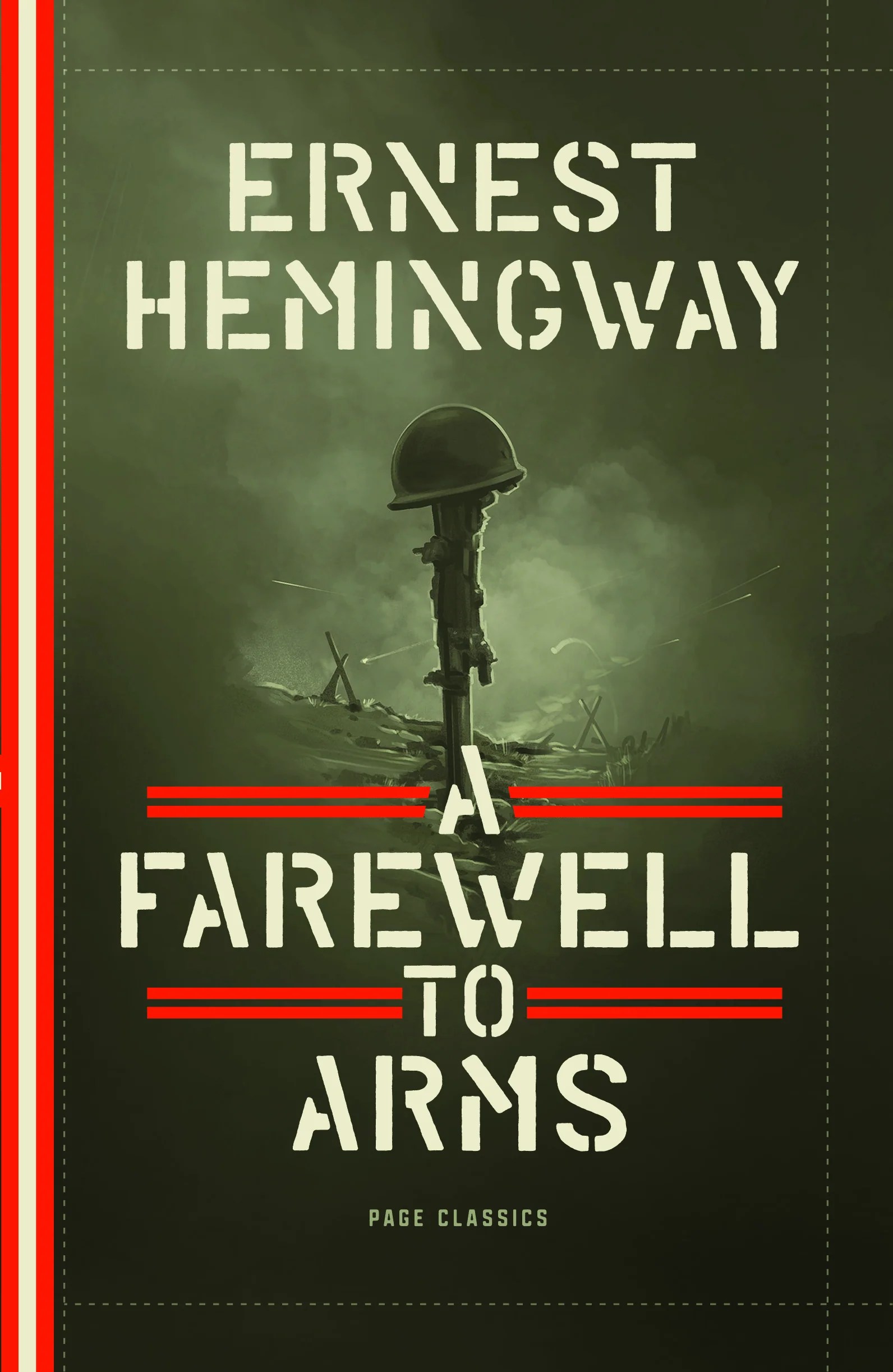
A Farewell to Arms – Ernest Hemingway 1929 355pgs. ( ~ 73,000 words) Realism
A Farewell to Arms is a classic by Ernest Hemingway, inspired by his experience as an ambulance driver for the Italian Red Cross in World War One and his real-life love affair with Agnes von Kurowsky, a Red Cross nurse.
Frederick Henry, an American serving in the Italian Army as a Lieutenant and director of ambulance drivers, is injured during an attack and taken to a hospital. While recovering, he falls in love with a British nurse. He returns to the front line to continue his duty, and when the Italian army retreats in 1917, he is captured by battle police and escapes. He reunites with Catherine and the two flee to Switzerland to escape the Italian army.
This is considered one of Hemingway’s classics and was his first bestseller — yet I cannot figure out why. The dialogue is sometimes difficult to follow. As Frederick collaborates with his Italian medics and doctors, much of the chatter feels disjointed. Perhaps that’s the appeal — that the confusion mirrors the experience of war itself. I also encountered, for the first time, sentences loaded with far more commas than I thought were allowed, and I often felt that Hemingway was describing things in way too much detail. That said, the overall story is easy to follow.
The way it ends is almost melodramatic. The final section follows Frederick and Catherine — who is pregnant with their child — as they wait in Switzerland for the birth. As the birth unfolds, you can feel what is coming. It’s almost as if Hemingway wrote the ending as a man whose inspiration had died, given that Agnes chose to marry someone else instead of him.
Would I recommend this book? It is not a horrible book, but it never gripped me enough to keep coming back to it. I actually read another book alongside it over two weeks before finally sitting down and finishing it in two hours just to have it done. I would recommend reading it in one or two sittings if you can. I’ve been told that For Whom the Bell Tolls is the best Hemingway — and I have already added that to my reading list.
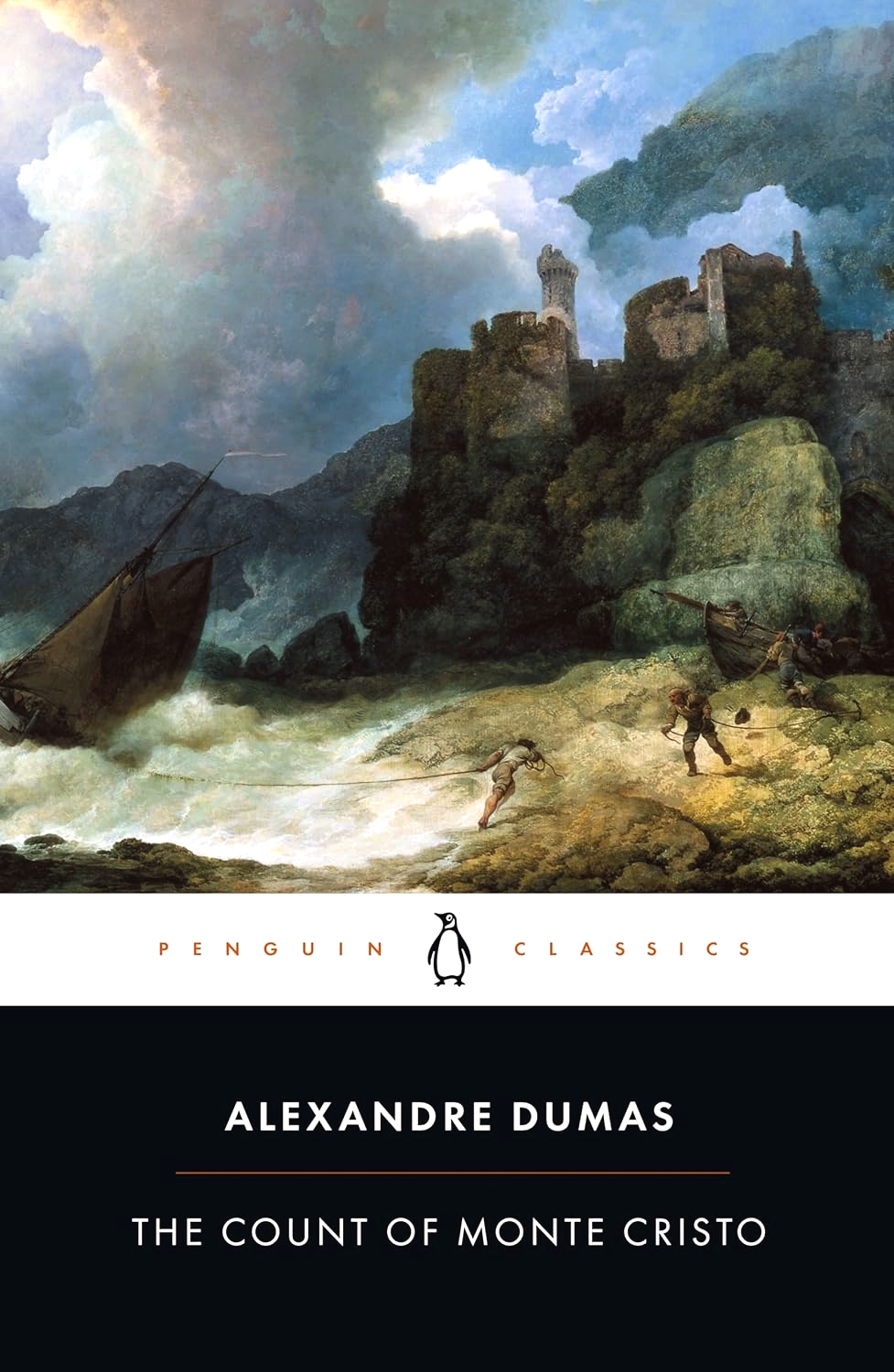
The Count of Monte Cristo by Alexandre Dumas 1846 / 1,596 pgs. ( ~ 464,000 words) Adventure/Classic
The Count of Monte Cristo is an epic novel, and I’m not just referring to the vast size of this book. At its core, it is a book about a prison break and vengeance for the wrongdoing done to the main character. That is so simplified — where the story is amazing is the characters themselves that allow the building of the story. The size of the novel does tempt even some seasoned readers, yet I can say that the story is easy to follow. Sometimes the challenge is trying to figure out who is who, as some characters get titles that change their name versus what it was at the start of the novel. However, never in the entire time while reading the book did I ask how much longer I have in the novel. Every chapter felt like a story that leaves you wanting more. In fact, if you understand that this book was serialized, then you can understand why it’s written the way it is.
From start to finish, I was asking just how is this going to end! What amazed me was that the prison break is so early in the book — I was thinking, what are we about to embark on for the next 1,200+ pages that are left? It didn’t disappoint either! It does take a long time for the story to build to the revenge section. Also, after the prison break, there is a large section that takes place from another character’s view where you wonder why are we reading about this, and that’s when you realize that all the other characters are now the main players and the Count is the character that comes into play when needed. That anticipation was gnawing at me the whole time I read it. I was looking forward to each revenge plot and how it was going to play out.
As each plot builds and we see the effects of his revenge, it’s sweeter than the last. Although, for the first time in a long time, I read a scene that stood my hair on end — I was floored and started to cry. The visual was amazing! To date, this was one of the most amazing lines I’ve read that sent chills down my spine:
“‘Héloïse! Héloïse!” he said, “what is the matter? Speak!” The young woman extended her stiff white hand toward him. “It is done, sir!” she said, with a rattling which seemed to tear her throat. “What more do you want?” and she fell full length on the floor.” – The Count of Monte Cristo
The image after this made me cry and even scream something that I don’t want to ruin for the dear reader.
Would I recommend this book? YES! I couldn’t put this book down. It is amazing. I haven’t read a book this gripping since I read Stephen King’s IT.
Enjoy a cup of coffee and a good book!
Lopaka
Note: After I finished this novel, I did a little research — I would recommend not doing that before reading. I’m sure I would have viewed the book differently had I known this information beforehand. Also, some say this is not the best book by Alexandre Dumas, and that The Three Musketeers is better. I’ve already added that to my future reading list!
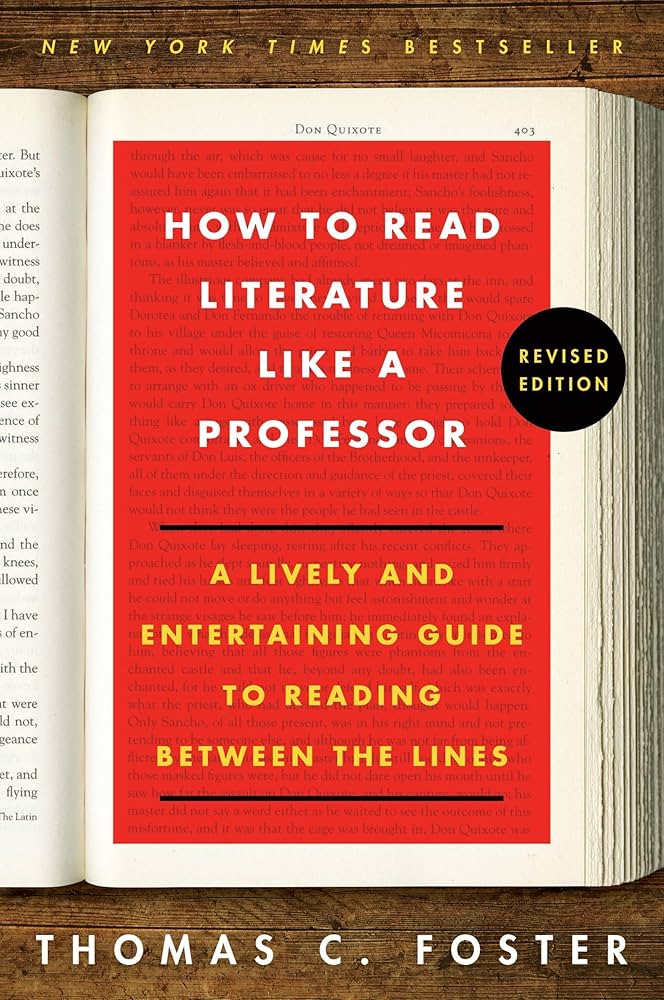
How to read Literature like a Professor by Thomas C. Foster 2003 / 314 pgs. (84,000~ words) Literary Criticism
When I started this book, I expected something entirely different. I honestly thought it would be a guide to reading professional documents effectively or finding key points in technical writing. It wasn’t that at all. However, I was pleasantly surprised by what I found.
The book is a guide to understanding literature on a deeper level by analyzing narrative context. It explains that elements in well-written stories are rarely accidental; they are there to help you visualize scenes or foreshadow events. Even characters are built for specific, structural reasons.
Here are a few highlights I noted:
There is no such thing as a new idea. All stories have already been written. When you break down a narrative, you find that authors are inspired by previous authors, who were inspired by those before them.
Most plots have ancient roots. Many themes stem from the Bible, Shakespeare, or Greek Mythology. This tradition goes back as far as Virgil writing the Aeneid (19 BC), which mirrors Homer’s Odyssey (8th Century BCE).
Weather matters. Rain and snow are rarely just atmospheric. Winter often symbolizes death, while Spring symbolizes rebirth—concepts rooted in the myth of Persephone and Hades.
The Hero vs. The Supporting Cast. The hero (almost) never dies, while those around them exist to support the narrative. We often know everything about the hero but very little about the supporting characters because their primary function is to drive the hero’s journey.
Violence serves a purpose. In literature, an injury is often a plot device to force one character to interact with another.
Symbols are subjective. Symbols mean something different to everyone. If a meaning were completely straightforward, it would be an allegory, not a symbol.
Would I recommend it? Absolutely. I really enjoyed reading it, and I could practically hear my high school teachers saying, “See, I told you this when you were in school!” It genuinely teaches you to read books from a different perspective.
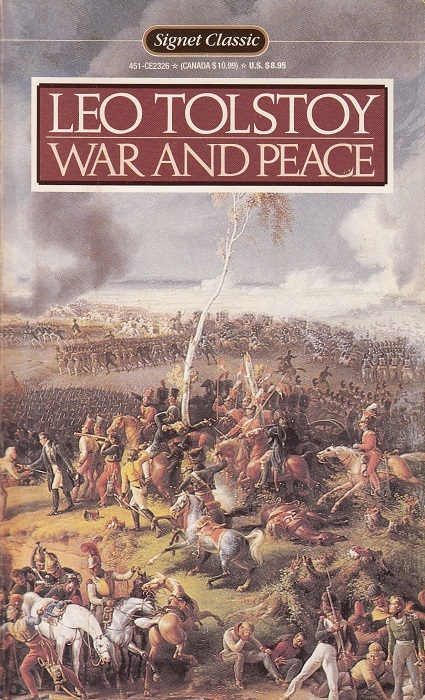
War and Peace by Leo Tolstoy (Translated by Louise and Aylmer Maude) 1869 / 1,394 pgs. (587,000 words) Classic
War and Peace is, to date, the longest novel I have ever read – and it’s a truly epic story. However, describing this book isn’t easy. It avoids simple narration and defies traditional structures. There’s no single central character; instead, the reader follows several individuals, a mix of fictional creations and historical figures. The narrative weaves around significant historical events, such as the Battle of Austerlitz, the lead-up to the French invasion of Russia, and the eventual burning of Moscow.
This novel offers more than just a story; it delves into philosophical questions of right and wrong, personal tragedies, and triumphs. It’s quite common to be following a character’s experiences, only for Tolstoy to digress into a philosophical discussion, such as debating the reasons and responsibility for Moscow’s burning before Napoleon’s arrival.
The narrative structure doesn’t follow a conventional pattern, yet somehow, it works. While reading, I sensed Tolstoy’s desire to innovate beyond the traditional novel format. Deeper into the book, I initially suspected Tolstoy’s main goal was simply to write about the burning of Moscow, using the surrounding story merely as a backdrop to convey the events of the occupation. While I was wrong about his sole focus being the Moscow fire, I was right that he structured the narrative purposefully to tell a larger story.
The story unfolds within the world of Russian aristocracy, an environment Tolstoy, as a Count himself, knew intimately. We follow numerous characters throughout the novel – some you grow to love, others to dislike. Pierre Bezukhov provides a fascinating example. He begins as the illegitimate son of a dying Count, with many hoping to inherit the vast fortune. Believing he’ll receive nothing, Pierre is unexpectedly thrust into the highest echelons of aristocracy when his father leaves him everything. This sudden change confuses Pierre, who feels unprepared for the responsibility and is still searching for his purpose in life. Much of his journey involves this search for meaning, during which others sometimes take advantage of his nature, including his wife, who gains access to much of his fortune.
Another compelling character is Natasha Rostova, a beautiful young countess. She falls in love and becomes engaged to the older Prince Andrei. As part of an agreement with Andrei’s father, they must wait a year before marrying, during which Andrei serves in the military and tours Europe. Natasha waits, though unhappily, feeling her youth slipping away. During this time, she develops strong feelings for Andrei’s friend, Pierre Bezukhov. Tolstoy intriguingly portrays this period from Natasha’s perspective, allowing the reader to feel her painful anticipation for Andrei’s return, mingled with the awareness of passing time.
As mentioned, exploring War and Peace is a vast undertaking. Readers face a few challenges, common for novels of this scale: primarily keeping track of the numerous characters and managing the book’s sheer size. Dedicating enough time is crucial; realistically, plan for at least two to three months to journey through it.
Interestingly, I read the novel on my iPad, despite owning a paper copy. The electronic format offered a significant advantage: easy translation. Tolstoy often incorporates French phrases and sentences into the dialogue – reflecting the fact that much of the Russian aristocracy at the time spoke French. While understanding the French isn’t essential to follow the plot, translating it (which was simple using the tablet’s highlight feature, far easier than juggling a dictionary) definitely enhances the reading experience and provides richer background context.
So, is dedicating the time worth it? Absolutely. I found War and Peace surprisingly readable. It wasn’t the overly complicated text I had feared – perhaps I’ve just become more accustomed to reading such books now. While the first 100 pages or so are quite dense, the narrative smooths out considerably afterwards. The main challenge truly is its length, not its complexity.
Once you reach the final page, there’s an immense sense of gratification that comes with having completed such a masterpiece. For me, it echoed the feeling I had after finishing The Stand – another classic, famously long novel.
Enjoy a good cup of coffee and a delightful book!
Lopaka
Interesting Notes
While reading War and Peace, I initially assumed Tolstoy’s primary goal was to write about the French occupation of Moscow in 1812, creating the surrounding narrative simply to support that event. However, I learned the reality was quite different.
Tolstoy originally intended to write about the Decembrists returning from exile (an event occurring much later than the novel’s timeline). But he realized he couldn’t adequately portray their return without first explaining the Decembrist revolt of 1825. To explain 1825, he felt it necessary to narrate the pivotal events of 1812, including the French invasion. Going back further, he determined he couldn’t properly set the stage for 1812 without exploring the precursor events around 1805, such as the Battle of Austerlitz.
And that is where War and Peace actually begins. By the time Tolstoy finished, he had crafted a 1,300-page epic that covered the years leading up to and including 1812, but he never reached the Decembrist events he had originally set out to chronicle. So, while the novel was conceived to eventually narrate specific historical moments, it grew into a monumental work that laid the groundwork but stopped before reaching that initial destination.
Furthermore, reading about Tolstoy’s own life, I realized how closely the character of Pierre Bezukhov mirrors aspects of Tolstoy’s own experiences and philosophical searching.