
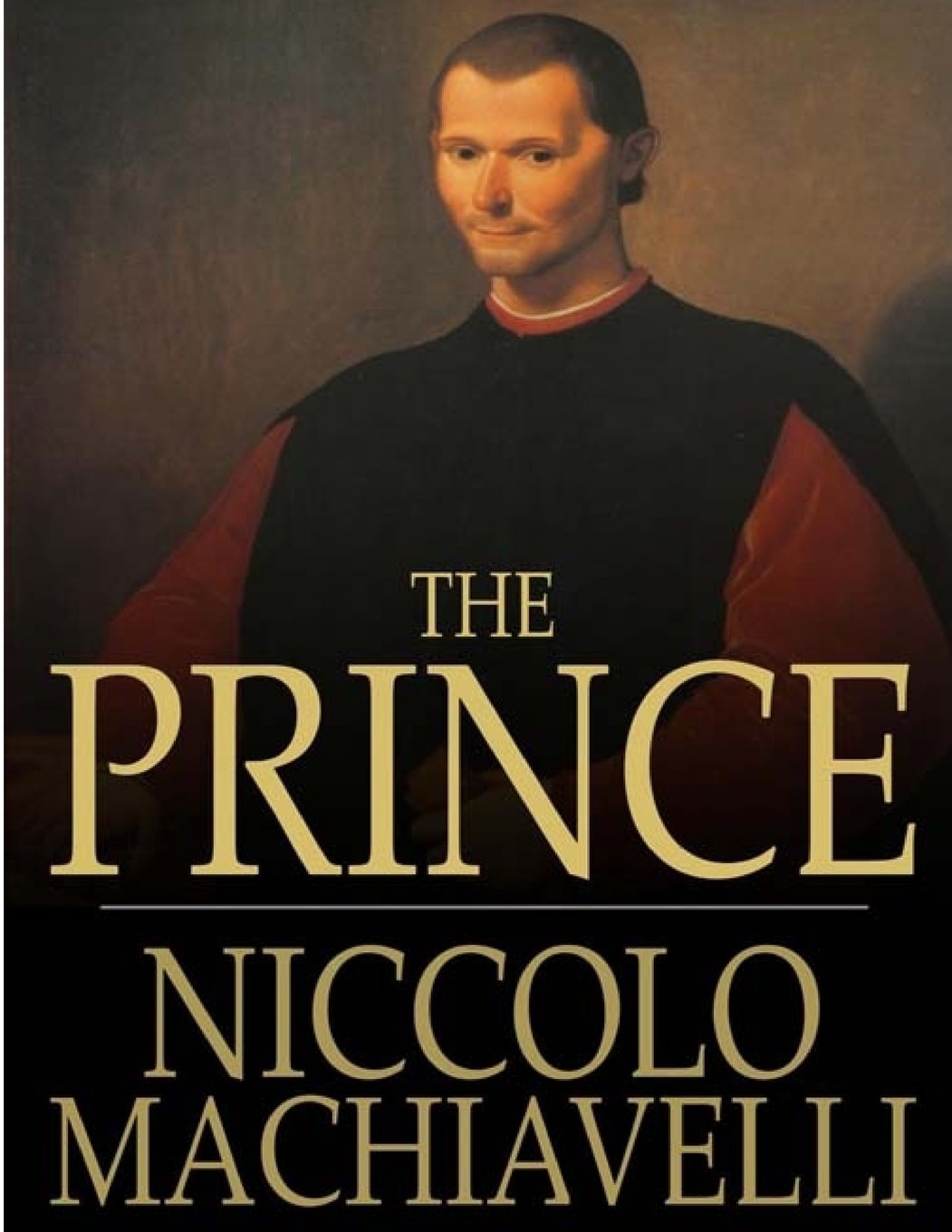

The Prince
by Niccolò Machiavelli 1532 / 96 pgs. Politics
The Prince is not a story. It’s a political thesis. Machiavelli analyzed historical leaders and used their success and failures as examples of how a prince should rule their kingdom. Machiavelli looked at two ways a prince may rise to power eventually to lead a territory, by force or inheritance. Machiavelli’s analysis is once one gains power, these are the steps to retain it.
The Prince shows how politicians, even today, utilize their ability to retain and use power. The most famous point in the thesis for a leader is “it’s much easier to be feared than loved.” When a Prince is feared, it’s easier to enforce control. Leaders should always be saying they are working to make citizens’ lives better; however, they are ready to take down any question to their power. Another way is Politicians can’t be honest and must use whatever tactic, included making promises they never intend to keep, to gain and retain power. The immoral method is the only method of a politician.
The Prince almost reads like a guide for Dictators. However, understanding that when Machiavelli wrote The Prince, he was in exile from his beloved Florence. He was a politician for 14 years, and after the government was overthrown, he was tortured for conspiracy. While he was away, he wrote several books and The Prince. Understanding why he was exiled could also mean The Prince is a warning to citizens of tyrannical rulers’ tactics to obtain power and influence and keep it.
The Prince is an essential political thesis. It is short, only 96 pages, however, very dense. It took me four days to finish reading it. If you want a book to get lost in, this isn’t it. If Politics/Government/History is your cup of tea, I would highly recommend it.
Enjoy a good cup of coffee and get lost in an excellent book,
Lopaka
 nyghteulen