
Tags
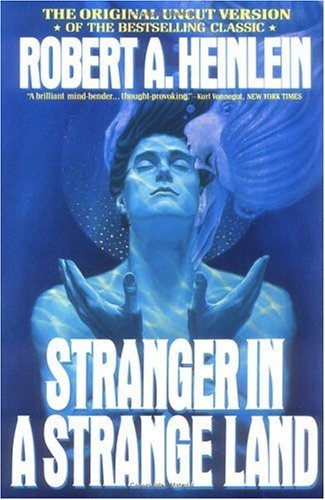

Stranger in a Strangeland by Robert A. Heinlien
1961 / 663 pgs. ( ~ 220,000 words) Sci-Fi Classic
Robert A. Heinlein’s Stranger in a Strange Land is a truly unusual book. The narrative follows Valentine Michael Smith, an orphan born on Mars during the first human expedition. Because the original crew consisted of married couples who engaged in “open relationships” during the journey, Mike’s parentage is unique. He ends up as the sole survivor of the mission, raised entirely by Martians and immersed in their language and culture. Twenty years later, a second mission discovers him and brings him back to Earth. As a man who has never experienced human life, Mike is the ultimate “Stranger in a Strange Land.”
From Narrative to Pontification
Early on, I expected a fascinating exploration of how Mike would perceive and experience our world. Unfortunately, that isn’t quite the book I got. Instead, the narrative often takes a backseat to other characters pontificating about the rights and wrongs of society. While the plot circles around Mike, the pages are dominated by lengthy debates on various social challenges.
A central figure in this is Jubal Harshaw (M.D., LL.B., Sc.D.). After Mike is essentially kidnapped by a nurse named Jill and taken to Jubal’s home, the story shifts. It quickly becomes clear that Jubal is a stand-in for Heinlein himself. Much of the book consists of Jubal engaging in discussions where he clearly holds the “correct” answer and must convince everyone else of his perspective.
The “MacGuffin” Protagonist
One notable example is the debate between Jubal and Duke regarding Mike’s Martian views on cannibalism. While humans find the practice atrocious, Jubal argues that it is an honorable Martian tradition. This pattern repeats throughout the book; Mike often feels more like a MacGuffin—an object used to trigger situations so the author can lecture on religion, money, property, gambling, and sexuality.
Eventually, Mike establishes the Church of All Worlds. Though framed as a mega-church, it functions more like a language school where students learn Martian and embrace its culture, including polygamy. The book feels like a “what if” scenario for someone with unlimited money and a clean slate. Mike begins the story with a child-like innocence, and when he encounters “wrongness,” he simply makes it vanish—much like a child’s fantasy of wishing problems away.
Would I recommend it? It’s an okay book, but I frequently found myself checking the timer to see how much of the story was left. The philosophical debates are incredibly long-winded. I read the uncut version released after Heinlein’s death, and I suspect the shorter, original version might be a tighter, better read. I’m glad I read it for its place in sci-fi history, but it certainly won’t be on my “read again” list.
Enjoy a cup of coffee and good book!
Lopaka
 nyghteulen
Pingback: 2025 Reading list | nyghteulen