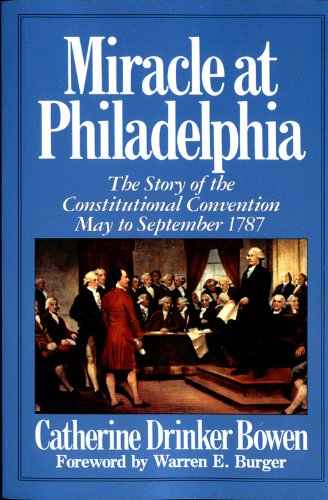
Miracle at Philadelphia by Catherine Drinker Bowen 1966 / 310 pgs. (86,500 words) Political Science/History
It doesn’t look like a page turner. It’s a story that not everyone will or desire to devour. Most people would care less about this story. They received all the education they needed on the birth of the nation in school. Understandable, many individuals, including my students don’t feel they need to learn more about the government then what they were taught in primary education.
Like every book, don’t judge it by its cover. This book is about the birth of the United States Constitution. It goes week by week and over many details that were taken from diaries and notes from those that were there. It also changes the narrative that we are told in school about the Great Compromise. We learn about the Virginia Plan and the New Jersey plan, the lectures on how the founders debated on these two plans and how the New Jersey plan was instrumental in the creation of the bicameral system we use today.
However, the Virginia plan already had a Bicameral system proposed. Most of the convention was debating the many details of the Virginia proposal. Many details were argued, for example do we have a Federal Government, that operates on states or a National Government that operates for the individuals. Interestingly, Democracy, that we practice today, was feared by many at the convention because they thought of it as rule by a mob, not the people. Shays Rebellion was still fresh in the minds of the delegates during the debates.
The New Jersey plan was introduced 15 June 1787 as an alternative to everything that was being debated and a method to fix the Articles of Confederation. However, this plan was destroyed by James Madison in a speech on the 19th of June and the New Jersey Plan was voted down. In our history books, it was the two plans that created the Great Compromise, however, Richard Sherman proposed the Compromise on the 11th of June. Its details like this that our history books erroneously tell and then it’s twisted into the narrative.
This books goes into many more details about the coming together of the convention, how it is conducted, and also after the vote and finally the ratification process. I really enjoyed many of the details Bowen spelled out that exposed many of the thoughts and even range of debates on why the US government is build the way it is and also what many feared and predicted would happen with our government in the future. One of my favorite quotes comes from Dr. Rush who wanted to establish a post graduate school and said
“Why…should young men study Greek particles and the conformation of the ruins at Palmyra when they should be acquiring ‘those branches of knowledge which increase the convenience of life, lessen human misery, improve our country, promote population, exalt the human understanding, and establish domestic and political happiness’” – Catherine Drinker Bowen
Would I recommend this book? Yes, if you are interested in this subject. I enjoyed it; however, this is in my field of education. I can’t say everyone would enjoy this narrative.
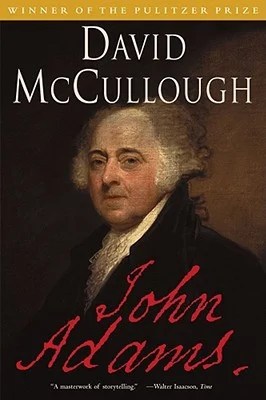
John Adams by David McCullough 2001 / 781 pgs. (188,00 words) Biography and History
Stunned is how I felt as I devoured every word of this masterpiece. Like Truman, this biography is very detailed and not a bore to read. Each paint stroke builds the picture that forms one of the great founding fathers of the United States; it also begs one to question why we do not know more about John Adams.
Honestly, when I started this book right after I finished Cycle of the Werewolf, I found myself reluctant as my knowledge of the Revolutionary/Colonial period of US history is weak compared to the W.W.II era. When I started, there was a feeling of dread and hesitance. David McCollough won the Pulitzer with John Adams andTruman. However, I was still unsure if I would enjoy reading JohnAdams with the same level of enjoyment as I did with Truman. All the feelings I experienced were put to pasture in the book’s first few pages.
This biography starts with the birth of Adams and a little background of his family in Quincy, Massachusetts. It builds from how his father raised him to Adams attending and graduating from Harvard. His eventual marriage to Abigail and the love that flows from them in letters they wrote to each other while he was away. McCullough even builds the events around Adams, like the Boston Massacre, how Adams successfully defended the British soldiers, and Adams’s essential involvement in the Declaration of Independence.
McCullough builds a wonderful picture as, naturally, the story progresses throughout the American Revolution and how the untold story of Adams going to France to help Franklin with the French. However, of his own volition, Adams goes to the Netherlands to negotiate trade and secure a loan from the Dutch. Congress eventually appoints him as minister to the Netherlands.
John Quincey’s picture is painted simultaneously, showing how travel with his father builds his reputation and experience. What is fascinating, and is eloquently shown by McCullough, is the events of times and how they changed the United States and people’s perspectives. For example, when Napoleon invaded Russia and seized the city, John Quincy was minister to St. Petersburg. Another example, John Quincey, was a Senator when President Jefferson sent to the Senate for their approval of the treaty that was eventually known as the Louisiana Purchase. Finally, who was Secretary of State when Spain negotiated the sale of Florida for $5,000,000? The Adams of the Adams-Onis Treaty, John Quincey.
The novel continues into John Adams’s times as the 1st Vice President of the United States, to his hatred of Alexander Hamilton, and John Adams the 2nd President of the United States. Also, the famous relationship between John Adams and Thomas Jefferson, eventually to the moment infamous in American History, their death on July 4th, 1826, the 50th Anniversary of the signing of the Declaration of Independence.
There is much more that I am not writing about, as this review would be very long. The rating should say how much I enjoyed this novel. I would absolutely recommend this if you were fascinated with the Presidents of the United States. This novel brings a very different light and appreciation for John Adams.
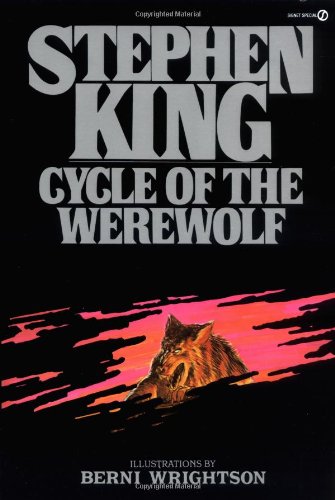
Cycle of the Werewolf by Stephen King 1985/ 128 pgs. (32,000 words) Horror
Cycle of the Werewolf is a graphic novel. It is divided into 12 chapters, that correspond with the months of the year. The story is simple, every full moon, a werewolf comes out and kills someone in a small town in Maine, Tarker Mills.
Over each month, people start to get afraid until a child in a wheel chair figures out who the werewolf is. Then on the final night in December, it all comes to an end.
For most of the chapters, they are very short. Victim is walking around or doing an action when a man size wolf standing on its legs attack and kills the victim. Seriously. The story builds a little bit in July with Marty, the child in the wheelchair, the only one to survive the werewolf attack. From August to November, there are a few more short chapters with more victims, except in September and October. Naturally, it is Halloween when the secret is reviled.
There is not much to this graphic novel. It is not amazing by any means and is a very fast read. There is not any meat for this. Again, this is a graphic novel. One could read it in just over an hour. I would recommend finding it in a library and sitting down and reading it quick. It is not worth the price to purchase it, unless you are building up the King collection.
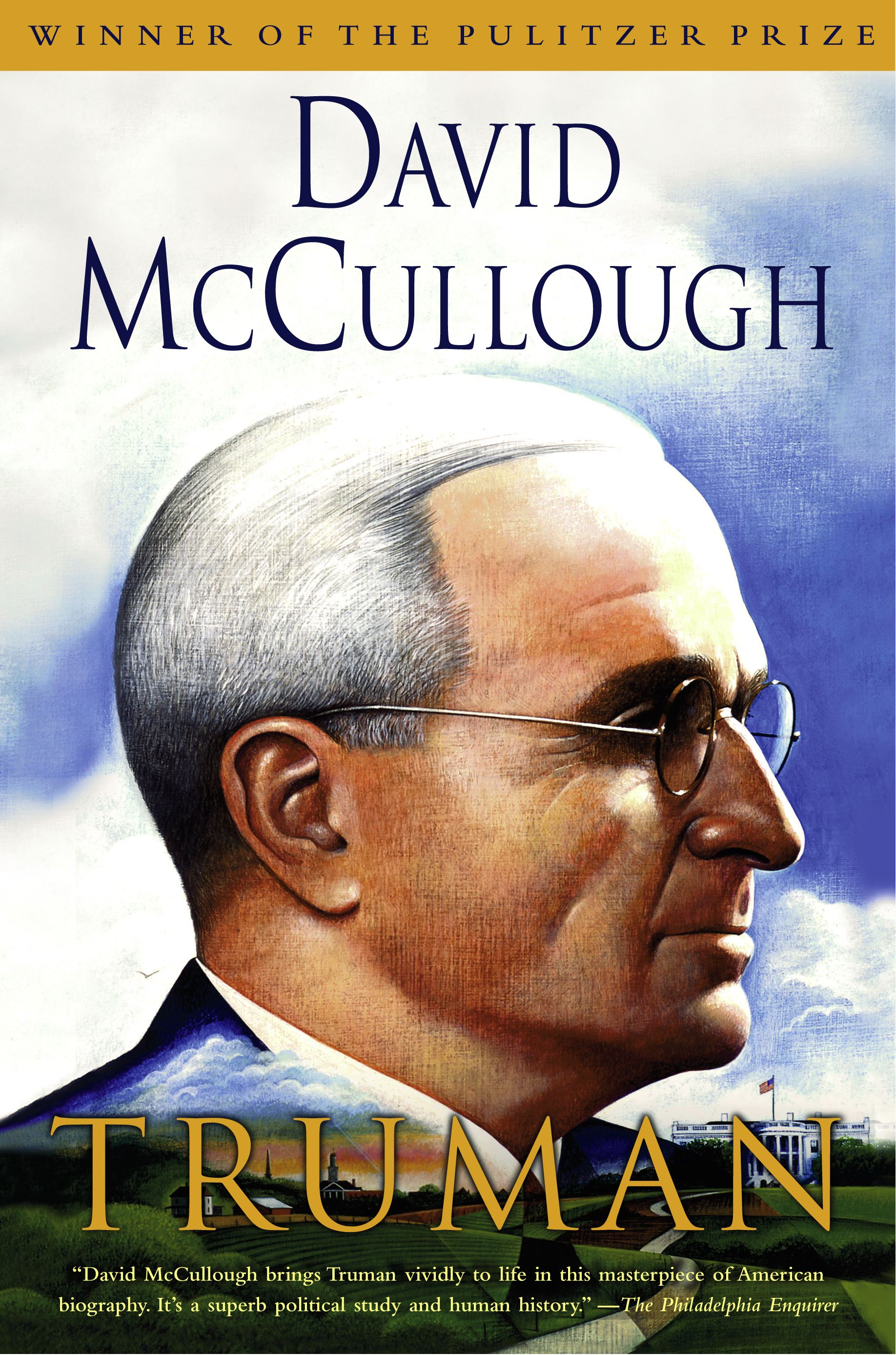
Truman by David McCullough 1993 / 1,120 pgs. (280,000 words) Biography, Politics, and History
Truman, what an outstanding annals and page turner. Many times, I found myself wanting to continue devouring another page beyond my mandatory hour obligation. All confession, I started this novel with a skeptical mindset if I would enjoy reading a vast biography. I was very pleasantly amazed at how much I genuinely enjoyed reading Truman.
This biography is a telling of Harry S. Truman from the day of his birth to his death and the real impact he had on the United States. It does not start off with the simple, Harry was born on 8 May 1884. McCullough starts with events that happen to Harry’s grandfather and father which would impact Harry throughout his life. The author builds a narrative that shows how actions of those, that even before you were born, could have a profound effect on our lives even almost a hundred years after the fact.
McCollough then builds from Harry growing dealing with having to wear glasses to wanting to attend West Point. Showing how Truman’s love of history and reading and how that would influence and even impact decisions and relations with political leaders during his presidency.
The underlying narrative with Truman which is well known today is how everything for Truman came later in his life than what normal people would expect with life experiences. For example, he went to fight in France during World War I as a Captain at the age of 33. Most of those under his command were between the ages of 18-23. Harry Truman was also the only President that deployed to France and served in combat in the first world war. He did not marry his love of his life, Bess Truman until he was 35 years old.
There are many details of Truman’s time as a Presiding Judge, his relationship with the political influential family Pendergast. The same family that eventually helped Truman become Senator which, after his election, Senator Truman started the Truman Commission that monitored spending and corruption with New Deal Programs. Finally, how and why Truman became Vice President knowing that he would have to take over for Roosevelt because many, including Roosevelt himself, knew that the President wouldn’t live through his fourth term.
Naturally, I can expound more, this is a massive and detailed biography, however, I’ll give some of the juicy tales that I really enjoyed and showed the true Harry Truman like we’ve never knew before. Harry wrote to Bess everyday and in one of his letters, while he was President, he called Bess his “Juno, Venus, Minerva, and Proserpina.” I’m not trained in the classics and had to look up Proserpina and it was a perfect name for Bess.
As an airman, we’ve also loved the fact that Truman signed the National Defense Act of 1947 that among its many actions created the United States Air Force. He signed in on board “The Sacred Cow”, the presidential aircraft. However, why he signed it on the plane is never explained. He was on the plane to fly home to see his dying mother and delayed the plane for an hour so he could sign the legislation. Once it was brought to him, he signed it on the plane and flew home, however, sadly, his mother died before he arrived in Missouri.
This biography won David McCollough the Pulitzer Prize. He also received the Pulitzer for another biography, John Adams. I would absolutely recommend Truman. This is a masterpiece
1776 by David McCullough 2005 / 294 pgs. (96,500 words) Military, War, and History
1776 is a very fascinating book that primary focuses on the first full year of the Revolutionary war. It starts with King George III address to parliament on 26th Oct 1775 where he states the a declaration of Independence will be the eventual goal of the British Colonies, this is eight months before the Declaration of Independence is signed on 4th of July, 1776.
The narration of the book goes into the decision to give overall command of the Continental Army to George Washington and all the fascinating trials and defeats that Washington partakes in just 1776. Details that modern history classes don’t tell that would really show the true miracle that the United States won the war in the first place.
Just a sample of this is the endless Enlistments that would expire and soldiers that Washington desperately needed would return home. Washington’s Army pulling out of many engagements and retreat for much of the year causing questions to arrise within the Army and even Congress whether the command of the Army should be handed to Washington’s deputy commander General Charles Lee, although this wouldn’t be a question after Lee is captured by the British on 12th December 1776.
Another highlight of the book is the importance that Colonel Henry Knox and even a young Alexander Hamilton would have on the Revolutionary Army in 1776.
For anyone interesting in the history of the Revolutionary War, this is a definitely a wonderful read. I would recommend it.
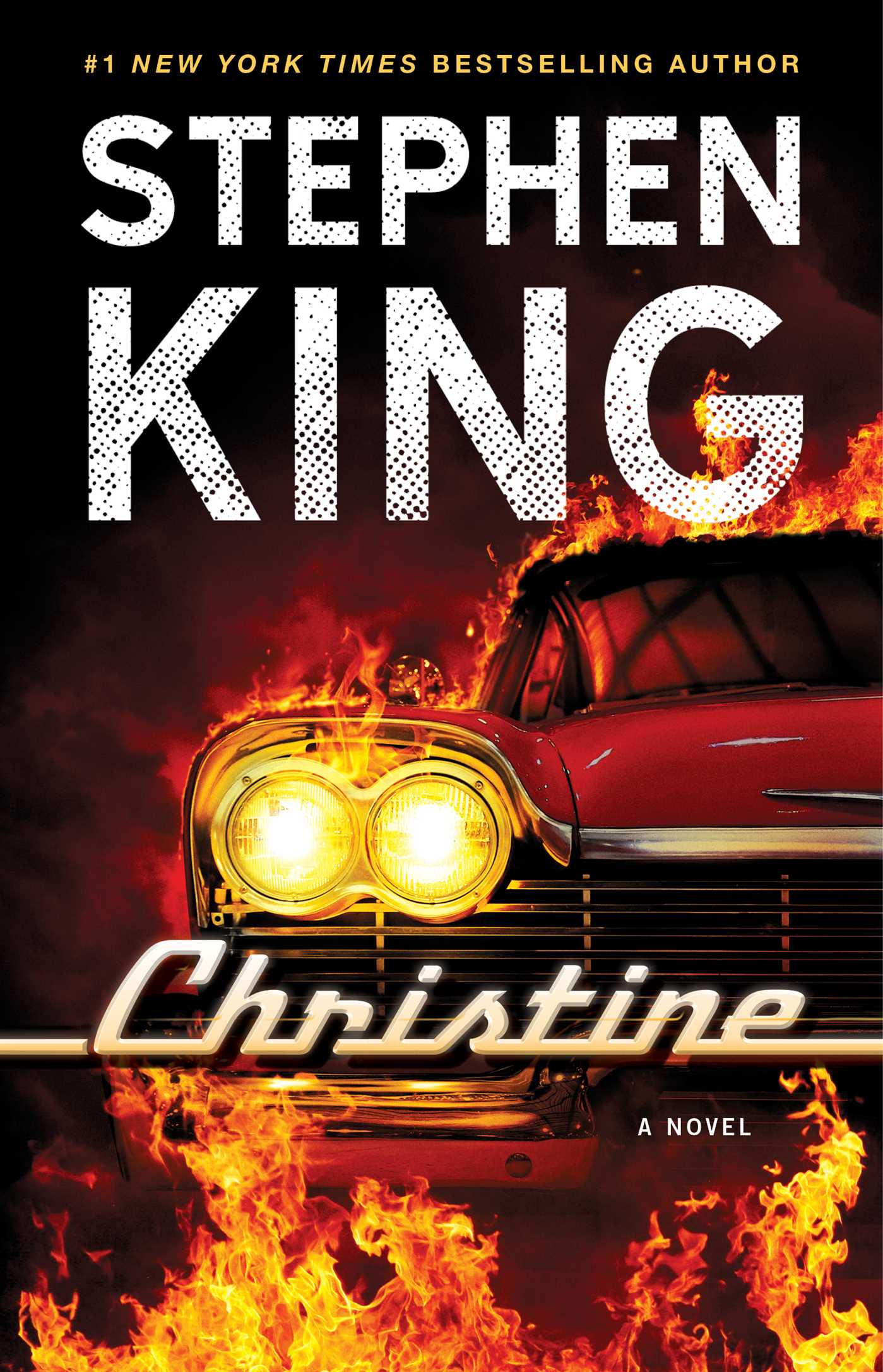
Christine by Stephen King 1984 / 736 pgs. (184,000 words) Horror
The most famous horror car in history, Christine, a 1958 Plymouth Fury. Painted Red and White, which Plymouth never offered. King takes us on an automotive adventure that changes horror. At first, as you read about this car, you think Christine is possessed by the devil or a demon of some type, alas dear reader, you would be wrong, just as I was.
Arnie falls in love with Christine at first site. She is badly falling apart, a car that has been sitting and neglected for many years. It should have been sent to the junk yard, destroyed, and recycled. Something about her infatuates him. Something that causes him to do anything to purchase her from her original owner, an Army veteran named Roland LeBay. LeBay hates everything and everyone. Although he loves Christine. As he does everything for the car, his family suffers from his desires for the car. His wife and daughter die within Christine. After making the deal to sell Christine to Arnie, LeBay dies, and the true power of the car becomes known and starts its deadly reign of death and destruction.
This novel is narrated by Dennis, Arnie’s best friend. As Dennis states, he wrote a reflection of events five years after the final act and also as a record in case something happen. He wrote it after reading the paper that the last surviving member of Buddy’s gang died when a car crashed though a wall killing him. Just like, Pet Cemetery, King leaves us wondering, is there more to come.
I really enjoyed reading this novel. It is on the list for a recommended book by King to read. Not at the top of the list. However, its one that would not disappoint a new reader.
Rage by Stephen King 1977 / 211 pgs. (54,176 words) Psychological Thriller
This was the first book King published under Richard Bachman. An interesting fact about this specific novel is it is out of print by request of Mr. King himself. Why did he do this? The following narration should clearly define the answer to why.
Charlie is a senior in high school who is called into the principal’s office to discover his fate after attacking a chemistry teacher with a pipe wrench. Once the verdict is read, transfer to Greenmantle Academy, Charlie mouths off to the principal and is immediately expelled from school. After arriving at his locker, he takes the gun and extra rounds he brought, sets the rest of the contents on fire, and closes the door. While smoke billows out of the slots in the locker door, he walks into a classroom, shoots the teacher in the head, and takes the class hostage. He kills another teacher who bursts into the classroom, wondering why they do not evacuate while the fire alarm is going off.
After the fire is out, the principal, a psychologist, and the local sheriff talk to Charlie over the intercom system, asking him to release his fellow students. He refuses and plays mind games with the adults while talking about “Getting it on.” Much of the novel is about Charlie and his fellow students talking about challenges that many youths take on during their most impressionable years, High School. From the physically challenged to the jock who is a cowered inside and uses his aggression against others to hide it. Even sexual, or lack of, experienced is shared in the classroom while police and others wait outside the school for Charlie’s next action.
Naturally, I do not want to give away the ending. As one can deduce from the narration, why Mr. King asked his publisher to stop printing the book. After several school shootings, one of which reportedly Rage was in the locker of one of the shooters, Stephen King stated he no longer wanted the book in circulation for obvious reasons.
This book is just more than just teens talking in a classroom. It is also about how many teens feel growing up in High School. It is a deep dive into youth’s challenges in school as they grow up, build an identity for themselves, and determine where they will go next on this fascinating journey called life.
I enjoyed this book. However, given the subject, for many, this could be a very challenging or not disturbing book to read, especially with the school shooting at the beginning and the hostage situation in the classroom. It is not an easy book to find. Since I am reading all of King’s novels, it would not be a complete list without Rage.
The Island of Dr. Moreau by H. G. Wells 1896 / 153 pgs. (43,183 words) Sci-Fi, Fiction
A classic by H. G. Wells. Pendrick, a biologist, is found after a shipwreck by Dr. Montgomery. Dr. Montgomery helps Pendrick gain strength as he is transported to an island. After arriving at the island, Dr. Montgomery takes his cargo with the animals and heads out to the island. Pendrick is kicked off the boat by the captain and drifts onto the island. This is where he is introduced to the Island of Dr. Moreau and his nightmare creations.
Dr. Moreau is a vivisectionist that was banned from practice in England. He came to the island to continue his experiment. The creations from his experiments inhabit the island, and Pendrick encounters them as he is confronted with several living beings. They are a blend of different animals that have human instincts, including speech and thought.
The book is a narration of Pendrick and his brief time on the island and escape. It is a fascinating insight that almost feels like a youth trying something that he wants to do but does not want to ask if he should.
This is a fast read; it only took me a few hours to read. It would not be the first H. G. Wells novel that I would recommend. That is The Time Machine.
All The Presidents Men by Carl Bernstein and Bob Woodward 1974 / 368 pgs. (92,000 words) Political/History
When I started this book, I thought it was a play-by-play of what happened at Watergate and how the President of the United States fell from grace. I was delightedly wrong in my interpretation of the subject of the book. While the Watergate break-in in 1972 serves as the background of the book and is the focus of the circle of events, the book is the experience of Bernstein and Woodward as they navigate in their investigation of the break-in.
The book naturally starts with the break-in and wiring of the Democratic National Headquarters at the Watergate Hotel. When Bernstein is called to write about the break-in, he is upset because he hoped he was finally moving away from reporting these common cases. Little did he know what he was about to uncover.
Woodward is teamed up with Bernstein at the start, and both do not want to work together. As the story grows, so does their friendship. The book builds from the discovery of a phone number for H Hunt at the White House in a phone book for several of the thieves. Also, one individual, McCord, was prior CIA and FBI. These simple facts start to grow the case from a simple break-in to how high the conspiracy goes.
The book also builds on all the trials, errors, and tribulations that Bernstein and Woodward experience as this continues the investigation into Watergate, including the few times they felt their lives were in danger. The most famous individual in the case of Watergate, Deep Throat, is introduced in the book, although it doesn’t reveal who he was.
The novel does not end with Nixon resigning. It ends at the state of the Union, 1974 when Nixon stated he would not resign. The follow-on book, The Final Days, goes into the events that lead up to Nixon’s resignation. That will be read later.