The Return of the King by J.R.R. Tolkien 1955 / 416 pgs Epic Fantasy
The conclusion of the epic, The Lord of the Rings, doesn’t disappoint! Picking up from the end of The Two Towers, Book V moves along with Gandolf and Pippen riding into Minas Tirith. Tolkien describes the city and every layer of it, giving the reader a wonderful picture of this vast city with seven layers and meanings. The current Steward, Denethor, was slowly going mad. Boromir was his favorite son and set to take his chair; what is not understood until later is that Denethor was using a Palantir. As the story slowly but interestingly builds in narrative, Tolkien uses Book V to continue world-building. Several chapters are just conversations between characters giving background information about past times or even the city’s rules. The Battle of the Pelennor Fields is epic, yet only one chapter; however, it is a chapter! This chapter made my hair stand when I read,
“But no living man am I! You look upon a woman. Éowyn I am, Éomund’s daughter. You stand between me and my Lord and kin. Begone, if you be not deathless! For living or dark undead, I will smite you, if you touch him.” – Tolkien, J. R. R. The Lord of the Rings.
After this chapter, much of the rest of Book V is about the eventual rise of Aragon to King Elessar. Also, the great debate, the attack at the Black Gate that will divert Sauron’s attention from Frodo and Sam. Leading into Book VI, focused on Frodo and Sam and the eventual fall of the Ring into Mount Doom. After the fall of Sauron, the narrative brings the remaining members of the Fellowship back together for the crowning of the King. Then, as the Fellowship breaks upon their various paths, the Hobbits have one last quest to take back the Shire.
Once the narrative picks up in The Two Towers, this is an epic tale that goes. The details and world-building are stunning! The aspects you don’t see in other books make it extraordinary. For example, Gandolf, naturally, is known by many names depending on the region he is dwelling. While residing at Minas Tirith, they called him Mithrandir. Even the appendix has a vast world-building, including the language used.
Naturally, I would absolutely recommend this book to anyone. It is stunning. I would forewarn, get past Tom Bombadil in The Fellowship of the Ring, as the narrative starts slow; however, as it picks up, it goes, and you don’t want to put it down. When I started The Two Towers, I wanted to finish the whole series, not to have it completed, because it was that good! Also, I would recommend having the soundtrack to LOTR or The Hobbit playing in the background sometimes; it makes the scene you are reading very interesting.
The Two Towers by J.R.R. Tolkien 1954 / 352 pgs Epic Fantasy
Part two of the epic, The Lord of the Rings, doesn’t disappoint! Picking up from the end of the Fellowship of the Ring, the broken Fellowship continues the quest on their separate paths. Aragon, Gimli, and Legolas hunted down and found Pippen and Merry, who Orcs took prisoners. During their travels, they find the Riders of Rohan and also Gandolf the White. The party then goes to Rohan, and the great battle of Helms Deep is fought between the forces of the West and East.
Merry and Pippen go into Fangor and start their adventure with the Ent’s and meet Treebeard. After informing him about the current events in the East, the Ent’s gather and attack Isengard and tear down everything around it. Trapping Saruman in the Tower, they eat and smoke while the party with Gandolf arrives. They retell the story of how the Ents tore apart Isengard and isolated the wizard in the Tower.
Interestingly, book three is the first half of the Two Towers. Book four is about Frodo and Sam and their adventure into Mordor. With Gollum guiding them, they eventually reach the black gate, double back, and go into the forest where Shelob resides. Frodo is stabbed, and Sam takes the Ring. Frodo is found by Orcs and brought into a fort. This is the end with Sam believing Frodo is dead.
The pace of this book is fantastic. I didn’t want to put it down. It was thrilling, definitely making the completion of The Fellowship of the Ring worth the work. There isn’t only action in this book. As Tolkien takes many pages to build the back story and world-building, it’s not monotonous or boring in the entire read. I would absolutely recommend this book, as it was a fantastic section of the Lord of the Rings.
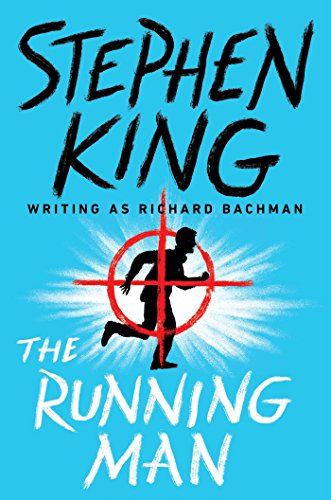
The Running Man by Stephen King 1982 / 416 pgs Dystopia
The Running Man, a game show set in a dystopian world like The Long Walk, entertains the masses. Benjamin Richards enrolls himself in the gaming network to earn money for his 18-month-old daughter suffering from pneumonia. In this time, the poor can’t afford simple doctor visits nor any medication that would take care of any disease easily remedied today. Richards can’t find work and his wife moved to prostitution to gain some income to try and survive each day.
After the physical, Richards is chosen for the marque event The Running Man—a game that he could make a lot of money for each hour he isn’t caught. After being given a 12-hour head start, he is on the run, with the whole nation hunting him down. It’s no-holds-barred. Anyone can be killed—the more deaths; even law enforcement is fair game, the more money Richards makes. Also, if a citizen catches or identifies Richards leading to his death, they receive a money reward. As everyone can make money off this game, naturally, this is the main game for the network.
The subplot is interesting as the top rich own the influence and power over the poor. The government and industry are destroying the environment and using the games as entertainment to cover up what is truly happening. Yes, as I read this, I thought this had a familiar ring today. During daily recordings, Richards tries to inform the people of the truth of what the government and network are doing. However, the network edits his videos to prevent the message from being broadcast.
I truly enjoyed the narration of this story. Although, it felt as though we went back to a familiar plot told from another game show that allows destitute people money in a dystopian world, The Long Walk. However, the message and how the game plays out are entirely different. What is more interesting is the chapters are a countdown starting from 100. Allowing the reader to question what will happen, “I know that X-many chapters remain. This is going to get interesting.”
I enjoyed the ending; although predictable, the twist is what I expected since this is a King novel, although I was hoping it would go a different path. I truly enjoyed it and would recommend it.
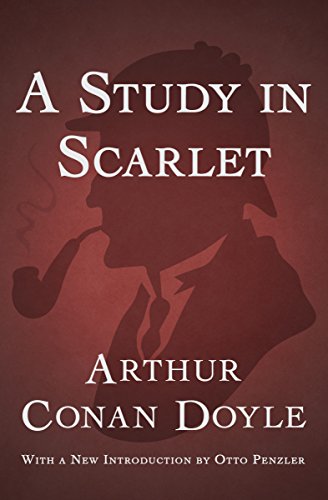
A Study in Scarlet by Arthur Conan Doyle 1887 / 176 pgs. Detective
Our first introduction to the super gumshoe Sherlock Holmes was the story that started it all. A Study in Scarlet, which was the name of the case that he investigated in this story. Also, our first background on how Dr. John Watson, a veteran of the Anglo-Afghan wars, is Holmes’s confidant. Through Watson, Holmes gives his enigmatic thoughts, allowing the reader to see inside Holmes’s line of deduction. Watson is the narrator, chronicler of Holmes cases.
How they end up living together is detailed in this story. All the juicy elements that we know of Holmes, smoking the pipe, the violin, and even the infamous use of the magnifying lens when investigating a scene are on full display. This narration is the first and excellent image of Sherlock Holmes.
Even the format of the story is exciting. We are first introduced to Dr. Watson, who is looking for a place to live after returning from the War. He is presented to Holmes, who requires a roommate to share the rent at 221B Baker Street. After introductions and moving in, Dr. Watson discovers Holmes is a consulting detective. His study of past murders, his infamous observations, attention to minute details, master of forensics, and even knowledge of past murders shows up in his logical reasoning for the who done it. A case came to Holmes that he initially didn’t want because detectives Gregson and Lestrade always receive the credit for Holme’s work is what this story leads into. After probing from Dr. Watson, Holmes picks up the case and correctly arrests the killer in the first seven chapters.
Section two is where the story takes a twist because for the following six chapters; it’s the background of the murderer, the why. Instead of a cold-blooded killer, this is a revenge story for lost love. After the murderer finishes his story, in the last chapter, Holmes explains to Watson how he discovered the murderer with all the clues that he deducted from the crime scenes. Dr. Watson naturally chronicles every detail in his journal as he finishes the narration of the story,
A Study in Scarlet is a short and fast read—exciting and simple fun. Never did I feel that the story drone on. When section 2 started, I thought it was another story. I wondered if it was a Holmes story, only to see the bigger picture once the key characters were introduced. Overall, it’s a delicious tale that I would recommend. It isn’t the most famous Sherlock Holmes book, The Hound of the Baskervilles, but it is a great introduction. Enjoy a good cup of coffee and an excellent book!
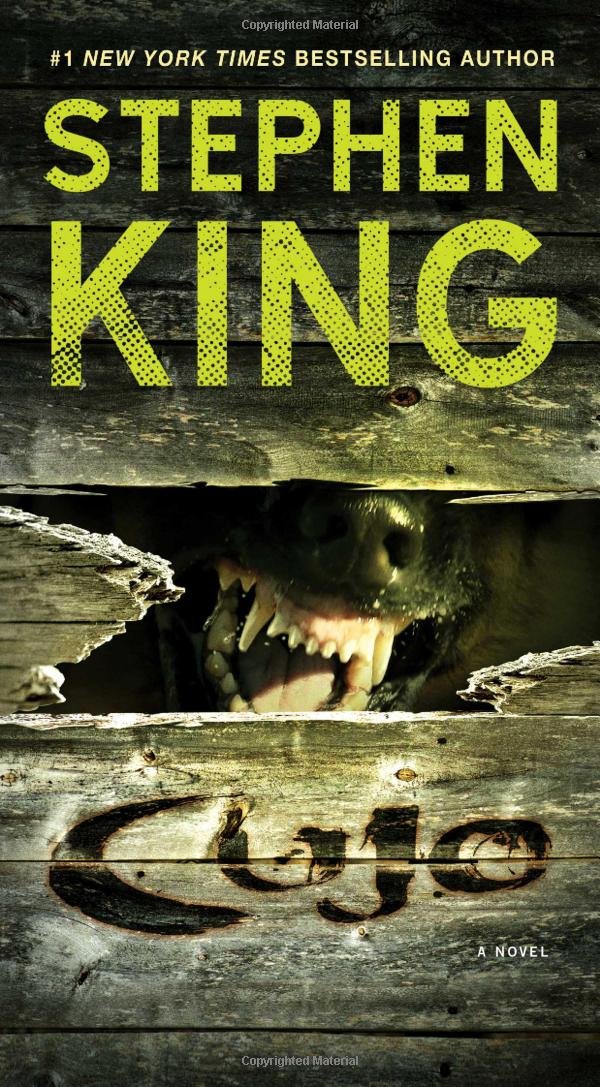
Another Mr. King classic. Many know the story. A lady and her son get stuck inside a broken-down Ford Pinto. Outside watching them, a rabid Saint Bernard named Cujo is ready to attack. A famous scene from the movie of the mother and son inside the car with a large dog slamming the door, trying to get inside the car and kill them.
Like all Stephen King stories, this will not end the way you hope. That, for me, is what makes reading Mr. King so interesting. You honestly don’t know how the book will end as they don’t end on a bright spot many times. This story is no different. What is fascinating is the narration from inside the dog’s thoughts. Mr. King takes us inside Cujo and tries to understand why the dog is attacking and killing the people he once loved.
At times, the story does drag on, although I did love the ending and not because I reached the novel’s end. Many times in the book, I kept looking at my time, wondering how much longer I had to read. The different plots were necessary for the overall story; sadly, the book drone on for many passages. The best subplot central to the book is with Donna, her husband, Vic, and their son Tad. Donna and Tad are stuck with a large dog waiting outside in the car. Also, Vic and his work partner Roger are also pivical to the story as it builds the human element. It changes the perspective of what is essential and not. The other subplot brings no meaning to the story; this is of Charity and Brett, who owns Cujo. Although much of the book is about them, there is no importance to the main plot; this is the drag on the whole book, the parts that made me look at the clock. The rest of the book is incredible. The entire segment of Donna, Tad, and Cujo is outstanding. It hits hard if you have kids of your own. It makes reading the narrative worth it.
Overall the story is good when you can bear through the rough sections. It’s not on my top 5 King books; however, it’s still a good read. I wouldn’t say avoid it. Understand, there is a lot of fluff in the book. If one can survive reading Moby Dick, one can enjoy Cujo!
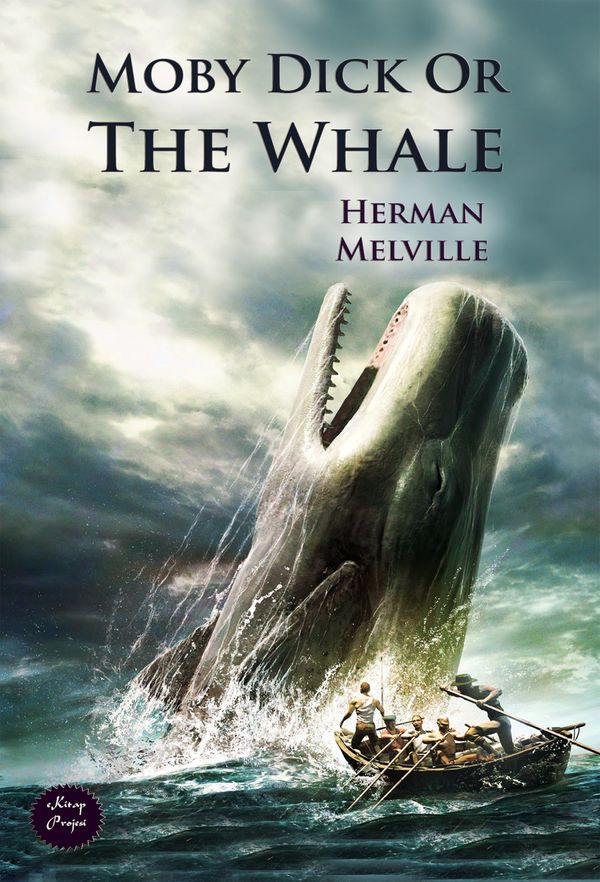
Moby Dick by Herman Melville 1851 / 378 pgs. Classic Fiction
“Call me Ishmael,” the infamous beginning of Moby Dick. The great American classic in literature. Countless great quotes come from this single book. Iconic characters that today play tropes in today’s entertainment. Specifically, Ahab, the monomaniacal Captain of the whaling ship Pequod. An individual is so focused on finding and killing the whale that he is willing to sacrifice everything, the ship, crew, and even his own life. Today, many people who have an obsession for anything at the cost of all are Ahab’s trope.
Many famous lines come from this classic novel, “Aye, aye! and I’ll chase him round Good Hope, and round the Horn, and round the Norway Maelstrom, and round perdition’s flames before I give him up.”. While reading this line, my inner geek remembered Khan and his variance of the quote “He tasks me! He tasks me and I shall have him! I’ll chase him ’round the moons of Nibia and ’round the Antares Maelstrom and ’round Perdition’s flames before I give him up.”. However, the keen eye knows he read this book because it can be seen on the Botany Bay book shelf. Yes, Star Trek II, is a modern telling of Moby Dick.
To write all the quotes would be my entire review. However, that is not why you are here, dear readers. Moby Dick is a narration by Ishmael, a sailor that desires to experience the Whalers’ life. In the beginning, Ishmael tells his story as a sailor and how the sea is always calling to him. Throughout his narration, he gives the story of many of the characters on the ship. The most infamous is Ahab, and how Moby Dick took his leg, and this is the seed for the fire that burns inside the Captain to hunt down the white whale obsessively.
Like many classics of the time, Melville describes and brings the reader into the world of whaleship warts and all in long narration. He describes in nauseating detail how a whale is dismembered, what parts are the most important, and those discarded after the grisly task is complete. It even goes into minute details about how a whaleship is run and the crew’s make-up. Enjoy a good cup of coffee and an excellent book!
Lopaka
NOTE: A little-known fact, Melville built the foundation for this book from the true story of Essex. That story is even more dark and gruesome than Moby Dick.
Frankenstein by Mary Shelley 1818 /240 pgs. Classic/Thriller/Sci-Fi
No castle, no digging up bodies and putting them together, and no lightning! Igor is not even a character in the story. Don’t allow all this to fool you; this is a thriller, and when it was written, it could also be a horror story or even a gothic novel.
Victor Frankenstein had visions of a possible future as he was creating the experiment. He wanted to cure all diseases and even cheat death. Studying pseudoscience and current scientific theories of the time, he discovered how to reanimate flesh. He worked long and created his man, and when he brought it to life, he realized the horror of his creation.
The entire story is told as a dictation. First, a ship’s captain letters to his sister in the U.K. and his current status of ship and crew stuck in the ice for the winter. Then, after witnessing a very large man on a dog sled going past his boat and following was a very frail man. After sickly Victor boards the boat, the captain proceeds to listen to his tale. In the middle of Victor’s story, the creation of the monster and the death of Victor’s young brother, William, Victor then reviews the tale that the demon tells Victor, a narration of a narration.
The tale continues, and Victor at first complies with the request of the monster to create a mate. Victor continues with philosophical thinking and internal debates that cause him to destroy the monster’s mate before she is complete, which, naturally, causes the monster to go in a rage. Then he exacts his revenge against his creator. Victor finishes his narration of the nightmare that the monster causes, and then the final words are from the captain to his sister.
Not what I was expecting. Although, it was a very delicious read. It doesn’t keep you on the edge of your seat and is a little predictable in places, and I was still curious about how it would end. I would definitely recommend this for a good read. A final note: Frankenstein is the name of the creator, the thing that we know as Frankenstein is called the demon or monster in the book.
War of the Worlds by H. G. Wells 1897 /287 pgs. Classic Sci-Fi
The Martians have arrived, departing Mars for a planet to colonize because the resources of their home are diminishing. They attack the U.K., taking out a small village and working towards London for occupation.
War of the Worlds is a good read, it’s very descriptive, and H. G. Wells builds a great plot with foreshadowing the instant conclusion of the war. Even the description of the Martians and why they evolved into their current form is a form of foreshadowing if you catch it. Wells Martians are not tall skinny, oval heads with big eyes like we envision Aliens today. They are more like large oval heads with a large orifice for an ear, big eyes, and tentacles that they use to move around and eat.
The Martians destroy mankind’s defenses and take over London and many parts of the world in the book. Civilization fights back; however, our weapons compared to the heat ray are minimal. The invasion was going bad for the human race when word arrived that the Martians were building a flying device. Once that was complete, the destruction of the human race would only be a matter of time.
The sudden ending, the disease that infects and kills the Martians, something that we have built an immune over time for some people in our current time, would seem a quick way out. However, in our history, disease from Europe almost wiped out many native tribes in the Americas. His use of the Red Weeds’ eventual demise builds for the conclusion that doesn’t killjoy the ending.
It’s a fun read; however, not a grip-you-by-the-throat-page turner. I would absolutely recommend it.
Lies My Teacher Told Me by James W. Loewen 2007 /464 pgs. History
What a fantastic read. Dr. Lorwen shows what has been missing in high school history classes for many years. How textbooks are just a memorization of facts, or lies as the title says, and doesn’t show the ugly side of American History.
When I was in school, I wondered why sections about Slavery, Reconstruction, even World War 1 and others are glanced over. We didn’t even reach Vietnam in my history class, and I’m sure that would have been a lesson that it was a bad war. Heck, even the US Constitution isn’t required reading anymore. I started learning how America truly was when I was in graduate school. It was eye opening!
It reads like American is the greatest nation and has no warts at all. We don’t really want to dwell on anything bad in our History, just the good. Even our heroes are without faults. We’ve all read the lie about Washington and the Cherry tree. Our great leaders never did have any bad thoughts or committed any bad actions.
Thomas Jefferson, who authored “all men are created equal,” owned over 300 slaves. However, is it taught in our history classes? Or do we still revere Jefferson as the 3rd president and important founding father that didn’t own any slaves?
This book is not an all-encompassing Lies book, there are many more that he doesn’t mention, and he even admits it in his second edition. The book’s point is we genuinely are not educated our youth, who will leave school and make decisions about the future of this nation based on false information.
I would recommend this book to anyone interested in an eye-opening view of a few of the challenging issues that we face in today’s society. However, be forwarded, you might get a little squeamish if you think America’s perfect.