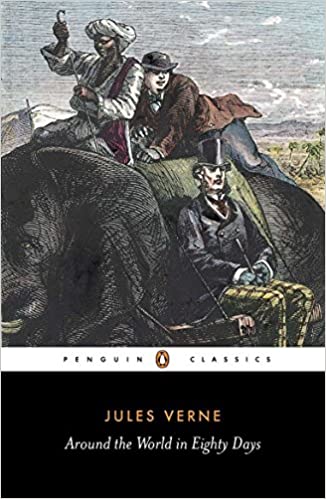
Around the World in Eighty Days by Jules Verne 1873 / 252 pgs Classic
It’s incredible how many classics start from a bet—Green Eggs and Ham, for example. Yet, a £20,000 (roughly £2,200,00 in today’s currency) wager made at a club and our hero, Mr. Philias Fogg, are off with his servant French Passepartout to journey around the world in eighty days.
The Journey would go east from London and utilize mainly Steamers and Trains. However, an elephant ride in India does change the story. As Mr. Fogg had the Journey planned out, it doesn’t go quite a planned as any incredible adventure does, and it goes off course several times. The team rescues a woman in India from being sacrificed in a funeral pyre. All the while, Mr. Fogg is being pursued by Detective Fix, who believes that Mr. Fogg was the thief that stole £50,000 from the Bank of England and desired the reward money.
This novel is a classic of Vernes that, once I picked up, I couldn’t put down. It is a beautiful read with twists and turns that keeps the reader on their nerves. He does world descriptions like Journey to the Interior of the Earth. However, not in nauseating details like 20,000 Leagues under the Sea. Just enough to make the story even more believable.
I would recommend this book for a good journey with Mr. Vene.
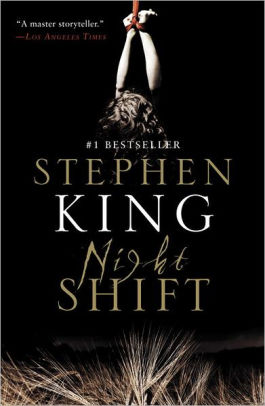
Night Shift is a collection of twenty short stories. Some of these stories appeared in magazines that Stephen King submitted to publish to make money before Carrie became a best seller. A few of these stories were made into movies, Children of the Corn, Truckers (Maximum Overdrive), Quitters Inc and The Ledge (Cat’s Eye), Graveyard Shift, and finally The Mangler. The Lawnmower Man was also a movie that just used the title to Stephen King’s story and nothing of the plot.
A few were also made into T.V. Mini Series. Some of the stories are the classic creepy suspense that King is famous for, and some are decent readings. The stories are in order, Jerusalem’s Lot, Graveyard Shift, Night Surf, I am the Doorway, The Mangler, The Boogeyman, Gray Matter, Battleground, Trucks, Sometimes They Come Back, Strawberry Spring, The Ledge, The Lawnmower Man, Quitters Inc, I know what you need, Children of the Corn, The last rung on the Ladder, The man who loved Flowers, One for the Road, and finally, The Woman in the Room.
Of these, my favorites are Quitters, Inc, Battleground, The Ledge, and Children of the Corn.
Quitters, Inc is about Morrison, a man who wants to stop smoking. When he sees a friend at the airport that he attended college with and smoked, he asked him how he quit smoking. He mentioned Quitters, Inc. Morrison contacts them, and they state they can guarantee they can stop him from smoking. They say the method is they torture and beat the family until he stops. After ten failures, the final solution is used….
The battleground is about a guy that receives a G.I. Joe box that little green men with helicopters, jeeps and even a rocket launcher comes out of to kill him….
The Ledge is a story about a tennis pro that is caught sleeping with a wealthy man’s wife. The Richman makes a wager that the tennis pro could walk around the ledge of the 26 stories building, and he would get $20,000, the wife, and his freedom. If he doesn’t, the police will arrest him with the heroin that was stashed in his car….
Children of the Corn are about children in a cornfield in Nebraska that kill any adults who enter their small town and anyone over 18 years old, including the children raised in the corn….
I would recommend this collection of stories to read. It’s not on top of my King list, but some good ones will make your skin crawl.
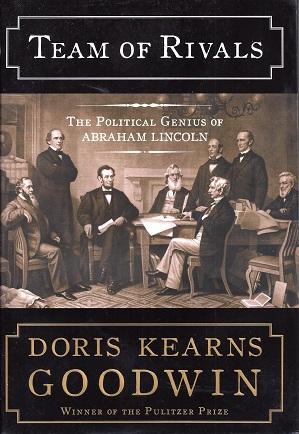
Team of Rivals: The Political Genius of Abraham Lincoln by Doris Kearns Goodwin 2006 / 917 (755 reading) pgs History
One hundred fifty-six years ago, today, at 10:14 pm. John Wilkes Booth pointed a .41 Deringer at the back of President Lincoln’s head and shot him. Similarly, the RMS Titanic, which struck an Iceberg at 11:40 pm on the 14th of April, didn’t sink until the 15th of April at 0220; Lincoln died 9 hours later, the 15th of April 1865 at 7:22 am. As I read about the Assassination, it didn’t dawn that I was reading it on the anniversary. The death of Lincoln is naturally the final chapter of a book about him. What a book it is!
Team of Rivals focuses on Abraham Lincoln’s rise in politics and his ability to use his allies and enemies at their most significant potential. He utilized his storytelling gift by employing the exemplary anecdote that would best illustrate what he means and is trying to convey. He would bring people together and also put them at ease. Lincoln understood better than most the power and influence he had as President and used every means to defeat the Confederacy and unite the US as one nation. Using the best people, even his rivalries, in the best positions, Lincoln built an army, rally them around him, and kept the US economy moving forward.
Team of Rivals is written in loose chronological order. It starts with the four main characters that will impact the Lincoln administrations running of the war. These are three men that all felt they should be the President and all ran against Lincoln in the 1860 election. William Seward, who would become the Secretary of State. Salmon Chase, Secretary of the Treasury and then Chief Justice of the Supreme Court. Judge Edward Bates, Attorney General. Finally, also a family that was very influential in the mid to late 1800’s, the Blair’s. Interestingly, this family-owned what is known today as the Presidential Guest House, the Blair House.
The book details these families, where they come from, what influence they had, and why they felt they should be the Republican nominee for President in 1860. Once Lincoln won the election, the story naturally moves through the civil war, focusing on the Lincoln administration. The fight between Gen McClellan and Lincoln on how the war should be conducted is spelled out nicely in this book. As the war has its ups and downs, it shows the impact it has on Lincoln, and the decisions and the timing for each as Lincoln was a master of political timing. Naturally, the last chapter is what is already mentioned, the Assassination.
This story is beautifully told and is an outstanding read. If you want to know the Civil War from the battles and impacts, I would recommend Battle Cry of Freedom. If you want to know the inside story, read Team of Rivals. It’s not a seriously dense history book. It’s a beautiful story told in a straightforward narration. Naturally, I would recommend this book!
Theory of International Politics by Kenneth N. Waltz 1979 / 252 pgs Political
The title says it all it is about the Theory of International Politics. Kenneth Waltz’s book is trying to strengthen the neorealist approach to the Theory and further refine it. However, over time, it has been taken apart by Liberalist because of the peaceful collapse of the Soviet Union and other events.
If you are interested in International Politics/Relations, this is a must-read. However, like his other book, Man, the State, and War, it’s a very dense book that I would have to re-read for myself to truly get the emphasis. However, I did enjoy this as it’s naturally within my field of interest. However, if you are not interested in this subject, don’t pick up this one as you will be bored very fast!
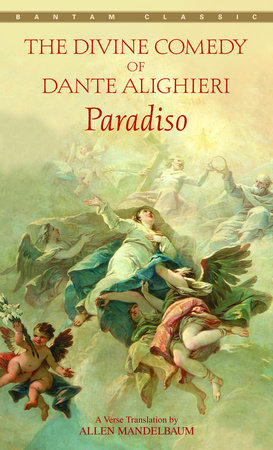
The Divine Comedy: Part 3 Paradiso by Dante Alighieri 1472 / 368 pgs Classic
The Divine Comedy isa very long poem broken into three parts Inferno, Purgatorio, and Paradiso. Dante and his guide Virgil, another poet who wrote the classic Aeneid, travels through Hell, Purgatory, and Heaven to reunite Dante with his dead girlfriend, Beatrice in Heaven. Essentially, The Divine Comedy is a love poem full of horror, brimstone, and punishment.
Paradiso is Heaven. There are ten hemispheres, each called Heaven, to Paradise based on the celestial skies believed to exist at the time. Otherwise, trying to understand why the Sun is the 4th Heaven would make absolutely no sense.
Paradiso is Dante meeting all those important souls who reside in the different levels of Paradise and listening to what they think is wrong with the Church. Like St Peter, St Thomas, and St Bernard, many of these people go on long diatribes about their disappointments with the current state of the Church and what needs to change to get it back to where they envisioned it. Dante and Beatrice leave the earth and explore the solar system and visit the Heavens before meeting with God himself.
Heaven I. The Moon Heaven II. Mercury Heaven III. Venus: The Lovers Heaven IV. The Sun: Theologians and Fathers of the Church Circle I. St Thomas of Aquinas Circle II. The Franciscan Order Circle III. The Resurrection of the Flesh Heaven V. Mars. Martyrs and Crusaders that died fighting for the True Faith Heaven VI. Jupiter. Righteous Kings and Rulers Heaven VII. Saturn. The Contemplative Heaven VIII. Fixed Stars Heaven IX. Primum Mobible Heaven X. Empyrean River of LIght Much more, naturally, is in this book, the Angels’ hierarchy, a description of God himself…which is three rings representing the Trinity.
This book, like the others, is a long poem. Very dense and hard to follow. I’ve had to take my notes a few times and compare them to other reviews to see if I’m on the right track because sections in each of the books become very weird. For example, the Garden visit at the end of Purgatorio, which has to do with a chariot that gets smashed and attacked by an eagle with a fox eating the smashed wood, made me wonder what drugs I needed to understand this scene. However, I also understand that many symbolic representations made more sense when this was written than today.
If I had to make a recommendation, I would only read Dante’s Inferno. That one was fascinating and not as challenging to read as the other two. I’m very glad that I read this classic, and looking forward to another classic soon. For tomorrow, I’m going to enjoy something a little more modern.
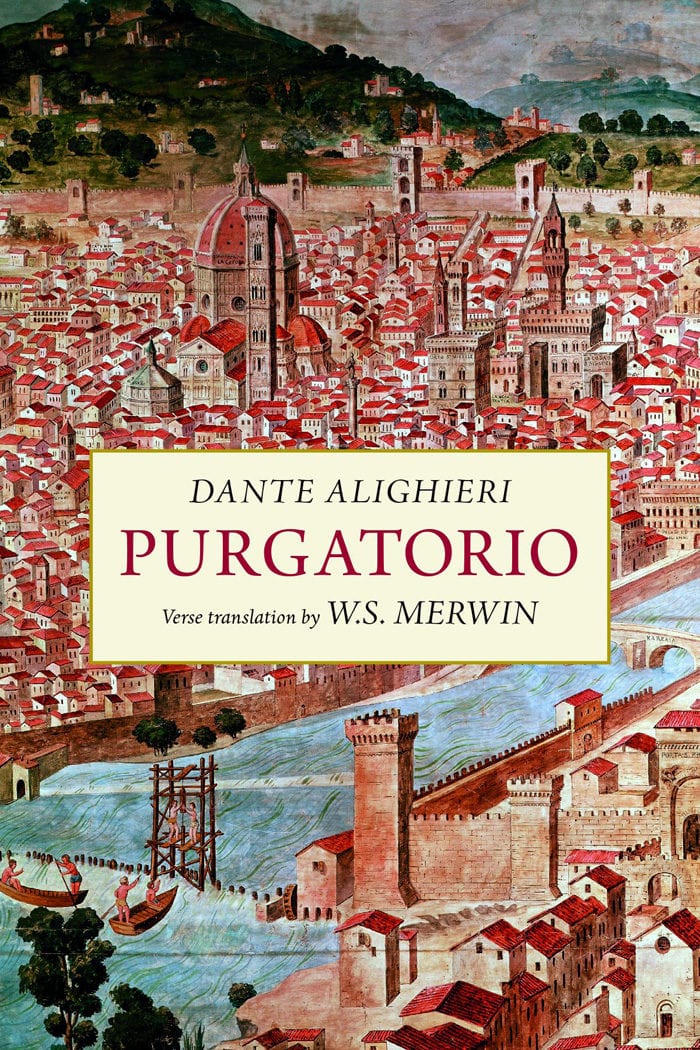
The Divine Comedy: Part 2 Purgatorio by Dante Alighieri 1472 / 181 pgs Classic
The Divine Comedy isa very long poem broken into 3 partsInferno, Purgatorio, and Paradiso. Dante and his guide Virgil, another poet who wrote the classic Aeneid, travels through Hell, Purgatory, and Heaven to reunite Dante with his dead girlfriend, Beatrice in Heaven. Essentially, The Divine Comedy is a love poem full of horror, brimstone, and punishment.
Purgatory is part of the passage that Dante needs to transverse to eventually find Beatrice. He must go through each Circle. Purgatory, in Dante’s vision, is broken into seven Circle’s. Purgatory’s Circles are themed after the deadly sins. For each sin, there is a punishment designed to symbolically represent the sin they committed in the flesh. However, unlike Hell, ones soul eventually rises to Paradise.
Note: Date has many, many side conversations with many people to talk about each sin and how it’s represented. There are 33 Chapters and only seven circles. It takes the first nine chapters just to get to the mountain to start the climb
To get the first Circle, They travel across the large frozen lake and are challenge by Cato of Utica. They are guided to the circle by an angel and meet with those who had presentence right before they died. These Sinners have to wait until they can walk the path of Bismantova (the Mountain).
Virgil and Dante are told they can travel only during the day. They wait and eventually got to the first circle after a lot of talks with Angels and people.
Circle I. The Proud: The condemned arebent over holding large stones.
Circle II. The Envious: Their Eyes are sown shut.
Circle III. The Irascible: Walk around in a blinding smoke.
Circle IV. The Slothful: Engaged in ceaseless activity.
Circle V. The Avaricious and Prodigal: Forced to lie on ground face down.
Circle VI. Gluttonous. Food just out of their reach and they are emaciated.
Circle VII. The Wanton. Standing in a wall of Fire.
Circle VII is in chapter 25, at this point Dante walks into the Terrestrial Paradise and finally is reunited with Beatrice. Sadly, Virgil must leave because he has to go back to Hell. Dante get’s talked to by Beatrice for the next 8 chapters and then finally they enter the garden and start into Paradise.
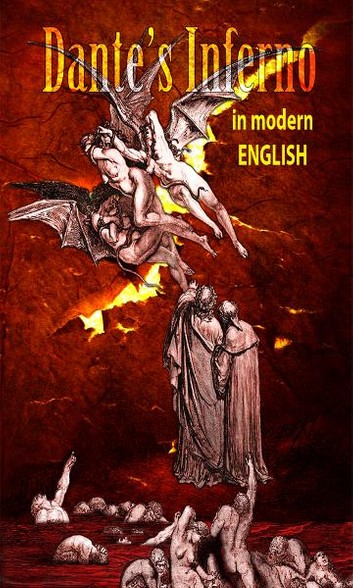
The Divine Comedy: Part 1 Dante’s Inferno by Dante Alighieri 1472 / 251 pgs Classic
The Divine Comedy is a very long poem broken into 3 parts, Inferno, Purgatorio, and Paradiso. Dante and his guide Virgil, another poet who wrote the classic Aeneid, travels through Hell, Purgatory, and Heaven to reunite Dante with his dead girlfriend, Beatrice in Heaven. Essentially, Divine Comedy is a love poem full of horror, brimstone, and punishment.
The Poem itself is interesting; however, also understanding the background of why this was written is very fascinating. However, dear reader, I won’t bore you with many details as you could, if you so choose, Google search and watch many videos and read all about it. I’ll just whet your appetite with a few highlights.
Dante was on the run from Florence as it was taken over by the Holy Roman Empire during a long dispute between the HR Emperor and the Pope on who was in charge.
Dante had a grunge with many Popes and how they were conducting the church, including the current one of his time, and they make an appearance in the Inferno.
Dante was Italian, which is rooted in Roman history, and despises Greece.
Dante was married, not to Beatrice; Beatrice was a girl he meets maybe twice and would be considered a youth crush. However, he never forgot her after she died, and this is why he used her in this Poem.
Now, the palate is pleased. Let’s dive into HELL. (That doesn’t look right, does it)
The Inferno is part of the passage that Dante needs to transverse to get to Beatrice. He must go through each level…and there are many levels to this place. Hell, in Dante’s vision, is broken into Nine Circle’s. A few of these Circles have semi-levels broken within. They take the overall theme for the level and break it down, as we shall see. For each sin/crime, there is a punishment designed to symbolically represent the crime they committed in the flesh and now are eternally suffering for it.
To get to the first Circle, the party must cross the river Acheron via the boat piloted by Charon, Ferryman of the Dead. At the gates, they see the sign that states, “All hope abandon, ye who enter in!” – Dante’s Inferno
Circle I. Limbo: Unfaithful and Unbaptized. They are just stuck, waiting. Nothing happening.
Circle II. Lust: Here, one is greeted by Minos, King of Crete and Judge of the Dead. Here is where ladies like Aphrodite and Cleopatra are residing. Again, just stuck waiting. However, if you must get stuck in hell with Aphrodite and Cleopatra, I’m sure that some wouldn’t consider it torture.
Circle III. Gluttony: The punishments begin! This Circle is guarded by Cerberus, the three-headed hound of Hades. It’s constantly raining.
Circle IV. Wealth [Greed]: Everyone is pushing large boulders to the top of a hill. After they collide in the middle, one side screams “Horde Possession and Money” and the other “Spend freely neglected their value.”
Circle V. Irascible and Sullen [Wrath]: The Circle is the River Styx. In the river, the people are constantly attacking each other. To cross the River, Dante and Virgil have to catch a lift from Phlegyas.
Once reaching shore, our adventures see the city of Dis with its large gates. The first V circles are minor hell. The real fun begins beyond this gate! There are astounded by some demons who try to bring Medusa to turn them to stone. However, an Angel comes down and stops this action and opens the gate to allow our protagonists to continue.
Circle VI. Heretics. Locked in burning tombs.
Circle VII. The Violent. Lovely land with a river of boiling blood flowing through it with Tyrants and Pillagers condemned within. Alexander the Great is here.
As one keeps moving through the Circle, they go into a land of leafless trees that the souls of Suicides are condemned. Any breaking of any branch caused great pain and agony. Harpies continuously feed off the trees.
Finally, they enter a vast desert with raining fire for the souls of those that committed acts against God, art, and nature.
Circle VIII. The Fraudulent and Malicious. This Circle is carved into 10 Bolgia’s (long ditches)
Bolgia I. Seducers and Panders: Condemned walking around and being whipped continuously by demons
Bolgia II. Flatterers: Condemned covered in shit
Bolgia III. Simoniacs: Buried head first with only their legs and feet uncovered so their soles can be burned. There are many Popes buried in the same hole, one on top of another in this method.
Bolgia IV. Soothsayers [Sorcerers]: Heads on backward.
Bolgia V. Peculartors [Politicians]: Condemned are in a lake of boiling tar guarded by the Malebranche that lift them up out and munch on them.
Bolgia VI. Hypocrites: Wear Orange cloaks made of lead.
Caiaphas is here crucified to the ground, so everyone that past must walk on top of him.
Bolgia VII. Thieves: They are in a pit of snakes that bite them and either change them into other forms or cause them to fall and be destroyed in flames, only to be reborn and bitten again.
Bolgia VIII. Evil Counselors: Condemned is ablaze in individual flames.
Bolgia IX.Schismatics: Condemned are continually being chopped, split, or pierced only to heal up and go again.
Bolgia X. Alchemists. They are suffering from many diseases.
Circle IX. Traitors: Like the previous Circle, this is broken into 5 divisions. Also, interestingly the entire Circle is the frozen lake of Cocytus.
As Dante and Virgil reach the final layer, they find three giants, two frozen and one not on the outer layer. The free Giant lowers them into the last Circle.
Division I. Caina: Named after Caine, this is Traitors to the Kindred. Frozen in the ice up to their necks, but their heads can rotate.
Division II. Antenora: Traitors to their country, Frozen to their heads, and they can’t move.
Division III.Ptolomaea: Traitors to the friends. Frozen in the ice.
Division IV.Judecca: Traitors to their Lords and Benefactors. They are just frozen in the ice.
Lucifer – Reserved for betrayers to God himself: Frozen up to his waist in ice but moves above. He has three faces on one head. Large bat wings always flapping, keeping the wind and cold air moving. His three mouthes are reserved for the most heinous of sinners. On the left is Cassus, and on the right is Brutus. The center is Judas Iscariot.
To leave Hell, Dante and Virgil climb down and then up Satan’s leg to break through and see the Mountain, which is part 2 of their journey.
This is just a summary of what the Inferno is. Many times Dante stops to have a conversation with someone. A few times, they have to have guides or even mounts to get them through a circle. It took me about 4 days to read through this part. The poetry has no rhyme to it, and it’s ancient compared to more modern poetry. I often had to slow down and reread a line to ensure I understood what Dante was saying. This is a very dense reading. However, it’s delicious to challenge one’s mind with complicated writing. This is a classic that should be read.
Naturally, I started Part II already. That will be the next review.
The Moon is Down by John Steinbeck 1942 / 188 pgs Fiction
The Moon is Down is not one of Steinbeck’s best-known classics. It starts with the end of an invasion by an Army in a small town. The invaders are a small force. However, because the invaded nation enjoyed peace for the last 400 years, they didn’t have a military response. The entire story is focused on the small town. The invading force states to the Mayor they are there for only the coal that is needed. They wish for peace and just require the town citizens to mine the coal.
The Colonel leaves the Mayor in a title role to show that the people are in charge. A traitor in the small village wants the Mayor’s position for himself, so he helped the invading army before they arrived with intelligence. Throughout the story, he connives his way, including going over the Colonel, talking to the Capital to gain authority that he feels he deserves.
During the invasion, an officer is killed ordering a citizen to work in the mines. This causes the invaders to hold a trial they want the Mayor to preside over. This is a tactic used to show that the Mayor is in charge and order should be kept in the town. The Mayor doesn’t comply but shows the convicted his support as his death sentence is carried out.
Citizens escape to England, and help is asked for as resistance is started to make the task impossible for the invaders. When the resistance begins, the Mayor and town doctor are arrested, and the Mayor is led away for his execution. The Colonel understands that this is an endless cycle as you kill one leader; another will step-up as long as people resist.
As I read this, I kept thinking that this book was written in the second world war about the resistance. I discovered that this book was read by French’s Resistance (Norway, Spain, Netherlands, and more). After understanding the impact, I believe that this short story should be read as a book that inspired many to resist the juggernaut that occupied their nation.
Would I recommend it? Absolutely. It is a short read. Only took me about 3 hours to complete. It’s not close to a masterpiece as his other works. However, understanding what it was saying at the time really shows the importance of literature.
The Dead Zone by Stephen King 1979 / 515 pgs Science Fiction Thriller
When I started this book, I thought it was going to go in a different direction. I did not research the book, figuring with ESP and The Dead Zone, it would be a horror novel. The assumption was a significant error on my behalf. Additionally, it took a different turn than I was expecting. At the beginning of the book Johnny Smith takes his girl on a date to the fair. They are heading out at the close of the fair when a Wheel of Fortune game is closing and hoping to get a few last bucks; the hosts ask them to take a chance. While playing, Sarah notices Johnny has an odd look when the wheel goes around and lands on his bet. She starts to get sick, and Johnny takes her back to her place. Then, catching a cab home, he is in an auto accident and put into a coma for the next four ½ years. This is the first sixty pages of the book.
I honestly thought that the next chapter would be Johnny waking up and rediscovering everything that he missed for many pages. Including Sarah getting married and having a kid. Using his ESP powers to take out the husband and get Sarah back, which fails in the end horribly. Wrong! The next fifty-five pages are what is going on around him and how it impacts his parents and Sarah. His mom is a bible-thumping evangelical that will do and believe anything that will bring her son out of his coma. In these pages, we are introduced to the two main baddies that will further develop the plot.
Page 115, Johnny awakens and then joins the world as he and they discover his power of clairvoyant visions. Johnny, when he touches someone or something, sometimes has visions of what is about to happen. For him, it is a curse, as naturally, people either think of him as a snake-oil salesman or a gift from God that can answer the mysteries from their lives. Many thinks of him as a freak and do not want him to touch them as they do not want him to see anything about him. For many visions, there are many things he cannot see, he says those are in The Dead Zone.
Eventually, the plot builds as Johnnys asked to help a serial killer case. Then a vision after touching a politician that shows they become President of the United States will cause the U.S. to go into a Nuclear War. The philosophical, moral question asked, if you could go back to 1932 Germany, would you kill Hitler? From here, the plot twists start, and one can only hope that Johnny makes the right decision for himself and the fate of millions.
The Dead Zone does not grip you like It. It has an easy pace that makes it a challenge to figure what is happening, and then page 458 makes the reader think….no way. From here, you must finish it because you cannot believe that King would do this to Johnny. It is the classic build-up that leaves you in suspense until the climactic moment.
Would I recommend The Dead Zone? It’s not on my OH YEAH list like The Shining or It. It is a steady read, not horrible or boring. It is not horrific like The Eyes of the Dragon. I would say sure. However, it is not on my King recommendation list.
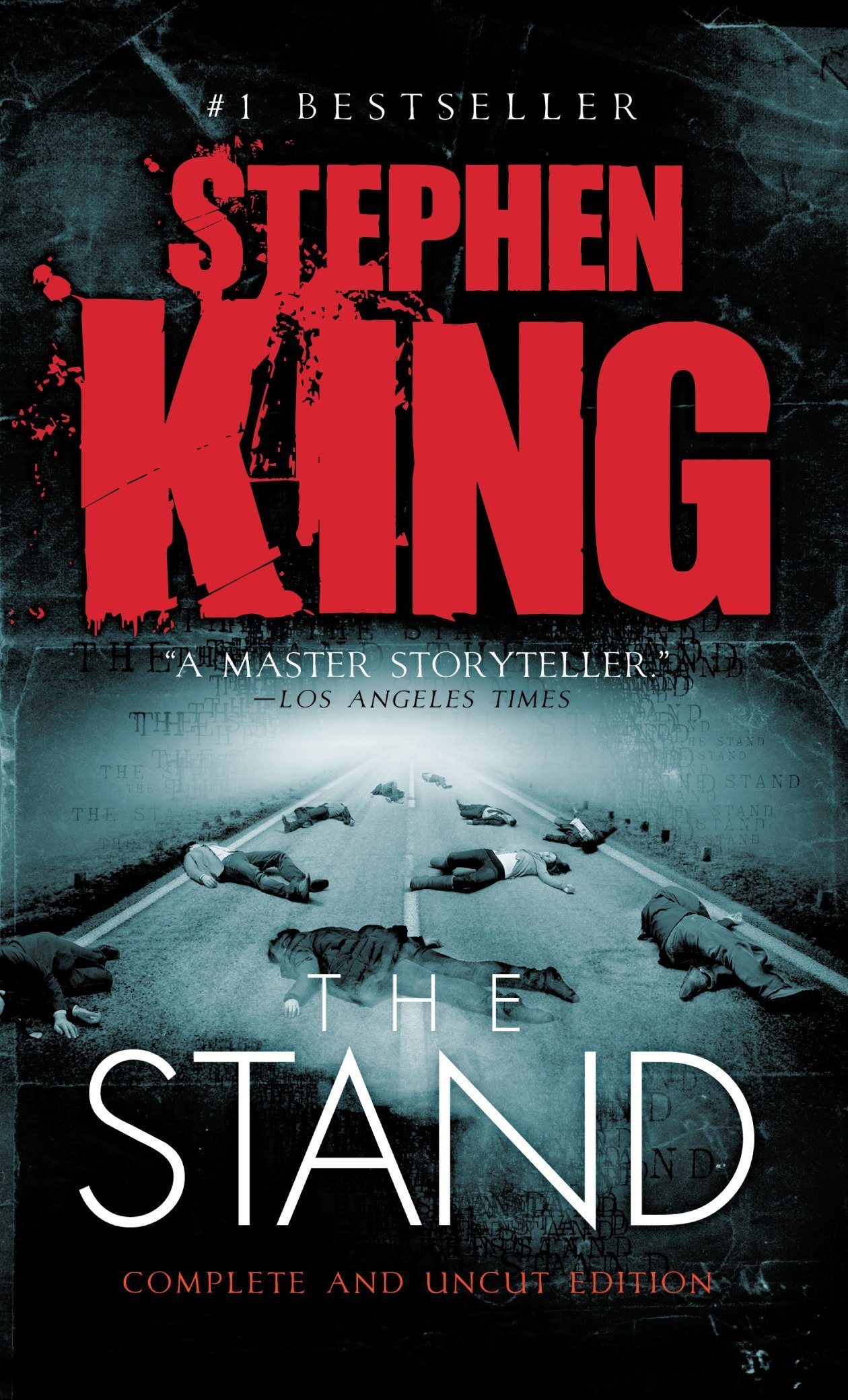
Mr. Kings’ Magnum Opus. What many people consider his most significant work. It’s the classic story of good versus evil. Funny enough, reading it in this time with what is going on around us makes one laugh. A virus, Captain Tripps, a deadly variation of the flu, is accidentally released from a lab in the United States and kills 99.4% of the human population.
Much of the novel is the gathering of survivors that eventually come together in two sectors of the United States driven by visions from two people.
In the Good Corner, at the age of 108, Mother Abagail. A figure for God’s own voice that guides survivors to Bolder, Colorado.
In the Evil Corner, the most infamous Randal Flagg. An evil shapeshifting, superpowered demon started in The Stand but is also in a few other books like Eyes of the Dragon and The Dark Tower, making his stand in Las Vegas. It did produce a chuckle knowing that Vegas was chosen since it is also known as Sin City.
Flagg is fantastic in this book. He is pure evil with a power-lust like no other.
After much of the gathering in the two locations, the plot starts to level, showing how law and order are run in two different places. For Bolder, it’s a restart of the United States. For Vegas, the rules of a dictatorship, many times compared to NAZI Germany.
Naturally, Flagg wants to destroy those that survive in Boulder, Colorado, or Free Zone as it’s known, because he wants to rule with absolute power.
The plot then twists to what the meaning of The Stand is…the final stand against Flagg. I won’t give away the story from here. However, one thing that I did discover was the rest of the plot get’s very predictable. There are two characters on their own journey that change the scheme and are critical to the outcome. As you read one’s solo plot, you can almost predict what will happen and then see that scene play out as the climactic event starts. It doesn’t ruin anything. It’s more of an ah-ha, I knew it. There is also Deus ex Macina. However, in the fight of God vs. a Demon, what do you expect?
I enjoyed this book and would highly recommend it. Is it my favorite King novel? It’s up on my top 5, sure. However, it didn’t grab me and held on while taking me on a long ride. It still is a great read!



 nyghteulen