• Lopaka’s Favorite Books
  • Lopaka’s Review Guide
  • Reading Lists
  • Stephen King List
  • Who is NyghtEulen?

nyghteulen

nyghteulen

Category Archives: History

The Rise and Fall of the Third Reich

07 Saturday May 2022

Posted by Lopaka in History, Military and War, Politics, Reading

≈ 2 Comments

The Rise and Fall of the Third Reich by William L. Shirer
1960 / 1264 pgs. (316,000 words) Political/History/Military and War

What an epic! Sixty-nine days were taken to finish this monster. What a beast it is! This was a unique read; when I ran across that finish line and turned the page into the notes section, I was not disappointed and did not feel like I had wasted my time reading this book. Like At Dawn We Slept, some of my favorite history books are written by historians who had access to papers and witnesses after the day’s events. Most, if not all, were never there to witness the events they wrote on.

Mr. Shirer witnessed many of the events during the Third Reich’s rise—watched many of the famous Nazi rallies and important events and then reported for CBS radio from Berlin. His relaying of the feeling of the people on 1 September 1939 when Germany invaded Poland is a complete contrast to what standard scholarly works state. After the War, he had access to the secret government papers and diaries of prominent Nazi leaders the United States collected and brought to the U.S. after the War. He researched this book before the documents returned to Germany in the late 1950s.

Unlike many history narratives dense with information per paragraph, this book is an easy read. It is easy to follow and does not get the reader lost in multiple mounds of facts. The flow is simple; although sometimes not in a linear direction, it is still easy to enjoy. While reading this, I never felt like I was falling asleep with information overload. I never looked at the time, wondering if my allocated hour was up. The timer would often ring, and I would keep reading, at least finishing the section that I was devouring.

Mr. Shirer starts with the birth and history of Adolf Hitler until his introduction to the German Workers Party in 1919. Then he continues with the historical rise of Hitler to Chancellor of Germany in 1933 and even the gritty details of how he gained absolute power over Germany after the Reichstag fire on 27 February 1933.

Then, Shirer paints a picture of Germany starting by rebuilding her economy. Led to Anschluss, then the occupation of the Rhineland, to the invasion of Poland in 1939, while leaving out no details of other events in those times. The beginning of W.W. II. is only the 52% mark in the book. The many pieces of events from 1933 to 1939 are so delicious that it is difficult to put the book down.

Naturally, 1939-1941 was an excellent time for the German military as it conquered and occupied much of Europe. Shirer illustrates how Hitler demanded the Army conduct operations as he envisioned and was victorious until the fall of France. Because of his victories, he believed he was the greatest leader in Germany’s history and that his armies could not lose. This belief would eventually lead to his downfall with Operation Barbarossa, 22 June 1941, the invasion of the Soviet Union. This date is synonymous with Napoleon crossing the Niemen in 1812 on his way to Moscow; Germany crossed the same river at the start of their invasion of the Soviet Union. However, unknown at the time, this was the beginning of the downfall of the Third Reich.

The disaster that is the invasion of Russia decimates the German army. The inclusion of the United States in the attack on Pearl Harbor by Japan strengthened the power of the Allies. Shirer then details many events and several assassination attempts on the Fuhrer, including the infamous 20 July 1944 plot, known as Valkyrie. After Hitler’s survival, circumstances led to the last German assault, the Battle of the Bulge, and the Soviets surrounding Berlin. Details of the final days in the Fuhrer bunker. Finally, concluding with the suicide of Hitler on 30 April and Germany’s unconditional surrender on 7 May 1945. This narrative has everything in between and is a delicious delight to devour.

Would I recommend this book? Absolutely. It is an effortless read, not dense. Although, as previously mentioned, it does mess with chronology, it is not making crazy loops like other history books I have read. I would forewarn you that this is a monster; this will take some time unless you are a speed reader! Also, I would read this only if you are interested in this subject. For those with no interest in history or W.W.II, you would shred this book and then burn it to assure it was gone from your library. Or use it as a doorstop.      

Enjoy a good cup of coffee and a delightful book!

Lopaka
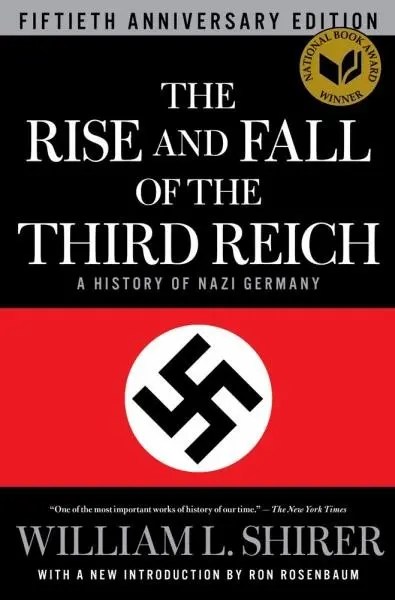
NOTE: I noticed after I finished the book and was relaxing while thinking about what I was going to write that today is 7 May, the 77th Anniversary of V-E day. Yes, I did find it ironic that I finished a book about the rise and fall of the Third Reich on the 77th anniversary of its fall into history.    

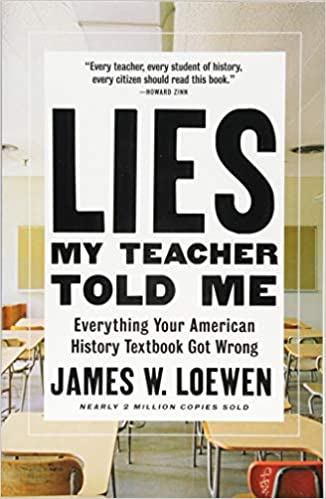
Lies My Teacher Told Me

22 Friday Oct 2021

Posted by Lopaka in History, Reading

≈ 1 Comment

Lies My Teacher Told Me by James W. Loewen
2007
/464 pgs.  History

What a fantastic read.  Dr. Lorwen shows what has been missing in high school history classes for many years.  How textbooks are just a memorization of facts, or lies as the title says, and doesn’t show the ugly side of American History.

When I was in school, I wondered why sections about Slavery, Reconstruction, even World War 1 and others are glanced over.  We didn’t even reach Vietnam in my history class, and I’m sure that would have been a lesson that it was a bad war.  Heck, even the US Constitution isn’t required reading anymore. I started learning how America truly was when I was in graduate school. It was eye opening!

It reads like American is the greatest nation and has no warts at all.  We don’t really want to dwell on anything bad in our History, just the good.  Even our heroes are without faults. We’ve all read the lie about Washington and the Cherry tree.  Our great leaders never did have any bad thoughts or committed any bad actions.

Thomas Jefferson, who authored “all men are created equal,” owned over 300 slaves. However, is it taught in our history classes?  Or do we still revere Jefferson as the 3rd president and important founding father that didn’t own any slaves?

This book is not an all-encompassing Lies book, there are many more that he doesn’t mention, and he even admits it in his second edition. The book’s point is we genuinely are not educated our youth, who will leave school and make decisions about the future of this nation based on false information. 

I would recommend this book to anyone interested in an eye-opening view of a few of the challenging issues that we face in today’s society.  However, be forwarded, you might get a little squeamish if you think America’s perfect.

Enjoy a good cup of coffee and an excellent book!

Lopaka

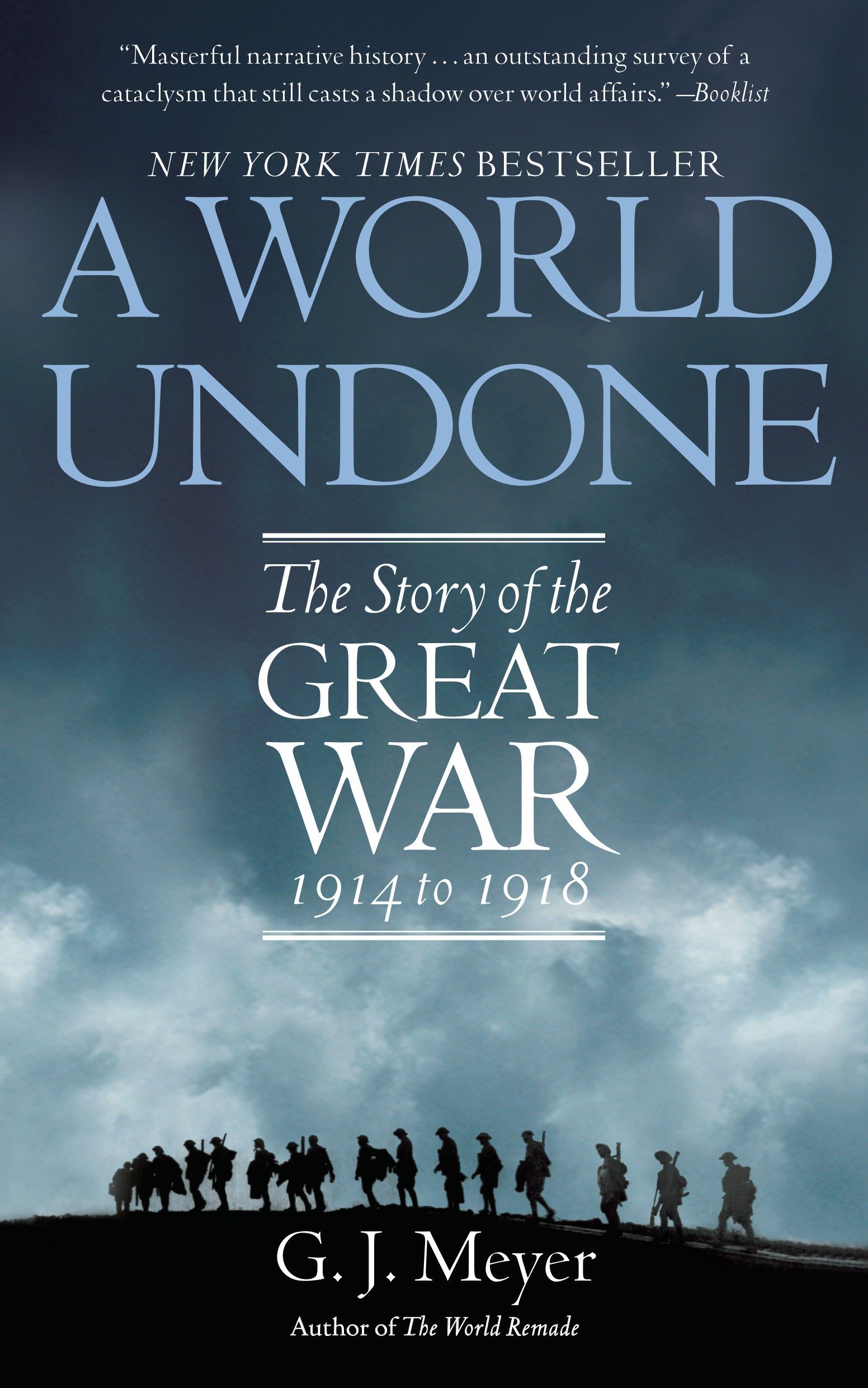
A World Undone

29 Wednesday Sep 2021

Posted by Lopaka in History, Military and War, Reading

≈ 1 Comment

The World Undone The Story of the Great War by G. J. Meyer  
2006
/ 658 pgs. History/ Military and War

What a monster of a book!  It took me over a month to finish this masterpiece.  It is a very well-researched and detailed chronicle of the first world war.  Also, it is more than just belligerents going to war.  There is much more in this than all the key battles.  It is a wonderful narration about the war and its impact on the world.

The book is laid out in the same manner as many historical chronicles.  A section for each year is broken into chapters explaining a battle or significant event.  What makes this narration more interesting is the humanity that Meyer tries to add to the narration.  At the end of each chapter is a background that goes into details that add more seasoning.  Many of them are fascinating, especially about some of the biographies of world leaders or generals.   

The impact on humanity is illustrated with challenges citizens experienced after the destruction of cities and forced enlistment of men and boys by many nations—Germany, for example, enlisted in 1917 those born in 1900. 

Meyer paints an outstanding picture of the overall war.  While going into delicious details, naturally, he couldn’t feature every event like the Germans’ surrender on Fochs train car and how Foch walked off at the negotiations.  This event played a small but impactful historical role in the French surrender to Germany in 1939.

Would I recommend this? Absolutely!  I enjoyed every minute I was able to read this book.  At 658 pgs, it’s not a monster for page count, but a different demon for depth.  It is number 2 on my W.W.1 books, after the Guns of August. 

Enjoy a good cup of coffee and a wonderful book!

Lopaka

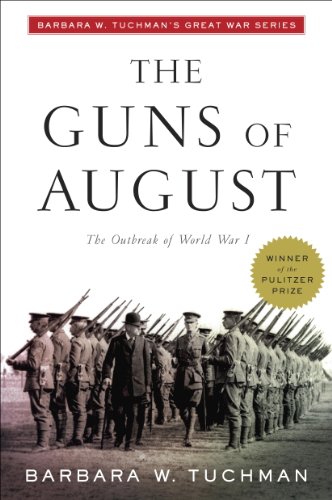
The Guns of August

20 Friday Aug 2021

Posted by Lopaka in History, Military and War, Reading

≈ 2 Comments

The Guns of August by Barbara W. Tuchman
1962
 / 511 pgs. History/Military and War

The Guns of August
is a historical masterpiece!  While I was reading, I never wondered how much longer I have to go or when it is going to end.  I just wanted to read more without looking up the key players to discover what happens to them.

The Guns of August is about the first and most critical month of World War One.  It starts with a narrative of events before the war—specifically, the planning of operations and treaties that were signed between nations before the conflict.  Also, very fascinatingly, the joint planning between the British and French military for contingency plans in case Germany attacked France through Belgium.  The riveting detail was these plans were started in early 1900’s.  Also, both the French and British planners understood the critical need for a combined commander of all forces on the Allied side if hostilities started.  Yet, in the first critical month, the BEF Commander in Chief refused to allow the BEF to fall under the French leadership of Joffe.

The assignation of Archduke Franz Ferdinand of Austria by the Black Hand, the single event that changes the face of Europe and power in the world, is just mentioned briefly in the book.  The month that all the critical decisions that led to the war’s start are a simple sentence.  If you are hoping for details about that month, this is not the narrative to read.  The focus of this narrative is the first month of the war.

After Austria declares war on Serbia, the main focus turns to the French and German military’s execution of Plan 17 and the Schlieffen plan.  How the Joffe’s refusal of deviation of Plan 17 even when the situation called for moving of forces to counter the German offensive. Molke’s changes to the Schlieffen offensive before the conflict. His melancholy during August and the lack of secure communication that would play critical roles in the German offensive that would prevent the Schlieffen plan from being executed and even a complete German victory within just over a month. 

Overall, this is a fantastic read.  It is definitely on my top five list for history books, along with At Dawn We Slept.  I’m already looking forward to reading more by Barbara Tuchman.  For anyone interested in reading about the start of World War I, I would highly recommend The Guns of August.       

Enjoy a good cup of coffee and a wonderful book!

Lopaka

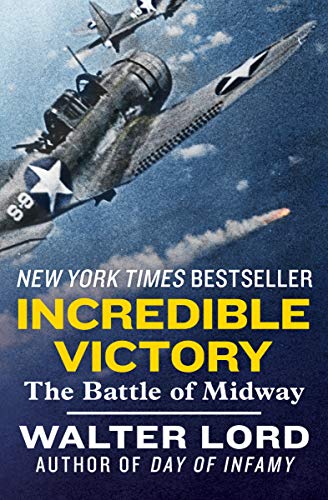
Incredible Victory

24 Saturday Jul 2021

Posted by Lopaka in History, Military and War, Reading

≈ 1 Comment

Incredible Victory: The Battle of Midway by Walter Lord
1967
 / 268 pgs. History, Military and War

Incredible Victory
is a Walter Lord history classic. It’s a detailed account, very similar to Miracle at Midway, of the planning and attack from both sides of the battle of Midway.  There are a few minor details between both books that are interesting; however, they don’t change any of the impacts of the fight. 

A fascinating point illustrated in both books is the “fog of war.” The in-validness of accounts as told by those that fought in the battle.  Both sides paint a different picture that makes a historian’s job more challenging trying to chronicle events.  Also, the written history by both nations after the battle and official reports.  When comparing the reports, there are very vast discrepancies on both sides.  However, it’s understandable that no one has time to write down precise information on what happened when in battle.   They leave that to the historian to sort out through logs, diaries, and interviews. 

Walter Lord pointed this out at the end of the book in a final section, mentioning that many U.S. Navy pilots swear they properly identified the Carrier based on the location of the Island.  However, the island location wasn’t the proper one for the Carrier they believed they attacked.  Also, taking in the official records of the first wave, the Akagi and Kaga were attacked, and no one bombed the Soyru.  The infamous “fog of War.”  

Overall, this is a beautiful read and easy to follow.  For anyone interested in reading about Midway’s Battle, I would recommend either Incredible Victory or Miracle at Midway.        

Enjoy a good cup of coffee and a wonderful book!

Lopaka

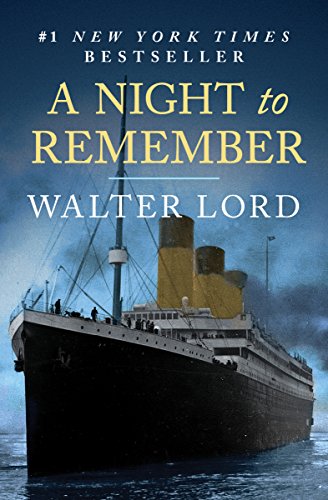
A Night To Remember

28 Monday Jun 2021

Posted by Lopaka in History, Reading

≈ Leave a comment

A Night to Remember
by Walter Lord 1955
 / 164 pgs. History

A Night to Remember is the narrative of the sinking of the most famous ocean liner in history.  It is considered the holy grail of the sinking of the Titanic.  Mr. Lord interviewed 63 survivors, utilized maps, newspaper articles, and memoirs to retell that infamous night of 14 April 1912.  A Night to Remember (1958) and Titanic (1997) used Walter Lord as a consultant and the book as guide for the narrative.

The story the moment, 11:40 p.m., when Lookout Fleet spots the Iceberg and radio’s the bridge of the infamous words “Iceberg right ahead.” From there, the narrative plays out, as many have seen in the movies.  A 300-foot gash is torn through the hull of the ship and starts flooding the first five compartments.  Mr. Andrews, the ship’s designer, is summoned and, after inspecting the damage, states the Titanic will flounder.  The truth then comes to light, the Titanic only carried enough lifeboats for 1,178 people, and there were 2,207 on board. 

From this moment, the narrative of the events starts with passengers being loaded into the lifeboats, the infamous women and children first.  Also, the story of the Californian and why she didn’t respond.  The CQD sent from Titanic via morse code and changed to S.O.S, telling all available ships to come to her aid.  From the moment the Iceberg hit the boat to her going under is half of the book.  The other half is the survival of those on the lifeboats and the rescue by the Carpathia.  The narrative of what the Carpathia did to come to the aid of the survivors is thrilling to devoir.  Finally, the story ends with the arrival in New York and the truth of the disaster being told.

This book is a fast read as I finished it in about 4.5 hours. It’s a grand narrative of what happened including the thoughts of many of the passengers and how they believed events played out that night, bringing a different perspective of the sinking.

I would recommend this for anyone to enjoy reading about A Night to Remember.                     

Enjoy a good cup of coffee and get lost in an excellent book,

Lopaka

Next – The Autobiography of Benjamin Franklin

Miracle at Midway

25 Friday Jun 2021

Posted by Lopaka in History, Military and War, Reading

≈ 2 Comments

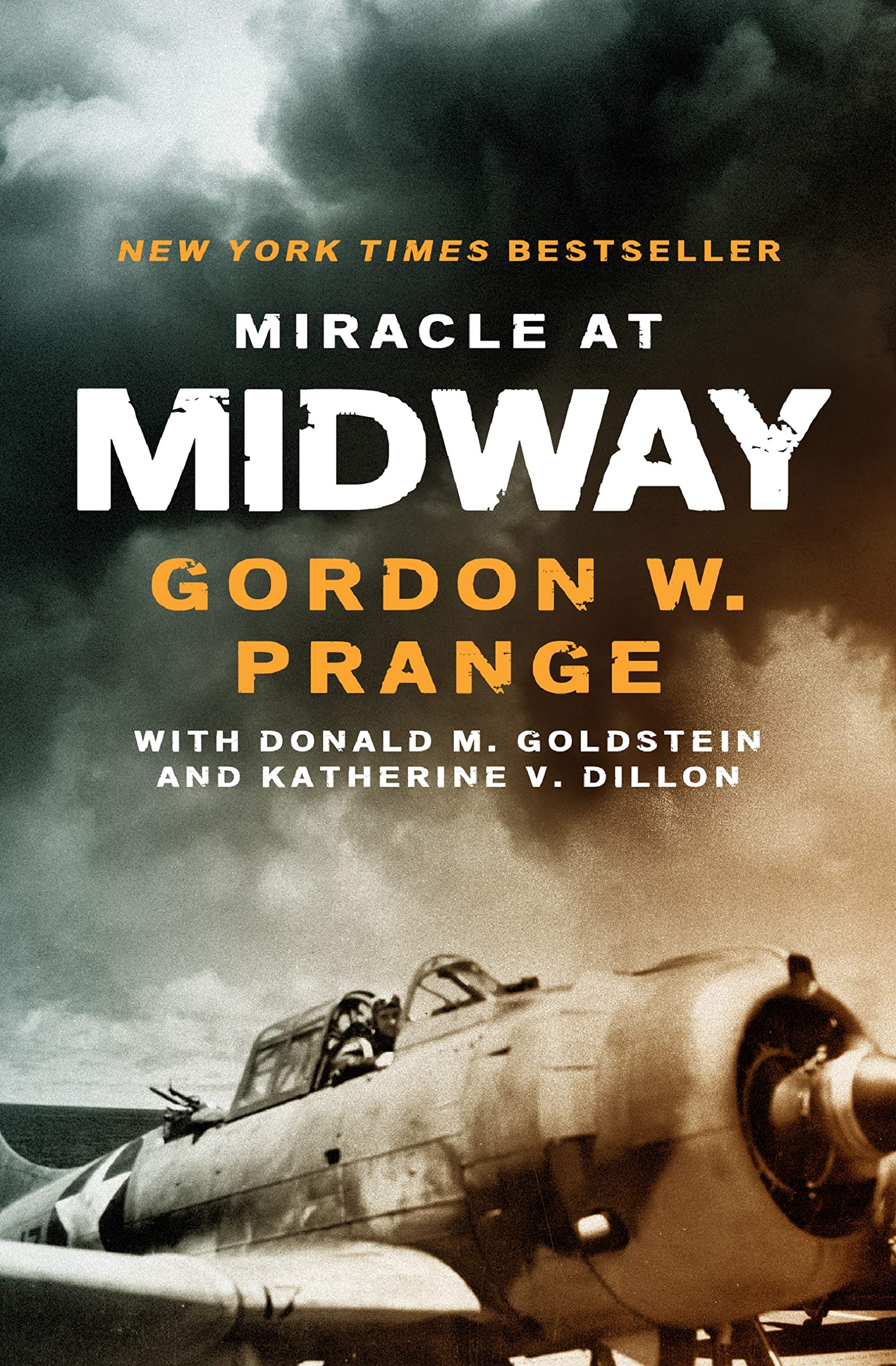
Miracle At Midway
by Gordon W. Prange, Donald M. Goldstein, and Katherine V. Dillon 1983
 / 469 pgs Military History

The battle of Midway is known as the turning point of the Pacific War.  The story is well known to those that have read about World War II.  The Imperial Japanese Navy lost four Aircraft Carriers, and the U.S. Navy losing the U.S.S. Yorktown (CV-5).  With the Japanese Carriers sunk and the loss of their very experienced pilots was to prove a disaster for the Empire that would never be on the offensive for the duration of the war.

The two movies about Midway tell a simplified version of what happens.  However, like all movies, there is more to the story than can be put on the film.  Miracle At Midway is a detailed account of the battle.  Unlike, At Dawn We Slept, there is not as much depth of the political games that brought the Japanese to this crucial battle. 


The fascinating section of the story is not what you would know from the movies, but the details that are left out of any standard Midway telling.  For example, how B-17’s and B-26’s from the USAAF bombed the Japanese fleet.  Their impact was minimal to nil; however, most people don’t know that any USAAF bombers were used in the battle. 

Another fascinating part that is lost to history was the first American aircraft to score a hit on the Japanese at the battle.  It wasn’t a carrier-born aircraft as most stories and even the movies tell.  It was a P.B.Y. Catalina rigged with a torpedo and scored a hit on the Akebono Maru in the Invasion Force.  The Catalina didn’t do much damage. Interestingly, it was the only successful U.S. torpedo attack during the entire battle!.  The P.B.Y. wasn’t the only aircraft that was rigged with a torpedo.  The USSAF rigged a torpedo to the B-26; however, their attack was unsuccessful.   

These are just a few of the fascinating and detailed stories that tell the whole narrative about the Battle of Midway.  Just like any History/War book, if it’s your cup of tea, you would enjoy this book.  If not, I would stay away from it.  I enjoyed reading it; it’s not as good as At Dawn We Slept. However, if you want a good read on the Battle of Midway, I would recommend it. 

Enjoy a good cup of coffee and get lost in an excellent book,

Lopaka

Next – A Night to Remember

The Wright Brothers

07 Friday May 2021

Posted by Lopaka in History, Reading

≈ 1 Comment

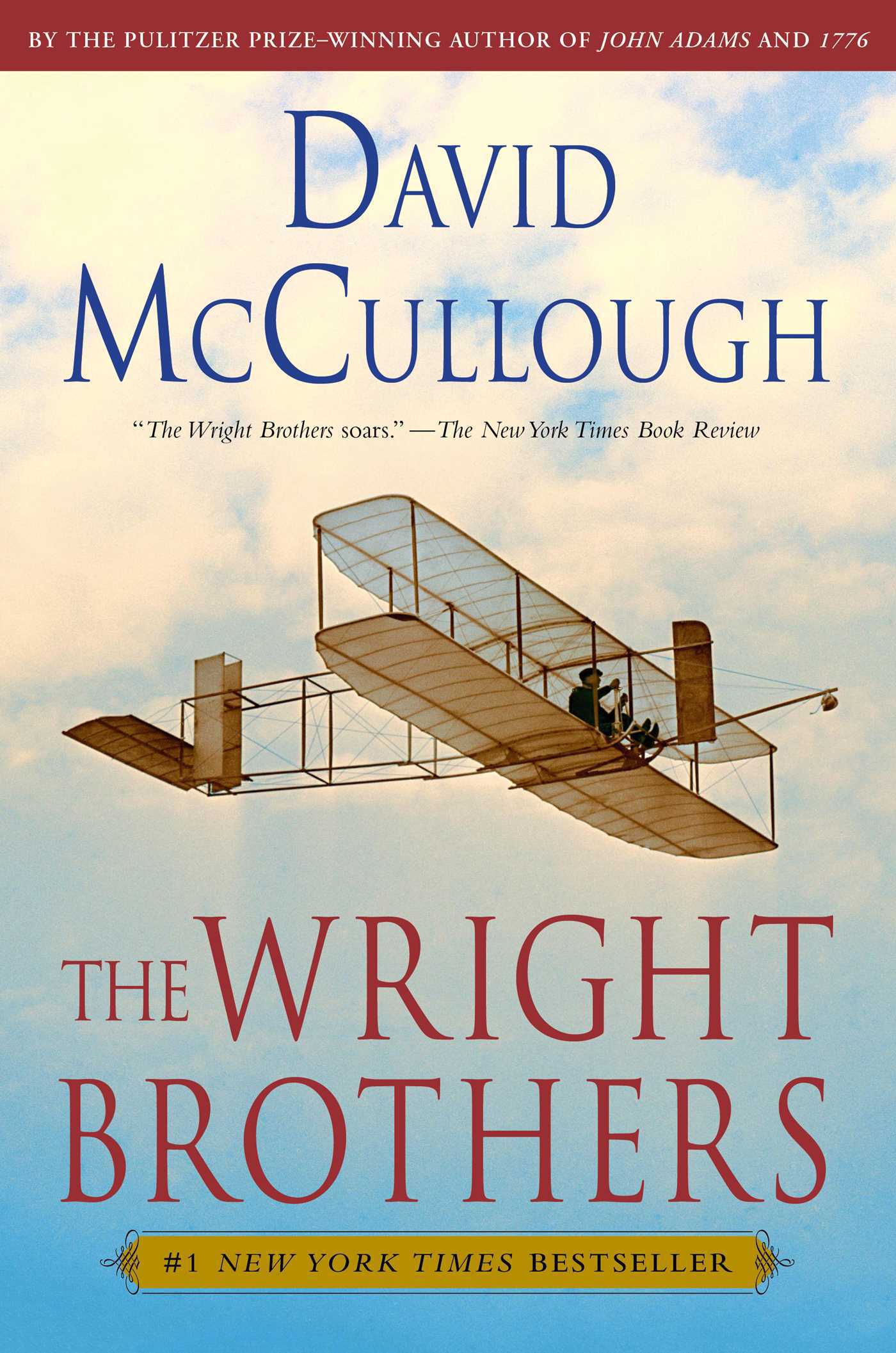
The Wright Brothers
by David McCollough
2015 / 321 pgs History

December 17th, 2003, while onboard an E-3B Sentry, I watched small dots on the monitor move one by one over the location designated as Kill Devils Hill, North Carolina.  Each dot was an different aircraft that spanned over 100 years.
Witnessing the centennial of flight and flying at the same spot the Wright Brothers did 100 years prior causes one to pause and smile.  In 2015, my family visited Kill Devils Hill and saw the Wright Brothers’ exact location of that historic flight.

Naturally, I was eager to read the story of the Wright Brothers, Wilber, and Orville.  This book doesn’t disappoint.  It starts with their birth and then their final move to Dayton, Ohio.  Then moves into their early years as newspaper publishers and then eventually to bicycle builders.  After Wilber contracts Typhoid and is recovering, he read about a German aviator’s experiment in powered flight, that planted the seed that would change the brother’s destiny.

They set themselves to solve the challenges of powered flight.  After four years of experiments, trials, tribulations, and setbacks.  On a sandy hill in North Carolina with Orville at the controls, the Wright Flyer 1903 took off and flew 120 feet in 12 seconds.  They flew three more flights that day, the last one lasting 59 seconds.
  

The rest of the book is about their continued experiments, building the Wright Flyer’s II and III.  Then their public
displays of flights to sell the planes to the United States, Germany, and French governments.  Also, some of the
accidents at the beginning of aviation, including the first passenger who died in an aircraft accident, also the first military officer, Lt Thomas Selfridge. 

Anyone interested in the early days of flight would find this book exciting.  The first 108 pages, up to the first flight
on December 17th, 1903 was thrilling to read. After this section, the story slows down although, not challenging to
get through, sometimes it could be difficult. I’ve been to Kill Devils Hill, been on the aviation path in Dayton, Ohio, visited Huffman Prairie Field where the Wrights experimented and improved on the 1903design.  Finally, the Smithsonian and visited the original 1903 Wright Flyer brought a smile as I read about many of the
locations and aircraft that I got to see over the years.  

I would only recommend this to history or aviation buffs.  If those don’t strike your fancy, this isn’t a book for you.  I enjoyed it, even in the challenging sections.         

Enjoy a good cup of coffee and get lost in an excellent book,

Lopaka

Team of Rivals

15 Thursday Apr 2021

Posted by Lopaka in History, Reading

≈ 1 Comment

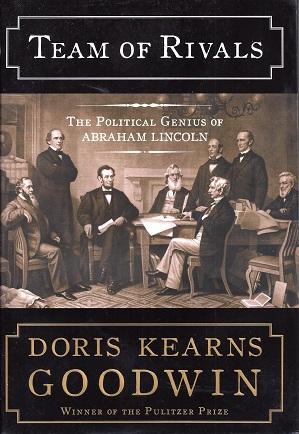
Team of Rivals: The Political Genius of Abraham Lincoln
by Doris Kearns Goodwin
2006 / 917 (755 reading) pgs History

One hundred fifty-six years ago, today, at 10:14 pm. John Wilkes Booth pointed a .41 Deringer at the back of President Lincoln’s head and shot him.  Similarly, the RMS Titanic, which struck an Iceberg at 11:40 pm on the 14th of April, didn’t sink until the 15th of April at 0220; Lincoln died 9 hours later, the 15th of April 1865 at 7:22 am.  As I read about the Assassination, it didn’t dawn that I was reading it on the anniversary.  The death of Lincoln is naturally the final chapter of a book about him.  What a book it is!

            Team of Rivals focuses on Abraham Lincoln’s rise in politics and his ability to use his allies and enemies at their most significant potential. He utilized his storytelling gift by employing the exemplary anecdote that would best illustrate what he means and is trying to convey. He would bring people together and also put them at ease.  Lincoln understood better than most the power and influence he had as President and used every means to defeat the Confederacy and unite the US as one nation.  Using the best people, even his rivalries, in the best positions, Lincoln built an army, rally them around him, and kept the US economy moving forward.   

            Team of Rivals is written in loose chronological order.  It starts with the four main characters that will impact the Lincoln administrations running of the war.  These are three men that all felt they should be the President and all ran against Lincoln in the 1860 election.  William Seward, who would become the Secretary of State.  Salmon Chase, Secretary of the Treasury and then Chief Justice of the Supreme Court.  Judge Edward Bates, Attorney General.  Finally, also a family that was very influential in the mid to late 1800’s, the Blair’s.  Interestingly, this family-owned what is known today as the Presidential Guest House, the Blair House.

            The book details these families, where they come from, what influence they had, and why they felt they should be the Republican nominee for President in 1860.  Once Lincoln won the election, the story naturally moves through the civil war, focusing on the Lincoln administration.  The fight between Gen McClellan and Lincoln on how the war should be conducted is spelled out nicely in this book.  As the war has its ups and downs, it shows the impact it has on Lincoln, and the decisions and the timing for each as Lincoln was a master of political timing.  Naturally, the last chapter is what is already mentioned, the Assassination.

This story is beautifully told and is an outstanding read.  If you want to know the Civil War from the battles and impacts, I would recommend Battle Cry of Freedom.  If you want to know the inside story, read Team of Rivals. It’s not a seriously dense history book. It’s a beautiful story told in a straightforward narration.  Naturally, I would recommend this book!

Enjoy a good cup of coffee and a good book!

Lopaka

The Pentagon Papers

16 Saturday Jan 2021

Posted by Lopaka in History, Reading

≈ 1 Comment

The Pentagon Papers by Neil Sheehan, Hendrick Smith, E. W. Kenworthy, and Fox Butterfield
2017 (1971) / 810 pgs

The Vietnam war, one could argue the single conflict that changed how citizens feel about trusting the U.S. government today. The Pentagon Papers summarizes the papers that were released to news media and printed in 1971. At the time, a hotly contested event that went to the Supreme Court. As of this writing, our equivalent of this is the Snowden leaking of documents to Wikileaks.

Naturally, this isn’t the entire Pentagon Papers as they are many volumes. Historians and reporters sat down and wrote 10 Chapters the summarize a time frame by an event that impacted our involvement in the war.  It starts with the Truman administration (1945) and concludes at the Johnson era (1967). Interestingly, Secretary of Defense Robert McNamara commissioned the report in 1967 to allow historians the truth behind the war.  One could argue it was him building his case for future judgment on his involvement in the war’s conduct.  [Sidenote: A fascinating documentary called The Fog of War has Sec McNamara talking about the 10 lessons he learned in his life included getting questioned about Vietnam]

I did find this very fascinating to read. Although it gets very tedious as you are reading memorandums written with many thoughts and opinions.  The format for each chapter is simple.  First, the title (significance and time frame), next is a list of highlights, an excellent exposition of the material, finally selected memo’s to support what was written.  In the memo’s, more information is added, naturally, that provide more insight.

I found it fascinating reading the truth of why and how we conducted the war versus what was being told to the American people.  After reading this, I wish the same thing was written for every conflict we have conducted. For historians, the information is invaluable.  Could we imagine how World War 2 would be written if something similar is released with all the leaders’ thoughts that led, planned, and conducted the war?  Would they have made the same decision if they knew that their papers and idea would be released in a record for all to read and judge?  I firmly believe that all leaders should read this and keep a copy near them on their work desk to think about when they make decisions that impact lives. 

Would I recommend this?  Only if you are interested in history or the truth of the Vietnam War.  Many times I almost fell asleep reading the monotonous memo’s that leaders wrote.  I did enjoy it, and it will have a place at my desk.

Favorite line: June 1964, President Johnson asked the C.I.A Director about the actual probability of the Domino Theory. He was informed on the 9th of June, “With the possible exception to Cambodia – it is unlikely that no nation in the area would quickly succumb to Communism as a result of the fall of South Vietnam.”  – The Pentagon Papers

Enjoy a cup of coffee and a good book!

Lopaka

← Older posts
Newer posts →

Recent Posts

  • Dune Messiah
  • The Nine
  • How to read Literature like a Professor
  • The Forever War
  • Churchill’s Shadow Raiders

Categories

  • African American
  • And so it begins…
  • Biography
  • Classic
  • Dark Fantasy
  • Detective
  • Dystopian Future
  • Epic Fantasy
  • Fanasy
  • Fiction
  • Graduate Class Reading
  • History
  • Horror
  • Leadership
  • Military and War
  • Music Reviews
  • Philosophy
  • Political Science
  • Politics
  • Psychological
  • Random Thoughts of a Wandering Mind
  • Reading
  • Running
  • Sci Fi
  • Textbook
  • Thriller
  • Travel
  • Western

Meta

  • Create account
  • Log in
  • Entries feed
  • Comments feed
  • WordPress.com

Blog at WordPress.com.

Privacy & Cookies: This site uses cookies. By continuing to use this website, you agree to their use.
To find out more, including how to control cookies, see here: Cookie Policy
  • Subscribe Subscribed
    • nyghteulen
    • Join 27 other subscribers
    • Already have a WordPress.com account? Log in now.
    • nyghteulen
    • Subscribe Subscribed
    • Sign up
    • Log in
    • Report this content
    • View site in Reader
    • Manage subscriptions
    • Collapse this bar
 

Loading Comments...