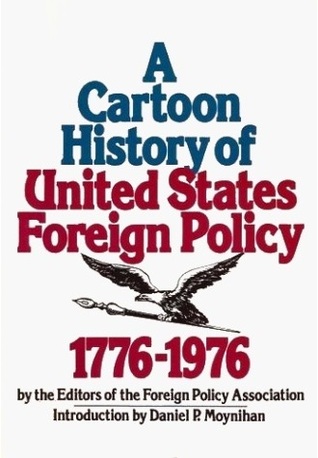
A Cartoon History of United States Foreign Policy 1776-1976 by the Editors of the Foreign Policy Association 1976 / 196 pgs
This is a easy read. First, it’s a simplified foreign history narrative of the United States from 1776 to 1976. Not much depth involved because the star is the comics that are shown with each commentary event. What is fascinating is seeing the evolution of political cartoons over the last 200 years. However, it’s not multiple comics for one event, just a few, if not just one, comic. Starting with the infamous divided snake drawn by Benjamin Franklin before for the United States was formed to reaction to events in 1776 to the view of United States influence over the United Nations after Vietnam, the “loss of China”, and resignation of Nixon.
For those that enjoy history with a sense of humor, this is a quick and fascinating read. Again, if you are versed in United States history, there is very little learning from the narrative. The comics are fun to read and interpret though.
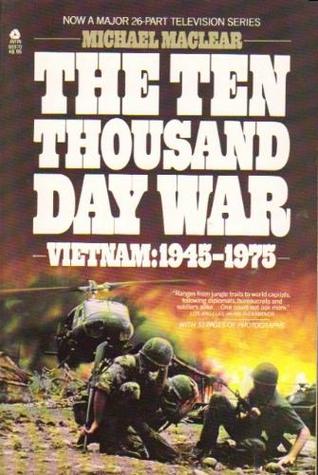
The Ten Thousand Day War – Vietnam: 1945-1975- by Michael Maclear
1981/369 pgs
Vietnam, a war that changed everything about America and how the citizens trust the government. This novel is about the history of the war and when the United States got involved and why. As the title suggested, it starts with the United States’ support for Indo-China against the Japanese in 1945. It ends with the fall of Saigon on 30 April 1975.
It’s a very well study of the war and hits all the major points in 20 Chapters. It dives into the infamous French loss at Dien Bein Phu that caused them to leave Vietnam. Like a snake, it weaves into our involvement with the South and how the cold war keyed our participation. From each administration that had a roll with Vietnam, from Roosevelt to Ford, Maclear shows the many times that we were projected to leave. He paints a shocking picture of the Assassination of the president of Vietnam and how it impacted JFK, who would be killed only a few months later.
He showed how Johnson wanted to win the war and create the Great Society only for all his ambitious plans for fall because of Vietnam. One of the great highlights is 1968 and how that impacted the United States starting with the Tet Offensive.
This historical tale was easy reading, and not every paragraph crammed with in-depth knowledge. I absolutely enjoyed reading this and would recommend to anyone that wants to know about Vietnam and why it still is an impact on the United States today.
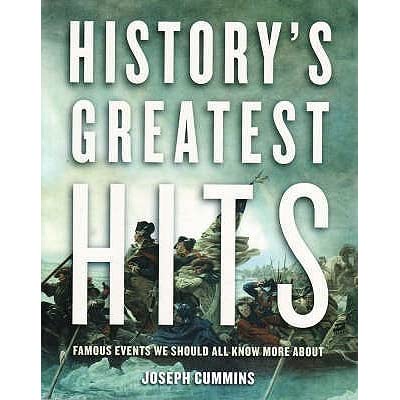
History’s Greatest Hit’s is an attempt to pick the most significant hits out of history. However, sadly, it misses the mark widely because some of the events chosen bring to question why a specific event was chosen, and others were not.
For example, The Ancient World 250 BCE-500 AD section, highlights three events. All very important. Hannibal crossing the Alpes, Assassination of Julius Caesar, and the Fall of Rome. That’s it. Those are the only three events you should know from that time. Alexander the Great doesn’t matter. The burning of library at Alexandria. I can forgive leaving Greece’s impact on the world, or China’s, or Egypts…yes this book is very Eurocentric. However, missing the most important and critical event from Roman history…Julius Caesar crossing the Rubicon 49 BC is unforgiving. If a historian narrates vital moments in Roman history for prosperity omitting that pivotal event and why it’s significant to Rome, it begs the reader to ask what else is forgotten. Cummins, however, commits an even more critical error that makes the omission of the Rubicon look minor and insignificant.
Waterloo. The final battle for Napoleon. A significant historical event. Cummins does an excellent narration of the struggle and why Napoleon lost. Sadly, as I read this story, it made me upset, thinking others are reading it and then having discussions about Waterloo and what they thought was factual information. In Cummins’s narration, he states the Seventh Coalition contained forces from Great Britain, the Netherlands, Belgium, and Germany. With an army from Prussia. Causing a double-take on my behalf, re-reading the sentence, and a face slap.
For those reading this and are confused about why I state this, please allow me to explain. Belgium doesn’t become a nation until 1830 after the Belgium Revolution. Germany didn’t exist as a nation until 1871. Even if one wants to state that the forces would have come from what is Germany today, then they can’t say Prussia because Prussia no longer existed after the German unification of 1871 since the King of Prussia, Wilhelm I became the German Emperor or Keizer. The battle of Waterloo was in 1815. Using modern nation titles to describe old forces is wrong, and those that read history will falsely believe that nations have been around longer than they truly have. For those that would read this and say that’s minor, then why didn’t Cummins in the Ancient world section when talking about Rome state Italy? Yes, proper terms in history do matter.
Finally, as the book gets into the modern era, the 1900’s. Cummins narrates about the battle of the Somme and why it’s the bloodiest day in British Army history. Also, the disaster of Gallipoli and how it almost destroyed the career of Churchill. However, one fact not mentioned, the critical event that has shaped the world as we know it today….the Assassination of Archduke Ferdinand of the Austrian-Hungarian empire, is omitted.
There are many more events that Cummins left out. If he was trying to tell a story of events mostly forget, however, should be remembered. The Gettysburg Address, Kennedy’s Assassination, and many others shouldn’t have been in the book as most people in the United States know about those events. History’s Greatest Hits is not a horrible read.
I enjoyed reading it and took it with a grain of salt, as this is what Cummins views as the Greatest Events.
There are many more errors in the book, and that’s ok. Would I recommend this book, no. As I stated before, if I had time to correct the many errors and add in other events that are very significant, then I would. However, for a history book, this falls very short of its intent.
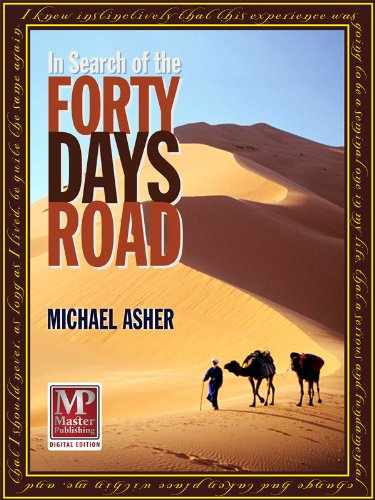
In Search of the Forty Days Road by Michael Asher 1987 / 179 pgs
A very interesting novel about the journey that Michael took when he went to the Sudan originally as a teacher of English and searched out the 40 days road.
As an englishman, he learned that many thought he was crazy to look for a road that wasn’t used for many years. Also, he dealt with being arrested, interrogated, theft, and almost dying of thirst many times while in the desert.
It was a wonderful read, and again, this book was used for my graduate course.
World War One: A Short History by Norman Stone 2008/190pg (reading)
This is the simplest abbreviated telling of World War One. Quick and to the point. It doesn’t go into great detail. Broken into each year of the war, one gets a good idea of how the war played out. Also, the book shows very well that although many people envision the war as a constant battle for months and months with no breaks, this wasn’t true. There were times of boredom and maneuvers to get Armies from one location to another.
It really showed very well the importance of the railway and also briefly delves in the development of the tank and it’s use on the lines. If someone wanted details, like the airplane and the evolution of the air war, this is not the book to read. This is a simple snapshot of the war. Each major battle and who participated.
It is a good book for someone to get the overall scope of the war and how each part played out. Also, to understand why after the war many nations changed and empires were lost forever.
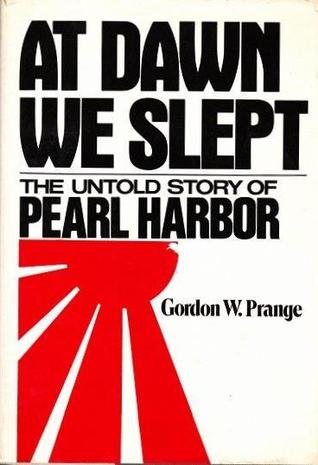
At Dawn We Slept: The Untold Story of Pearl Harbor by Gordon W. Prange with Donald M. Goldstein and Katherine V. Dillon 1981/753pg (reading)
Like many readers, I have a stack of books with bookmarks in various places reminding me that I started reading and then neglected finishing for various reason. As some readers will attest…some of these books will never get finished. However, a few, haunt your dreams. When you finish another book, the ghost of those started in the past cry for you to pick them up and allow them to continue on the adventure that you stopped many years ago.
18 years it has taken me to finish this novel. If you have followed this blog, you undoubtedly know I love WWII. I was fascinated with Pearl Harbor and the events in 1941 well before the 50th Anniversary of the attack. Picking up this novel, I have started it…put it down (mostly due to classes for my undergrad and now grad work) picked up and again..put down. Well, it is done and it is amazing!
This is, undoubtedly the bible of the Pearl Harbor story. It starts with the planning from the Japanese side. What was happening in Washington and Pearl Harbor. It goes deep into the meticulous planning and the spying from the Japanese consulate and what was gathered and how.
It takes the events leading up to the attack into details that is eye opening. It even goes into the attack and just how fast and damaging it truly was. Then, it breaks down all the investigations and aftermath of attack. Finally, explains where the blame for attack truly falls.
Professor Gordon W. Prange researched and interviewed survivors from both sides for 37 years to truthfully tell this detailed narrative. Sadly, he died just shortly before it was completed. However, two of his students completed one the most well researched first hands account of the attack that has ever been published.
This is definitely in my top 10 history books list and I would highly recommend this to anyone that has an interest in history and the Pearl Harbor attack.
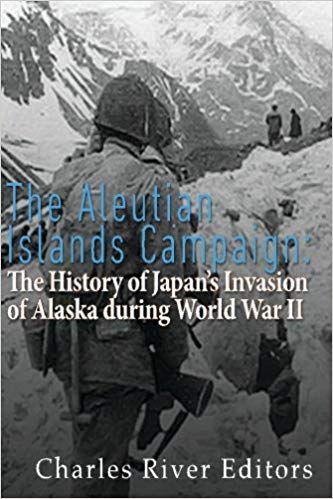
The Aleutian Islands Campaign: The History of Japan’s Invasion of Alaska during World War II by Charles River Editors 2016/42pgs
This is not a long history book. To be precise, it’s more of a lengthy synopsis on the Aleutian Islands Campaign that doesn’t go into great detail like other historical novels. It’s a simple narrative of the events of the invasion and occupation of the Aleutian Islands by the Japanese in 1942. Then the explosion of the occupiers by the US in 1943. This is a forgotten war. Many of our history books about WWII just give this campaign a footnote. Sadly, the results from this campaign are not known except by those that research the war.
If one wants a fast simple read about the Aleutians War, I would recommend this book. There are more details then what Wikipedia presents, however, not too much more. I wouldn’t recommend the $10 on Amazon. This is a great Kindle Prime book.