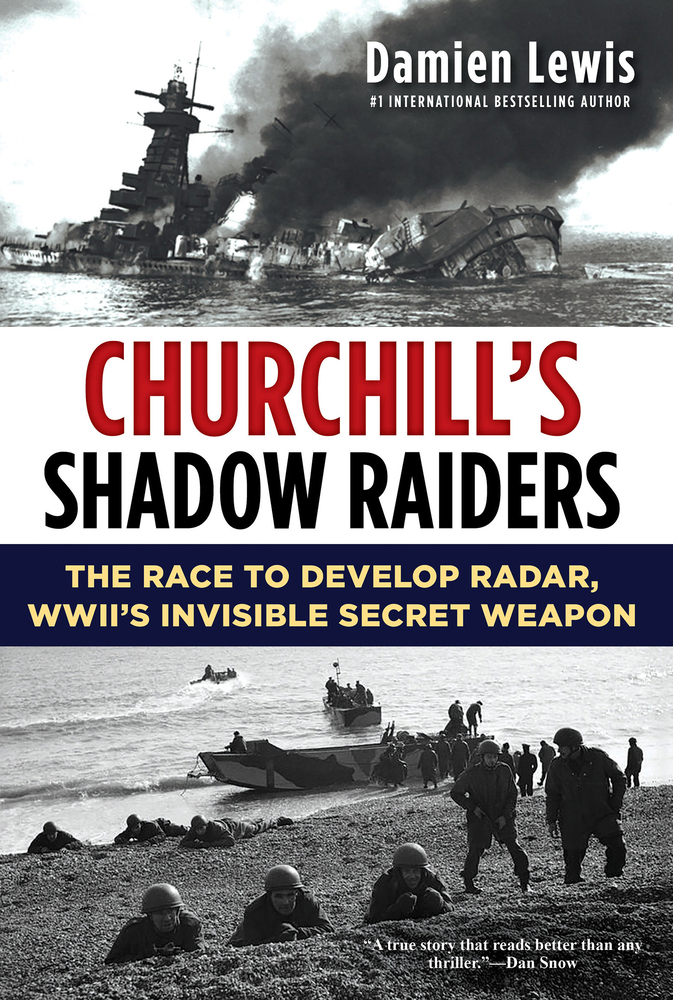
Churchill’s Shadow Raiders by Damien Lewis 2019 / 350 pgs. (104,000 words) Military and War, History
The birth of the British Airborne Commando Operations, Operation Colossus, the very first British airborne operation, a mission to parachute into Italy and destroy a key freshwater aqueduct. It explores the challenges the team faced and how the mission ultimately ended in failure when their extraction failed, leading to the entire team’s capture.
However, the idea wasn’t over. The battle of Briton was an air battle and RADAR was the key that helped the British survive. The story then shifts to a critical intelligence-gathering raid in France. Understanding that German RADAR technology was a major threat, commandos were sent to capture parts of an advanced Würzburg radar system and return them to the UK. This mission proved to be a major success, providing intelligence that would have a great impact on the future Operation Overlord (D-Day).
Would I recommend it? It’s a good book for those that are interested in the subject. Having a RADAR background, the book sparked my interest. If you are not interested in military history, it might not be for you.
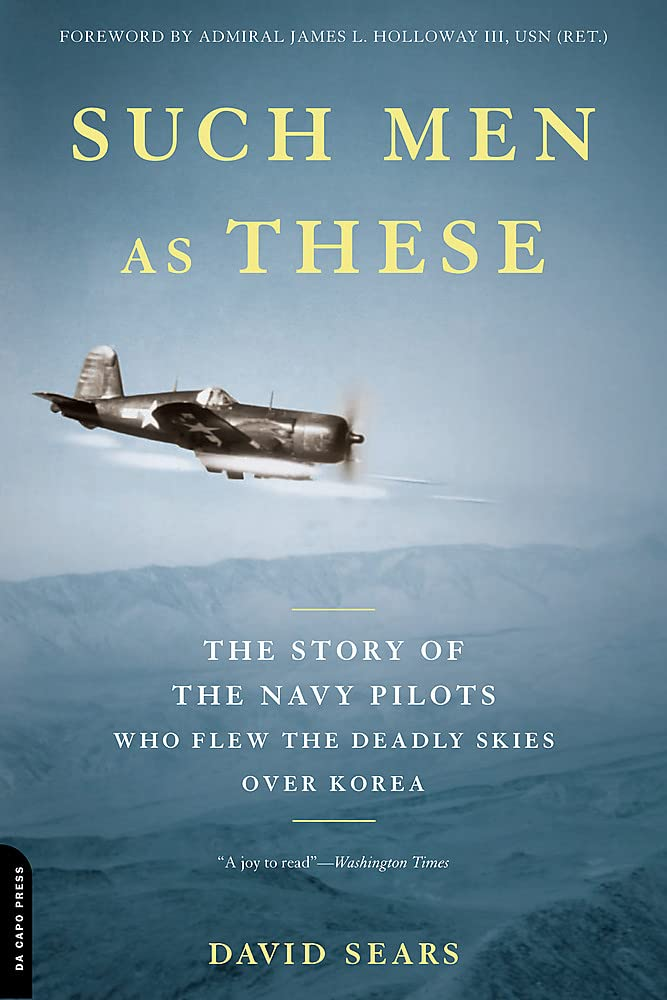
Such Men as These by David Sears 2010 / 396 pgs. [336 Narrative] (118,272 words) Military Historical
James Michener’s assignment from the Saturday Evening Post to report on the Korean War ultimately yielded the notes that formed the basis for his famous book, The Bridges at Toko-Ri. Inspired by Michener’s work and potentially his notes, David Sears crafts a fascinating narrative focusing on the challenges and contributions of the U.S. Navy’s Task Force 77 during the Korean War (1950-1953). The book offers a compelling account of the Navy’s response, weaving in Michener’s own experiences and the war’s impact on him.
The conflict began on June 25, 1950, when North Korea invaded South Korea. The United States military, facing a conflict it hadn’t anticipated, was largely unprepared. World War II had concluded only five years earlier, leading to a significant drawdown of active-duty forces and meaning much of the technology employed in Korea was leftover from the previous war. Consequently, from the Navy’s perspective, the demands of the conflict fell heavily upon reserve forces rather than the depleted active component.
Such Men as These recounts numerous experiences of naval personnel, particularly pilots assigned to Task Force 77. One particularly striking story involves Ensign Jesse Brown, the first African American Naval Aviator, and Lieutenant (Junior Grade) Thomas Hudner, who received the Medal of Honor for his valiant attempt to rescue the downed Ensign Brown.
While the book doesn’t delve deeply into the specific air combat tactics of the war, it excels at capturing the human element. It effectively covers the experiences of those serving with Task Force 77 throughout the conflict.
Would I recommend this book? Absolutely. Such Men as These is a great read and does not disappoint. However, readers should know what to expect: if you are seeking detailed analyses of battles and military tactics, this might not be the book for you. But if you are interested in the powerful, human stories of Naval Aviators and personnel serving under extraordinary circumstances during the Korean War, this book is an excellent choice.
Enjoy a good cup of coffee and a delightful book!
Lopaka
A Final Thought: On a personal note, I have worn the POW/MIA bracelet for Lt. Orville M. Cook, USNR, for over 30 years. He was an AD-3 Skyraider pilot shot down over North Korea on July 18, 1951, and is mentioned by name in the book. While I appreciated seeing his name included and learning about the context before and after his loss, I was naturally hoping for details on his specific final mission, which weren’t present. His story, and its partial inclusion, underscores the book’s focus on the broader human tapestry of Task Force 77, even if it means some individual threads aren’t fully explored.
The Book of War: 25 Centuries of Great War Writings by John Keegan 1999 / 667 pgs. (200,000 words) History, Military & Warfare
As the title implies, this is a collection of writings that describe warfare. The premises were to show how warfare changed over the generations. It is a collection of writings, not just from the leaders or soldiers that fought in many conflicts. It is also from historians, witnesses, and even an obituary. It starts from excerpts of the Peloponnesian War by Thucydides and ends with an account from the Gulf War. It includes poems and narrations.
Various accounts throughout history, as Mr. Keegan noted in the beginning, were how the enemy was treated when captured. In early times, entire nations were destroyed, and their citizens were made into slaves or pressed into service. Militaries of early civilizations had soldiers that served for their entire life. As time progressed, warfare changed on account of the improvement of technology over time to make warfare even more deadly and societal challenges.
What also made many of these accounts fascinating was the personalization of many narrations that historians would miss in their writings. One gets a more intimate feeling when reading accounts that the humanity is not edited out.
A couple of narrations that I found very fascinating were “A Farewell to Arms” by George Peele which was a Commemoration of the Retirement of Queen Elizabeths champion as he laid down his arms. A narration by Inga Clendinnen about the Aztecs use of a gladiatorial stone that would be the “final” battle of an enemy warrior before they collapsed on the stone from blood loss. Davy Crockett’s account of fighting with the Choctaw and Chickasaw during the war of 1812. James Bodell “A Soldiers view of Empire” about wives and girlfriends accompanying soldiers to the ship before departure and then left to fend for themselves while the men were away. Something that people in today’s military do not think about with families of yester years. Rudyard Kipling poem “Tommy” about the treatment of soldiers after the war. Stephen Graham’s “How News of War,” an account of how men were notified for conscription during the first world war.
I would recommend this book to anyone that enjoys reading about warfare and military.
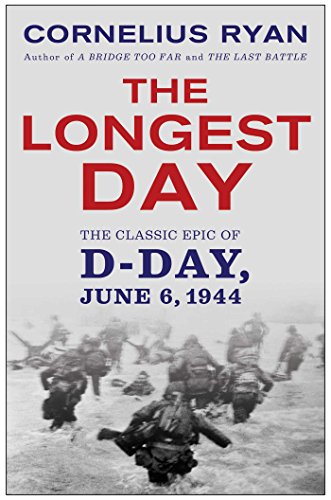
The Longest Day by Cornelious Ryan 1959 / 277 pgs. (88,000) Miliary & War, History
6th June 1944, the invasion of Europe by the Allies at Normandy, France, also marks the end of the German occupation of Europe. On 6th May 1945, the war in Europe would be over. This book is a narration of the events of that historical day. The Longest Day is not as detailed as Six Armies in Normandy, butit is still an excellent narration that does not disappoint. The movie The Longest Day is based on this book; as one reads it, much was captured in the movie as narrated. Mr. Ryan breaks down the event into three parts.
Part One – The Wait
The wait starts two days before the invasion. The story focuses on Rommel trying to secure the beachhead as he knew that if he could stop the attack there, it would spell out a disaster for the Allies and set them back. Eisenhower made many decisions about when the invasion would start based on weather reports that were never good for the conditions the allies would prefer—also, the long wait for the troops as they waited for the order. What is interesting is the details mentioned that many other books leave out. For example, Rommel was going to meet Hitler on 6th June to convince the Feurer to release the Panzers in Pas-de-Calais, for Rommel knew they were the best chance for the Germans to stop the invasion force. Another detail was Operation Gambit, the British minisubs X30 and X32 sitting off the coast to help guide the landing craft to the beach.
Part Two – The Night
The beginning of the invasion. The landing of the Paratroopers from the British and American forces, many of them were scattered all over Normandy during the night drops. Many British landed in the swamps and were never found. The landing at St-Mere-Eglis with the Germans shooting at the 82nd as troopers descended into the town and illuminated by the fire the French were trying to extinguish. Even the Paratrooper that landed on the church and had to listen to the bells clang all night until the Germans finally lowered us. Gliders landing and crashing with troops on board. The taking of Pegasus Bridge by the British.
Part Three – The Day
This is the moment that most people know: the invasion of the beach. Ryan describes the E-Boat attack that sunk the Norwegian Destroyer Svenner—the sinking of the USS Corry by a sea mine. The LST and Higgens boats challenged landing on the beach. At Utah Beach, the troops disembarked at the wrong spot, and Gen Roosevelt said infamously, “We’ll start the war from right here!” How the British and Canadians faced less resistance. The fight at Omaha Beach was the bloodiest part of the invasion.
Like many writings about historical events, this book has parts other books do not mention, like Operation Gambit. It is less detailed than Six Armies in Normandy or At Dawn We Slept. It is still a great read, and if anyone asks for a delightful book about D-Day, I recommend The Longest Day.
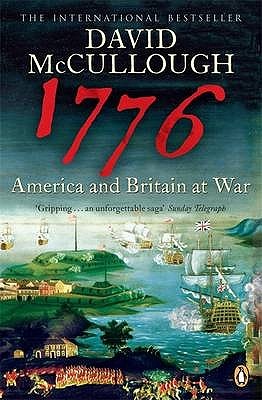
1776 by David McCullough 2005 / 294 pgs. (96,500 words) Military, War, and History
1776 is a very fascinating book that primary focuses on the first full year of the Revolutionary war. It starts with King George III address to parliament on 26th Oct 1775 where he states the a declaration of Independence will be the eventual goal of the British Colonies, this is eight months before the Declaration of Independence is signed on 4th of July, 1776.
The narration of the book goes into the decision to give overall command of the Continental Army to George Washington and all the fascinating trials and defeats that Washington partakes in just 1776. Details that modern history classes don’t tell that would really show the true miracle that the United States won the war in the first place.
Just a sample of this is the endless Enlistments that would expire and soldiers that Washington desperately needed would return home. Washington’s Army pulling out of many engagements and retreat for much of the year causing questions to arrise within the Army and even Congress whether the command of the Army should be handed to Washington’s deputy commander General Charles Lee, although this wouldn’t be a question after Lee is captured by the British on 12th December 1776.
Another highlight of the book is the importance that Colonel Henry Knox and even a young Alexander Hamilton would have on the Revolutionary Army in 1776.
For anyone interesting in the history of the Revolutionary War, this is a definitely a wonderful read. I would recommend it.
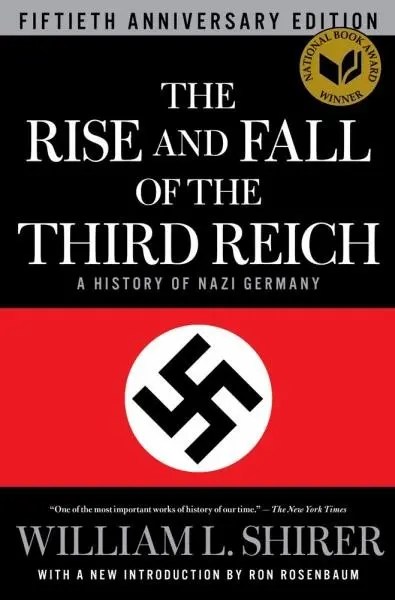
The Rise and Fall of the Third Reich by William L. Shirer 1960 / 1264 pgs. (316,000 words) Political/History/Military and War
What an epic! Sixty-nine days were taken to finish this monster. What a beast it is! This was a unique read; when I ran across that finish line and turned the page into the notes section, I was not disappointed and did not feel like I had wasted my time reading this book. Like At Dawn We Slept, some of my favorite history books are written by historians who had access to papers and witnesses after the day’s events. Most, if not all, were never there to witness the events they wrote on.
Mr. Shirer witnessed many of the events during the Third Reich’s rise—watched many of the famous Nazi rallies and important events and then reported for CBS radio from Berlin. His relaying of the feeling of the people on 1 September 1939 when Germany invaded Poland is a complete contrast to what standard scholarly works state. After the War, he had access to the secret government papers and diaries of prominent Nazi leaders the United States collected and brought to the U.S. after the War. He researched this book before the documents returned to Germany in the late 1950s.
Unlike many history narratives dense with information per paragraph, this book is an easy read. It is easy to follow and does not get the reader lost in multiple mounds of facts. The flow is simple; although sometimes not in a linear direction, it is still easy to enjoy. While reading this, I never felt like I was falling asleep with information overload. I never looked at the time, wondering if my allocated hour was up. The timer would often ring, and I would keep reading, at least finishing the section that I was devouring.
Mr. Shirer starts with the birth and history of Adolf Hitler until his introduction to the German Workers Party in 1919. Then he continues with the historical rise of Hitler to Chancellor of Germany in 1933 and even the gritty details of how he gained absolute power over Germany after the Reichstag fire on 27 February 1933.
Then, Shirer paints a picture of Germany starting by rebuilding her economy. Led to Anschluss, then the occupation of the Rhineland, to the invasion of Poland in 1939, while leaving out no details of other events in those times. The beginning of W.W. II. is only the 52% mark in the book. The many pieces of events from 1933 to 1939 are so delicious that it is difficult to put the book down.
Naturally, 1939-1941 was an excellent time for the German military as it conquered and occupied much of Europe. Shirer illustrates how Hitler demanded the Army conduct operations as he envisioned and was victorious until the fall of France. Because of his victories, he believed he was the greatest leader in Germany’s history and that his armies could not lose. This belief would eventually lead to his downfall with Operation Barbarossa, 22 June 1941, the invasion of the Soviet Union. This date is synonymous with Napoleon crossing the Niemen in 1812 on his way to Moscow; Germany crossed the same river at the start of their invasion of the Soviet Union. However, unknown at the time, this was the beginning of the downfall of the Third Reich.
The disaster that is the invasion of Russia decimates the German army. The inclusion of the United States in the attack on Pearl Harbor by Japan strengthened the power of the Allies. Shirer then details many events and several assassination attempts on the Fuhrer, including the infamous 20 July 1944 plot, known as Valkyrie. After Hitler’s survival, circumstances led to the last German assault, the Battle of the Bulge, and the Soviets surrounding Berlin. Details of the final days in the Fuhrer bunker. Finally, concluding with the suicide of Hitler on 30 April and Germany’s unconditional surrender on 7 May 1945. This narrative has everything in between and is a delicious delight to devour.
Would I recommend this book? Absolutely. It is an effortless read, not dense. Although, as previously mentioned, it does mess with chronology, it is not making crazy loops like other history books I have read. I would forewarn you that this is a monster; this will take some time unless you are a speed reader! Also, I would read this only if you are interested in this subject. For those with no interest in history or W.W.II, you would shred this book and then burn it to assure it was gone from your library. Or use it as a doorstop.
Enjoy a good cup of coffee and a delightful book!
Lopaka
NOTE: I noticed after I finished the book and was relaxing while thinking about what I was going to write that today is 7 May, the 77th Anniversary of V-E day. Yes, I did find it ironic that I finished a book about the rise and fall of the Third Reich on the 77th anniversary of its fall into history.
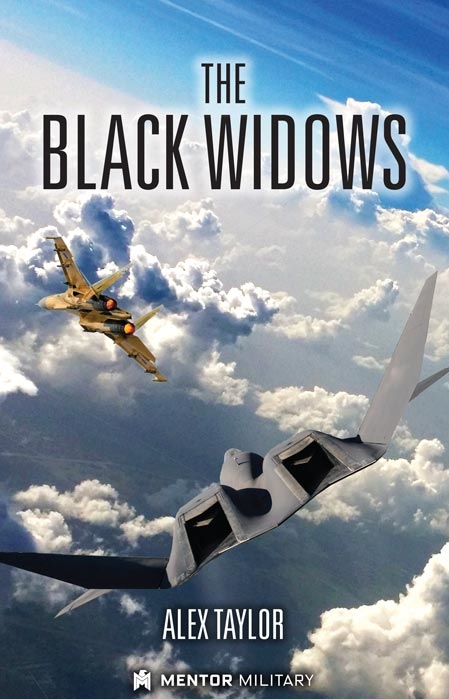
1st Lt Ian Archer, USAF, an F-15C fighter pilot, is cocky and flamboyant; however, he does have a heart that doesn’t appear too often. Grounded is a dreaded word for any flyer. A simple meaning, his flying days are over. From his USAF Academy days to flying the vaunted F-15C, all that he worked for is gone in a flash. What is going to happen next? Is his career finished? Not only is Archer grounded, but he is also ordered to report to a missile base in Montana to sit in silos waiting for World War III.
After arriving, he discovers that he is not there for the Missile assignment. He joins a highly classified squadron, the 13th Fighter-Intercepter Squadron, the Bulls, that fly the F-23 Black Widow. The leadership is unconventional, and Ian has to deal with unusual rules and the mission profile of an aircraft that officially was retired after the ATF program. As his training goes south in this military thriller, he starts to question himself and his abilities.
In the beginning, it’s hard to get into as Ian is a cocky-arrogant flighter pilot that can’t do wrong. However, the narrative starts to chip away at Ian’s armor over time. The narrative gets exciting once the reader pasts the ego of Archer.
I enjoyed the challenges that Archer had to take on both as an officer and individual. For the last 145 pages, I couldn’t put it down because I was so curious to know what was going to happen. I would recommend this book to anyone that enjoys a fighter pilot-oriented story. This book is a Tom Clancy meets Ian Fleming. The technical military thriller style of Clancy and the center-focused character of Fleming. I truly enjoyed it and am looking forward to reading what is next for Archer and “The Bulls.”
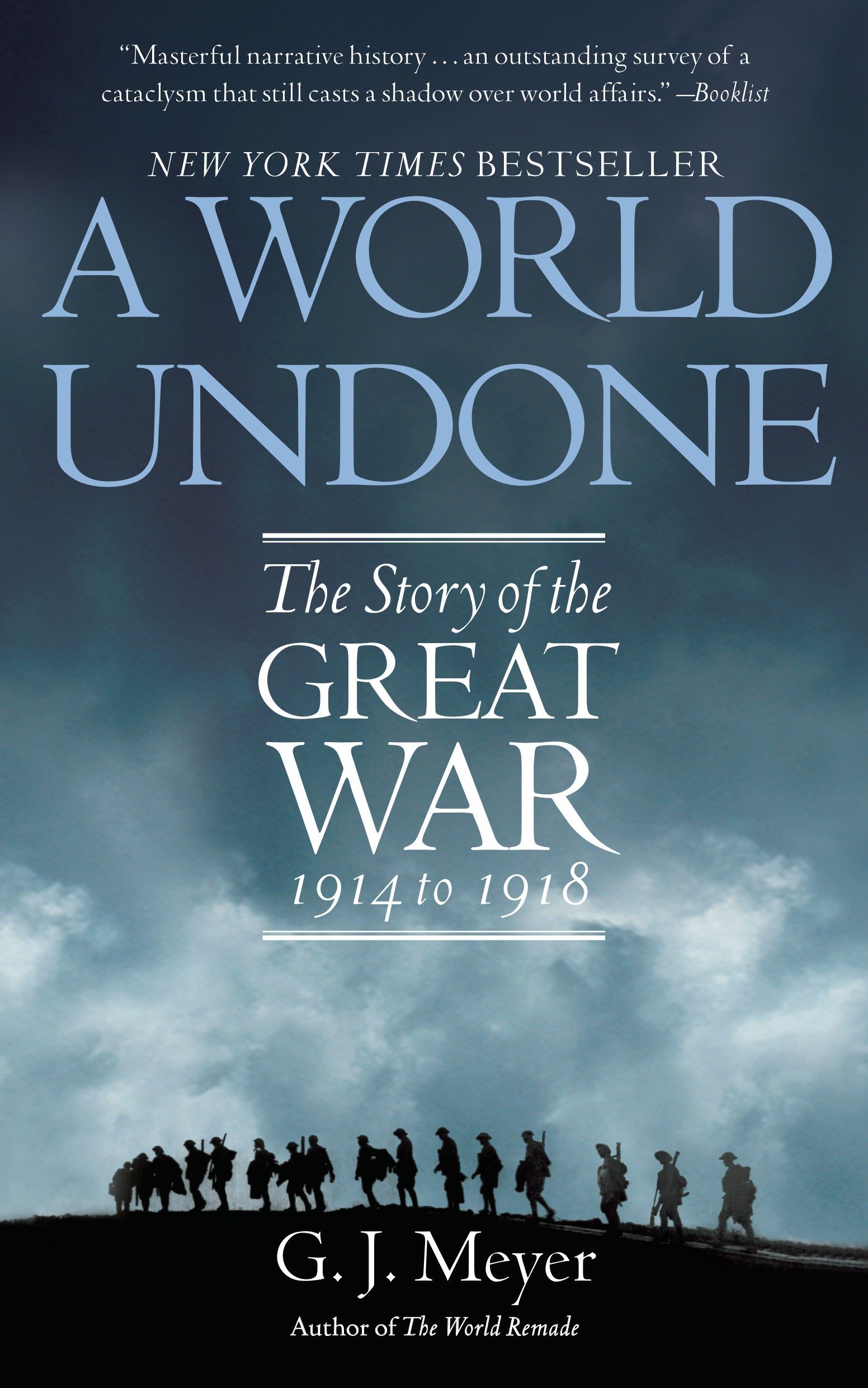
The World Undone The Story of the Great Warby G. J. Meyer 2006 / 658 pgs. History/ Military and War
What a monster of a book! It took me over a month to finish this masterpiece. It is a very well-researched and detailed chronicle of the first world war. Also, it is more than just belligerents going to war. There is much more in this than all the key battles. It is a wonderful narration about the war and its impact on the world.
The book is laid out in the same manner as many historical chronicles. A section for each year is broken into chapters explaining a battle or significant event. What makes this narration more interesting is the humanity that Meyer tries to add to the narration. At the end of each chapter is a background that goes into details that add more seasoning. Many of them are fascinating, especially about some of the biographies of world leaders or generals.
The impact on humanity is illustrated with challenges citizens experienced after the destruction of cities and forced enlistment of men and boys by many nations—Germany, for example, enlisted in 1917 those born in 1900.
Meyer paints an outstanding picture of the overall war. While going into delicious details, naturally, he couldn’t feature every event like the Germans’ surrender on Fochs train car and how Foch walked off at the negotiations. This event played a small but impactful historical role in the French surrender to Germany in 1939.
Would I recommend this? Absolutely! I enjoyed every minute I was able to read this book. At 658 pgs, it’s not a monster for page count, but a different demon for depth. It is number 2 on my W.W.1 books, after the Guns of August.
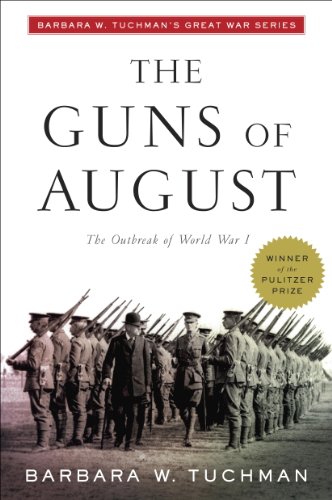
The Guns of August by Barbara W. Tuchman 1962 / 511 pgs. History/Military and War
The Guns of August is a historical masterpiece! While I was reading, I never wondered how much longer I have to go or when it is going to end. I just wanted to read more without looking up the key players to discover what happens to them.
The Guns of August is about the first and most critical month of World War One. It starts with a narrative of events before the war—specifically, the planning of operations and treaties that were signed between nations before the conflict. Also, very fascinatingly, the joint planning between the British and French military for contingency plans in case Germany attacked France through Belgium. The riveting detail was these plans were started in early 1900’s. Also, both the French and British planners understood the critical need for a combined commander of all forces on the Allied side if hostilities started. Yet, in the first critical month, the BEF Commander in Chief refused to allow the BEF to fall under the French leadership of Joffe.
The assignation of Archduke Franz Ferdinand of Austria by the Black Hand, the single event that changes the face of Europe and power in the world, is just mentioned briefly in the book. The month that all the critical decisions that led to the war’s start are a simple sentence. If you are hoping for details about that month, this is not the narrative to read. The focus of this narrative is the first month of the war.
After Austria declares war on Serbia, the main focus turns to the French and German military’s execution of Plan 17 and the Schlieffen plan. How the Joffe’s refusal of deviation of Plan 17 even when the situation called for moving of forces to counter the German offensive. Molke’s changes to the Schlieffen offensive before the conflict. His melancholy during August and the lack of secure communication that would play critical roles in the German offensive that would prevent the Schlieffen plan from being executed and even a complete German victory within just over a month.
Overall, this is a fantastic read. It is definitely on my top five list for history books, along with At Dawn We Slept. I’m already looking forward to reading more by Barbara Tuchman. For anyone interested in reading about the start of World War I, I would highly recommend The Guns of August.
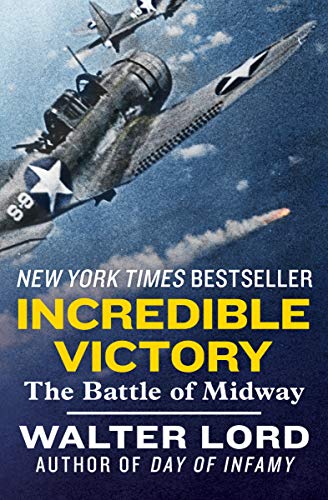
Incredible Victory: The Battle of Midway by Walter Lord 1967 / 268 pgs. History, Military and War
Incredible Victory is a Walter Lord history classic. It’s a detailed account, very similar to Miracle at Midway, of the planning and attack from both sides of the battle of Midway. There are a few minor details between both books that are interesting; however, they don’t change any of the impacts of the fight.
A fascinating point illustrated in both books is the “fog of war.” The in-validness of accounts as told by those that fought in the battle. Both sides paint a different picture that makes a historian’s job more challenging trying to chronicle events. Also, the written history by both nations after the battle and official reports. When comparing the reports, there are very vast discrepancies on both sides. However, it’s understandable that no one has time to write down precise information on what happened when in battle. They leave that to the historian to sort out through logs, diaries, and interviews.
Walter Lord pointed this out at the end of the book in a final section, mentioning that many U.S. Navy pilots swear they properly identified the Carrier based on the location of the Island. However, the island location wasn’t the proper one for the Carrier they believed they attacked. Also, taking in the official records of the first wave, the Akagi and Kaga were attacked, and no one bombed the Soyru. The infamous “fog of War.”
Overall, this is a beautiful read and easy to follow. For anyone interested in reading about Midway’s Battle, I would recommend either Incredible Victory orMiracle at Midway.




 nyghteulen