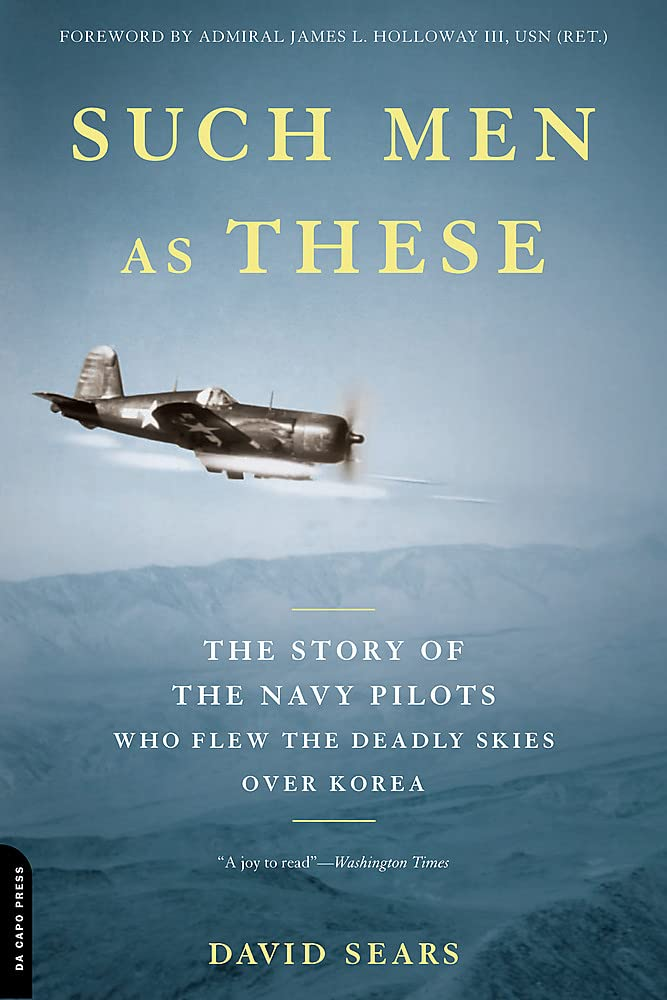

Such Men as These by David Sears
2010 / 396 pgs. [336 Narrative] (118,272 words) Military Historical
James Michener’s assignment from the Saturday Evening Post to report on the Korean War ultimately yielded the notes that formed the basis for his famous book, The Bridges at Toko-Ri. Inspired by Michener’s work and potentially his notes, David Sears crafts a fascinating narrative focusing on the challenges and contributions of the U.S. Navy’s Task Force 77 during the Korean War (1950-1953). The book offers a compelling account of the Navy’s response, weaving in Michener’s own experiences and the war’s impact on him.
The conflict began on June 25, 1950, when North Korea invaded South Korea. The United States military, facing a conflict it hadn’t anticipated, was largely unprepared. World War II had concluded only five years earlier, leading to a significant drawdown of active-duty forces and meaning much of the technology employed in Korea was leftover from the previous war. Consequently, from the Navy’s perspective, the demands of the conflict fell heavily upon reserve forces rather than the depleted active component.
Such Men as These recounts numerous experiences of naval personnel, particularly pilots assigned to Task Force 77. One particularly striking story involves Ensign Jesse Brown, the first African American Naval Aviator, and Lieutenant (Junior Grade) Thomas Hudner, who received the Medal of Honor for his valiant attempt to rescue the downed Ensign Brown.
While the book doesn’t delve deeply into the specific air combat tactics of the war, it excels at capturing the human element. It effectively covers the experiences of those serving with Task Force 77 throughout the conflict.
Would I recommend this book? Absolutely. Such Men as These is a great read and does not disappoint. However, readers should know what to expect: if you are seeking detailed analyses of battles and military tactics, this might not be the book for you. But if you are interested in the powerful, human stories of Naval Aviators and personnel serving under extraordinary circumstances during the Korean War, this book is an excellent choice.
Enjoy a good cup of coffee and a delightful book!
Lopaka
A Final Thought: On a personal note, I have worn the POW/MIA bracelet for Lt. Orville M. Cook, USNR, for over 30 years. He was an AD-3 Skyraider pilot shot down over North Korea on July 18, 1951, and is mentioned by name in the book. While I appreciated seeing his name included and learning about the context before and after his loss, I was naturally hoping for details on his specific final mission, which weren’t present. His story, and its partial inclusion, underscores the book’s focus on the broader human tapestry of Task Force 77, even if it means some individual threads aren’t fully explored.
 nyghteulen