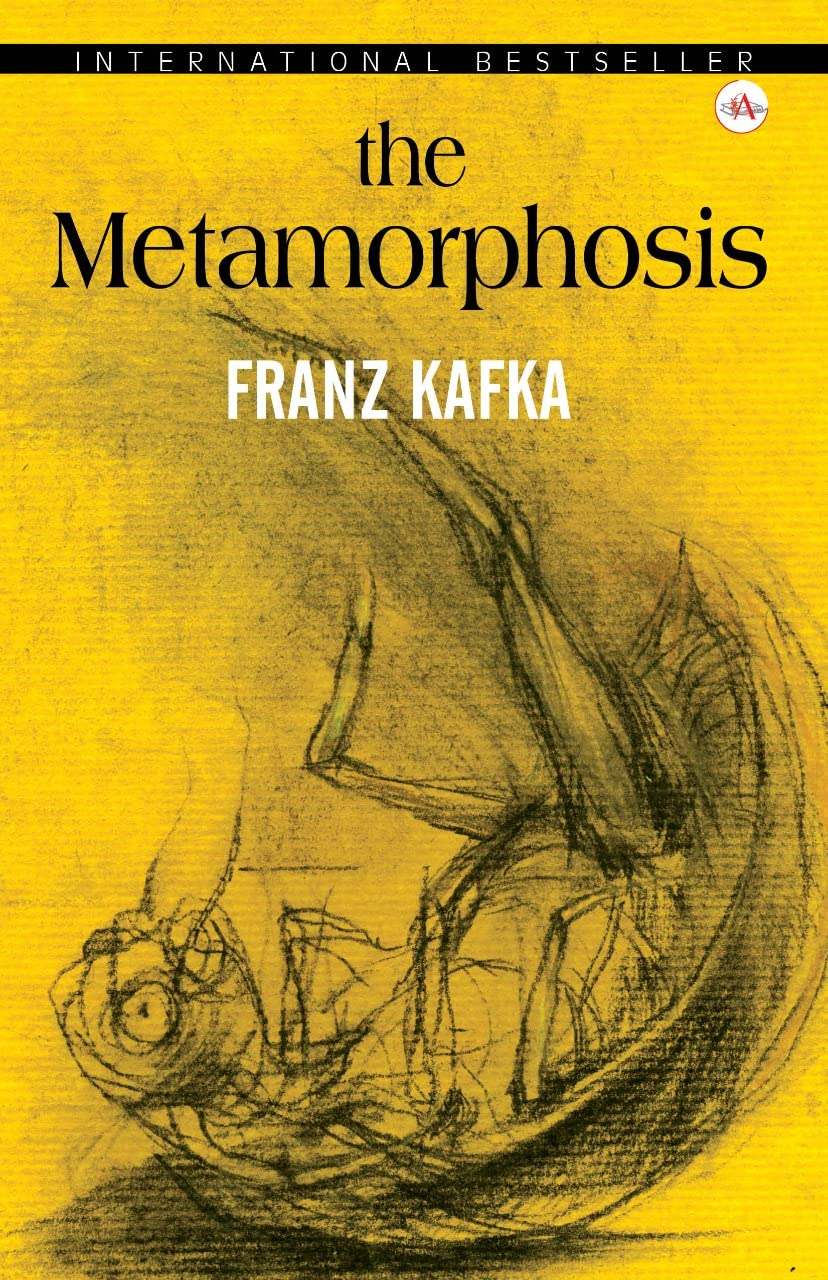
The Metamorphosis by Franc Kafka 1916 / 78 pgs. (22,009 words) Classic
Kafka’s The Metamorphosis opens with Gregor Samsa awakening one morning to find himself transformed into what the author calls a “monstrous vermin.” The novella then focuses on the reactions of Gregor and his family as they confront the reality that he is no longer the traveling salesman and sole breadwinner who supported them. This disturbing event sets the narrative in motion.
Although it’s a short novella—only about 78 pages, which I read in roughly two hours—it carries a significant emotional weight. From the beginning, I was curious about where the story would lead. The narrative develops towards an ending that feels both inevitable and deeply sad, leaving the reader with much to consider about the characters.
Despite its seemingly straightforward narration, the story provokes considerable thought. It’s easy to see why this work is hailed as a classic.
Would I recommend it? Absolutely.
Enjoy a good cup of coffee and a delightful book!
Lopaka
Interesting Notes:
One of my favorite movies is Spaceballs. There is a line that I never understood until now. After I finished The Metamorphosis, I was working on something when the line came to my head and I had that Ah Ha moment.
The line,
Colonel Sandurz “Preparing ship for Metamorphosis Sir.”
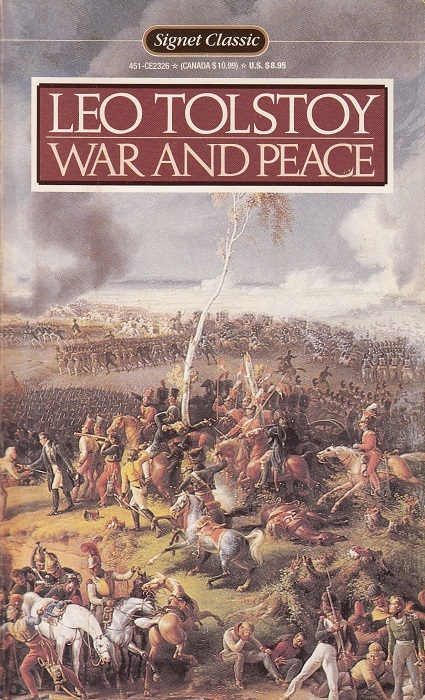
War and Peace by Leo Tolstoy (Translated by Louise and Aylmer Maude) 1869 / 1,394 pgs. (587,000 words) Classic
War and Peace is, to date, the longest novel I have ever read – and it’s a truly epic story. However, describing this book isn’t easy. It avoids simple narration and defies traditional structures. There’s no single central character; instead, the reader follows several individuals, a mix of fictional creations and historical figures. The narrative weaves around significant historical events, such as the Battle of Austerlitz, the lead-up to the French invasion of Russia, and the eventual burning of Moscow.
This novel offers more than just a story; it delves into philosophical questions of right and wrong, personal tragedies, and triumphs. It’s quite common to be following a character’s experiences, only for Tolstoy to digress into a philosophical discussion, such as debating the reasons and responsibility for Moscow’s burning before Napoleon’s arrival.
The narrative structure doesn’t follow a conventional pattern, yet somehow, it works. While reading, I sensed Tolstoy’s desire to innovate beyond the traditional novel format. Deeper into the book, I initially suspected Tolstoy’s main goal was simply to write about the burning of Moscow, using the surrounding story merely as a backdrop to convey the events of the occupation. While I was wrong about his sole focus being the Moscow fire, I was right that he structured the narrative purposefully to tell a larger story.
The story unfolds within the world of Russian aristocracy, an environment Tolstoy, as a Count himself, knew intimately. We follow numerous characters throughout the novel – some you grow to love, others to dislike. Pierre Bezukhov provides a fascinating example. He begins as the illegitimate son of a dying Count, with many hoping to inherit the vast fortune. Believing he’ll receive nothing, Pierre is unexpectedly thrust into the highest echelons of aristocracy when his father leaves him everything. This sudden change confuses Pierre, who feels unprepared for the responsibility and is still searching for his purpose in life. Much of his journey involves this search for meaning, during which others sometimes take advantage of his nature, including his wife, who gains access to much of his fortune.
Another compelling character is Natasha Rostova, a beautiful young countess. She falls in love and becomes engaged to the older Prince Andrei. As part of an agreement with Andrei’s father, they must wait a year before marrying, during which Andrei serves in the military and tours Europe. Natasha waits, though unhappily, feeling her youth slipping away. During this time, she develops strong feelings for Andrei’s friend, Pierre Bezukhov. Tolstoy intriguingly portrays this period from Natasha’s perspective, allowing the reader to feel her painful anticipation for Andrei’s return, mingled with the awareness of passing time.
As mentioned, exploring War and Peace is a vast undertaking. Readers face a few challenges, common for novels of this scale: primarily keeping track of the numerous characters and managing the book’s sheer size. Dedicating enough time is crucial; realistically, plan for at least two to three months to journey through it.
Interestingly, I read the novel on my iPad, despite owning a paper copy. The electronic format offered a significant advantage: easy translation. Tolstoy often incorporates French phrases and sentences into the dialogue – reflecting the fact that much of the Russian aristocracy at the time spoke French. While understanding the French isn’t essential to follow the plot, translating it (which was simple using the tablet’s highlight feature, far easier than juggling a dictionary) definitely enhances the reading experience and provides richer background context.
So, is dedicating the time worth it? Absolutely. I found War and Peace surprisingly readable. It wasn’t the overly complicated text I had feared – perhaps I’ve just become more accustomed to reading such books now. While the first 100 pages or so are quite dense, the narrative smooths out considerably afterwards. The main challenge truly is its length, not its complexity.
Once you reach the final page, there’s an immense sense of gratification that comes with having completed such a masterpiece. For me, it echoed the feeling I had after finishing The Stand – another classic, famously long novel.
Enjoy a good cup of coffee and a delightful book!
Lopaka
Interesting Notes
While reading War and Peace, I initially assumed Tolstoy’s primary goal was to write about the French occupation of Moscow in 1812, creating the surrounding narrative simply to support that event. However, I learned the reality was quite different.
Tolstoy originally intended to write about the Decembrists returning from exile (an event occurring much later than the novel’s timeline). But he realized he couldn’t adequately portray their return without first explaining the Decembrist revolt of 1825. To explain 1825, he felt it necessary to narrate the pivotal events of 1812, including the French invasion. Going back further, he determined he couldn’t properly set the stage for 1812 without exploring the precursor events around 1805, such as the Battle of Austerlitz.
And that is where War and Peace actually begins. By the time Tolstoy finished, he had crafted a 1,300-page epic that covered the years leading up to and including 1812, but he never reached the Decembrist events he had originally set out to chronicle. So, while the novel was conceived to eventually narrate specific historical moments, it grew into a monumental work that laid the groundwork but stopped before reaching that initial destination.
Furthermore, reading about Tolstoy’s own life, I realized how closely the character of Pierre Bezukhov mirrors aspects of Tolstoy’s own experiences and philosophical searching.
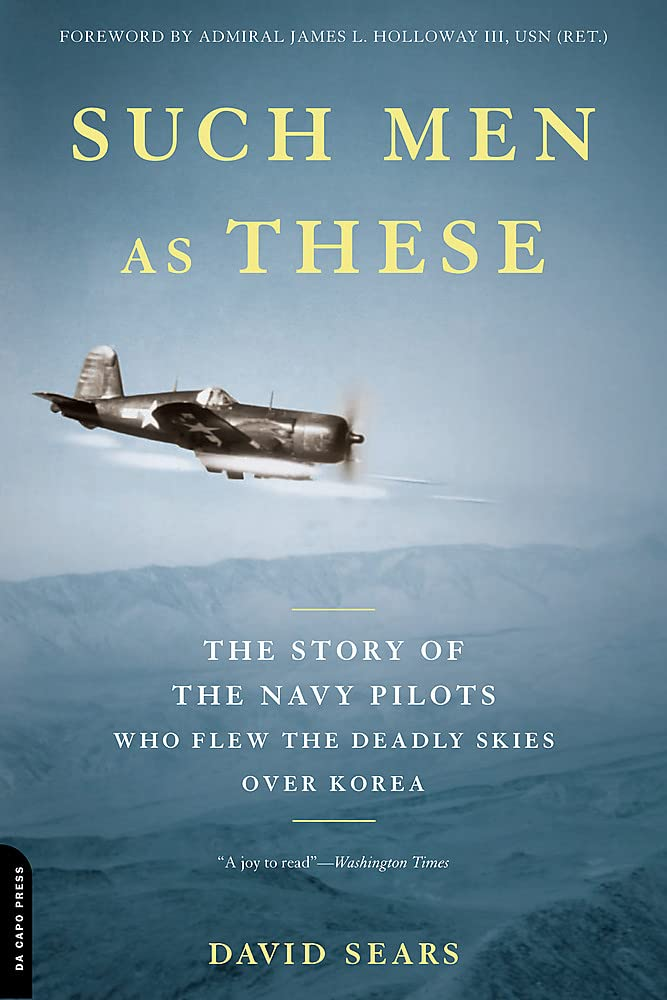
Such Men as These by David Sears 2010 / 396 pgs. [336 Narrative] (118,272 words) Military Historical
James Michener’s assignment from the Saturday Evening Post to report on the Korean War ultimately yielded the notes that formed the basis for his famous book, The Bridges at Toko-Ri. Inspired by Michener’s work and potentially his notes, David Sears crafts a fascinating narrative focusing on the challenges and contributions of the U.S. Navy’s Task Force 77 during the Korean War (1950-1953). The book offers a compelling account of the Navy’s response, weaving in Michener’s own experiences and the war’s impact on him.
The conflict began on June 25, 1950, when North Korea invaded South Korea. The United States military, facing a conflict it hadn’t anticipated, was largely unprepared. World War II had concluded only five years earlier, leading to a significant drawdown of active-duty forces and meaning much of the technology employed in Korea was leftover from the previous war. Consequently, from the Navy’s perspective, the demands of the conflict fell heavily upon reserve forces rather than the depleted active component.
Such Men as These recounts numerous experiences of naval personnel, particularly pilots assigned to Task Force 77. One particularly striking story involves Ensign Jesse Brown, the first African American Naval Aviator, and Lieutenant (Junior Grade) Thomas Hudner, who received the Medal of Honor for his valiant attempt to rescue the downed Ensign Brown.
While the book doesn’t delve deeply into the specific air combat tactics of the war, it excels at capturing the human element. It effectively covers the experiences of those serving with Task Force 77 throughout the conflict.
Would I recommend this book? Absolutely. Such Men as These is a great read and does not disappoint. However, readers should know what to expect: if you are seeking detailed analyses of battles and military tactics, this might not be the book for you. But if you are interested in the powerful, human stories of Naval Aviators and personnel serving under extraordinary circumstances during the Korean War, this book is an excellent choice.
Enjoy a good cup of coffee and a delightful book!
Lopaka
A Final Thought: On a personal note, I have worn the POW/MIA bracelet for Lt. Orville M. Cook, USNR, for over 30 years. He was an AD-3 Skyraider pilot shot down over North Korea on July 18, 1951, and is mentioned by name in the book. While I appreciated seeing his name included and learning about the context before and after his loss, I was naturally hoping for details on his specific final mission, which weren’t present. His story, and its partial inclusion, underscores the book’s focus on the broader human tapestry of Task Force 77, even if it means some individual threads aren’t fully explored.
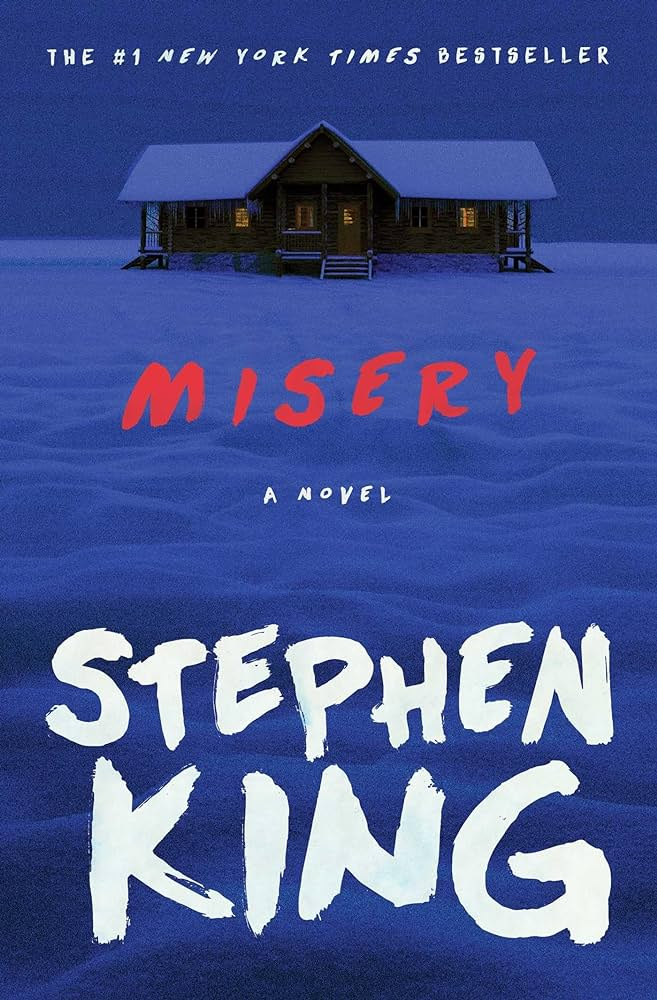
Misery by Stephen King 1987 / 454 pgs. (110,565 words) Psychological-Horror-Thriller
Misery, a classic by Mr. King. It grips you from the start and does not let go. Paul Sheldon, author of the Misery Chastain novels wakes up from a confused and drugged out haze. As he gathers his wits and surroundings, he feels agonizing pain from his hips and below. He meets his savior, Mrs. Annie Wilkes, not only a former nurse, but also his number-one fan. Also, he realizes that he is not in a hospital being cared for by trained professionals but held against his will at Annie’s house. However, with two shattered legs, he is not going to be leaving anytime soon.
Annie loves the Misery books and really does not care for Pauls other works. As he has heard and read from other fans, please, just write those wonderful Misery books –signed, your number-one fan. His latest manuscript was in the car that Annie pulled him from. She reads it and finds it horrible, his worst writing ever. She did mention that she was waiting for the latest Misery book, Misery’s Child, to be released in paperback. What she does not know yet is Paul killed Misery. He despises Misery Chastain, as he feels he can write a lot more than just romance novels that swoon all of his fans. Once Annie has Misery’s Child in hand and devours it, she is terribly upset, and blames Paul for murdering Misery.
With the help of a BBQ pit, Annie demands Paul to burn his latest manuscript, the horrible book called Fast Cars. Once that is complete, she brings him an old Royal typewriter and has him author a book just for her, the greatest novel he has ever written, Misery’s Return! That, dear readers, is the first fifty pages of this masterpiece, for it only gets worse for Paul, much worse as he drafts the only book that will keep him alive.
Annie Wilkes, I believe is one of Mr. Kings greatest antagonist. She is one of the most polarizing characters because you are not sure what she will do at any given moment. This effectively makes the narrative an on-the-edge of your seat experience. The conclusion is incredibly satisfying with frightening consequences.
This novel, I felt, was a narration of frustration from Mr. King as he feels like Paul in various interactions with fans that have played out over the years. Considering, Mr., King received backlash from fans after the release of Eyes of the Dragon. Many fans just demanded him to continue writing horror books. I would imagine it was the same feeling that Tom Clancy received when Red Storm Rising was published, which was not a Jack Ryan novel, and readers demanded another Ryan book. I could imagine many authors reading this novel and stating, “that is how I feel”. Geroge R. R. Martin faces this all the time with his fans demanding for the author to sit a write Winds of Winter and do nothing else until it is complete.
Would I recommend this book, oh yeah! It is a great read and did not disappoint.
Enjoy a good cup of coffee and a delightful book! Lopaka
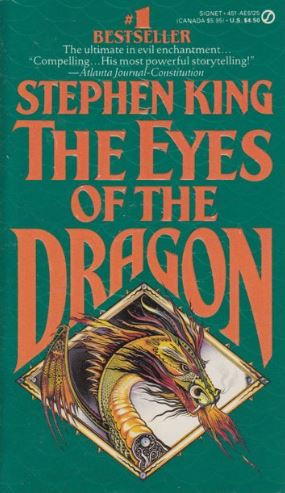
Eyes of the Dragon by Stephen King 1984/ 378 pgs. (90,335 words) Fantasy
Eyes of the Dragon, a different book than what we are used to, from Mr. King. When I read this book over 30 years ago, I was deep into fantasy books like the Dragonlance Saga. This is one the first books that I saw the title, read the short intro on the back cover, took it home from the school library, read it and thought, this book sucks! It was my first foray into the world of Mr. King. Reading this book again with fresher eyes and a different expectation, I was not jaded when I first finished it.
In the book, we get reintroduced to Flagg. He is the Magician that “advises” the King of Delain, Roland. Not the same Roland from the Gunslinger. Flagg thirst for chaos and sets things in motion to see that it happens. He arranges for those that stand to block his pursuit of chaos for the Kingdom with death or imprisonment.
Flagg arranges for the death of the Queen, Sasha, while she gives birth to Thomas, the second in the line to the throne. Flagg felt that Sasha was starting to gain influence of King Roland that would interfere with Flaggs plans. Peter, the first born, was like his mother and Flagg could see that when Peter became King, he would dismiss Flagg as his advisor. Thomas, on the other hand, was like his father, King Roland, and easily swayed by the powerful influence of the Magician.
Flagg arranges for Peter to be charged and found guilty of the vicious murder of his father, King Roland, and imprisoned for life in the great tower called the Needle. His younger brother, Thomas, becomes King at the age of twelve. With King Roland and Queen Sasha dead, Prince Peter locked in the Needle, Flagg has complete control over King Thomas to create the Chaos that he desires for the Kingdom of Delain. This, dear reader, is all I will tell you about the story.
Mr. King wrote this in a narrative form as if he were a bard or great storyteller reciting the plot to you and even includes his own thoughts in the story.
Would I recommend this for reading, not really. Still not one of his great novels and for a Stephen King book, not what you would expect. It is not horrible, just not even in the top tell books that I would recommend from Mr. King.
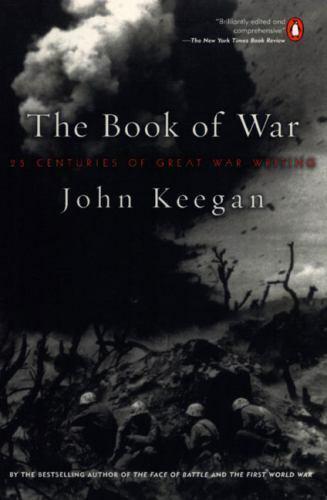
The Book of War: 25 Centuries of Great War Writings by John Keegan 1999 / 667 pgs. (200,000 words) History, Military & Warfare
As the title implies, this is a collection of writings that describe warfare. The premises were to show how warfare changed over the generations. It is a collection of writings, not just from the leaders or soldiers that fought in many conflicts. It is also from historians, witnesses, and even an obituary. It starts from excerpts of the Peloponnesian War by Thucydides and ends with an account from the Gulf War. It includes poems and narrations.
Various accounts throughout history, as Mr. Keegan noted in the beginning, were how the enemy was treated when captured. In early times, entire nations were destroyed, and their citizens were made into slaves or pressed into service. Militaries of early civilizations had soldiers that served for their entire life. As time progressed, warfare changed on account of the improvement of technology over time to make warfare even more deadly and societal challenges.
What also made many of these accounts fascinating was the personalization of many narrations that historians would miss in their writings. One gets a more intimate feeling when reading accounts that the humanity is not edited out.
A couple of narrations that I found very fascinating were “A Farewell to Arms” by George Peele which was a Commemoration of the Retirement of Queen Elizabeths champion as he laid down his arms. A narration by Inga Clendinnen about the Aztecs use of a gladiatorial stone that would be the “final” battle of an enemy warrior before they collapsed on the stone from blood loss. Davy Crockett’s account of fighting with the Choctaw and Chickasaw during the war of 1812. James Bodell “A Soldiers view of Empire” about wives and girlfriends accompanying soldiers to the ship before departure and then left to fend for themselves while the men were away. Something that people in today’s military do not think about with families of yester years. Rudyard Kipling poem “Tommy” about the treatment of soldiers after the war. Stephen Graham’s “How News of War,” an account of how men were notified for conscription during the first world war.
I would recommend this book to anyone that enjoys reading about warfare and military.
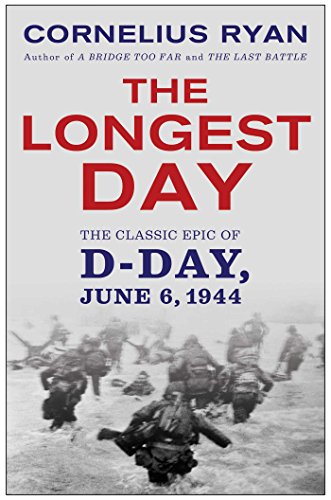
The Longest Day by Cornelious Ryan 1959 / 277 pgs. (88,000) Miliary & War, History
6th June 1944, the invasion of Europe by the Allies at Normandy, France, also marks the end of the German occupation of Europe. On 6th May 1945, the war in Europe would be over. This book is a narration of the events of that historical day. The Longest Day is not as detailed as Six Armies in Normandy, butit is still an excellent narration that does not disappoint. The movie The Longest Day is based on this book; as one reads it, much was captured in the movie as narrated. Mr. Ryan breaks down the event into three parts.
Part One – The Wait
The wait starts two days before the invasion. The story focuses on Rommel trying to secure the beachhead as he knew that if he could stop the attack there, it would spell out a disaster for the Allies and set them back. Eisenhower made many decisions about when the invasion would start based on weather reports that were never good for the conditions the allies would prefer—also, the long wait for the troops as they waited for the order. What is interesting is the details mentioned that many other books leave out. For example, Rommel was going to meet Hitler on 6th June to convince the Feurer to release the Panzers in Pas-de-Calais, for Rommel knew they were the best chance for the Germans to stop the invasion force. Another detail was Operation Gambit, the British minisubs X30 and X32 sitting off the coast to help guide the landing craft to the beach.
Part Two – The Night
The beginning of the invasion. The landing of the Paratroopers from the British and American forces, many of them were scattered all over Normandy during the night drops. Many British landed in the swamps and were never found. The landing at St-Mere-Eglis with the Germans shooting at the 82nd as troopers descended into the town and illuminated by the fire the French were trying to extinguish. Even the Paratrooper that landed on the church and had to listen to the bells clang all night until the Germans finally lowered us. Gliders landing and crashing with troops on board. The taking of Pegasus Bridge by the British.
Part Three – The Day
This is the moment that most people know: the invasion of the beach. Ryan describes the E-Boat attack that sunk the Norwegian Destroyer Svenner—the sinking of the USS Corry by a sea mine. The LST and Higgens boats challenged landing on the beach. At Utah Beach, the troops disembarked at the wrong spot, and Gen Roosevelt said infamously, “We’ll start the war from right here!” How the British and Canadians faced less resistance. The fight at Omaha Beach was the bloodiest part of the invasion.
Like many writings about historical events, this book has parts other books do not mention, like Operation Gambit. It is less detailed than Six Armies in Normandy or At Dawn We Slept. It is still a great read, and if anyone asks for a delightful book about D-Day, I recommend The Longest Day.
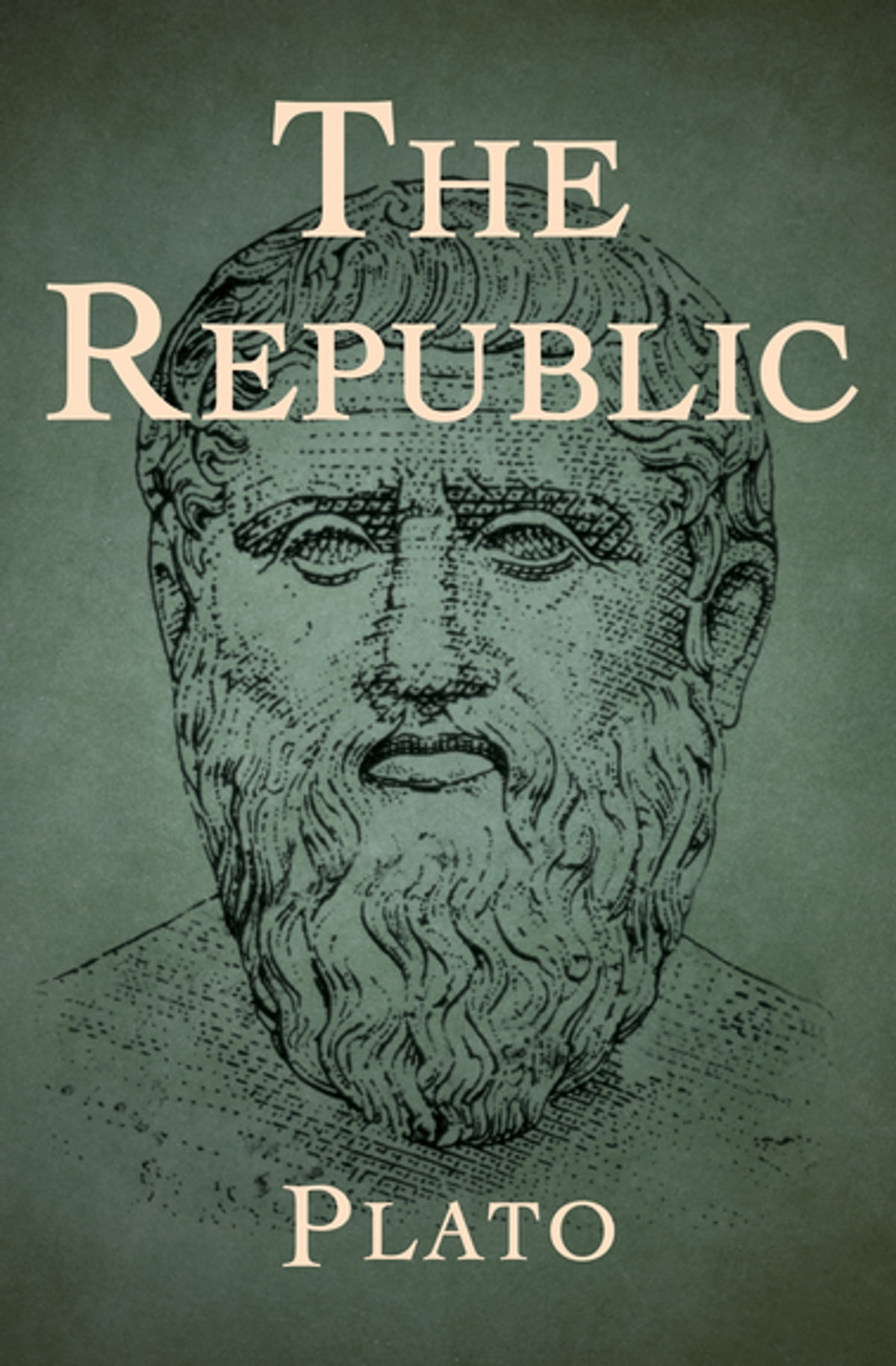
The Republic by Plato 380 B.C. / 206 pgs. (51,500 words) Classic, Political Science, & Philosophy
This book has been on my bucket list for a while. As a Political Scientist, it’s a “should” read. Also, on many must-read-before-you-die lists, this book is must-read. Interestingly, it was never mentioned or required reading in graduate school.
The Republic is broken into ten books, called chapters today. It is written in Socratic dialogue between Socrates and various people. A debate of point and counterpoint arguing what is the perfect government system. The discussions within the republic range from what is Justice to when people should marry. What poetry should be allowed to be written, and for what purpose. What type of music should be allowed. Even what education people should have.
Some highlights that I found fascinating:
An argument is that men and women should have equal education and be treated equally.
There is a fascinating debate on how warfare should be conducted and even the proper treatment of the enemy.
The relationship between the sexes.
Also, one interesting discussion was about what makes a good leader. Those who are reluctant to rule – rule quietly – are the best leaders. Those who desire and are eager to rule are the worst.
The Republic is an interesting book to read, and I often slowed down and carefully read a section to ensure I understood what was being discussed. I often watched a video on YouTube about the “book” I just finished to ensure I understood the meaning of the dialogue. The only section that got me lost was Book 8, which is the section that means the most for many readers, “The Cave.” I had to read that twice before the “light bulb” finally turned on.
The Republic is a good read. I did enjoy it and the challenge that comes with reading it. Although, I can say I’m not a fan of Socratic narration.





 nyghteulen