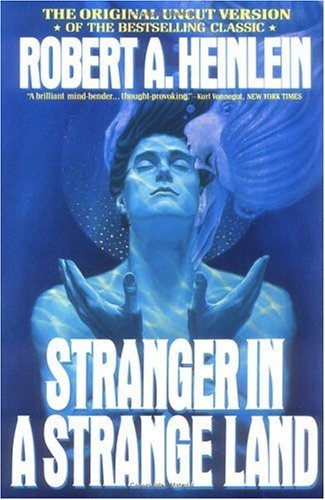
Stranger in a Strangeland by Robert A. Heinlien 1961 / 663 pgs. ( ~ 220,000 words) Sci-Fi Classic
Robert A. Heinlein’s Stranger in a Strange Land is a truly unusual book. The narrative follows Valentine Michael Smith, an orphan born on Mars during the first human expedition. Because the original crew consisted of married couples who engaged in “open relationships” during the journey, Mike’s parentage is unique. He ends up as the sole survivor of the mission, raised entirely by Martians and immersed in their language and culture. Twenty years later, a second mission discovers him and brings him back to Earth. As a man who has never experienced human life, Mike is the ultimate “Stranger in a Strange Land.”
From Narrative to Pontification
Early on, I expected a fascinating exploration of how Mike would perceive and experience our world. Unfortunately, that isn’t quite the book I got. Instead, the narrative often takes a backseat to other characters pontificating about the rights and wrongs of society. While the plot circles around Mike, the pages are dominated by lengthy debates on various social challenges.
A central figure in this is Jubal Harshaw (M.D., LL.B., Sc.D.). After Mike is essentially kidnapped by a nurse named Jill and taken to Jubal’s home, the story shifts. It quickly becomes clear that Jubal is a stand-in for Heinlein himself. Much of the book consists of Jubal engaging in discussions where he clearly holds the “correct” answer and must convince everyone else of his perspective.
The “MacGuffin” Protagonist
One notable example is the debate between Jubal and Duke regarding Mike’s Martian views on cannibalism. While humans find the practice atrocious, Jubal argues that it is an honorable Martian tradition. This pattern repeats throughout the book; Mike often feels more like a MacGuffin—an object used to trigger situations so the author can lecture on religion, money, property, gambling, and sexuality.
Eventually, Mike establishes the Church of All Worlds. Though framed as a mega-church, it functions more like a language school where students learn Martian and embrace its culture, including polygamy. The book feels like a “what if” scenario for someone with unlimited money and a clean slate. Mike begins the story with a child-like innocence, and when he encounters “wrongness,” he simply makes it vanish—much like a child’s fantasy of wishing problems away.
Would I recommend it? It’s an okay book, but I frequently found myself checking the timer to see how much of the story was left. The philosophical debates are incredibly long-winded. I read the uncut version released after Heinlein’s death, and I suspect the shorter, original version might be a tighter, better read. I’m glad I read it for its place in sci-fi history, but it certainly won’t be on my “read again” list.
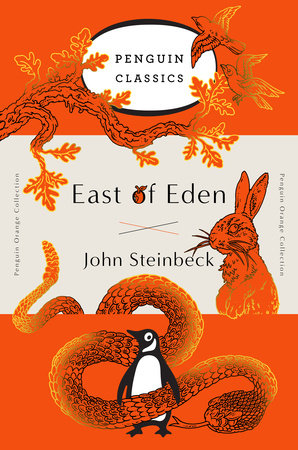
East of Eden by John Steinbeck 1952 / 602 pgs. (610,000 words) Classic
John Steinbeck’s magnum opus, East of Eden, is an epic retelling of the biblical stories of Adam and Eve and Cain and Abel. Set in the Salinas Valley of California, the novel masterfully weaves together the lives of two families: the hardworking Hamiltons and the deeply troubled Trasks.
The story of the Trasks begins in Connecticut with two brothers, Adam and Charles, living under the shadow of their cruel and dishonest father. Though a failure in most respects, the father’s fabricated tales of Civil War heroism eventually land him a powerful government position. Upon his death, he bequeaths a significant fortune to his sons.
The narrative follows Adam, who, after a forced stint in the Army, marries the beautiful but monstrously manipulative Cathy Ames. Soon after giving birth to twin boys, Caleb (Cal) and Aron, Cathy abandons her new family. The boys are raised by Adam with the indispensable help of Lee, their Chinese cook, housekeeper, and the story’s philosophical heart. In many ways, Lee becomes more of a father to the boys than the distant Adam ever is.
The central conflict unfolds as the brothers grow up, embodying the ancient rivalry of Cain and Abel. Cal is the dark, tempestuous, and jealous son, while Aron is the fair, innocent, and morally rigid one, whose idealism makes it difficult for him to confront the world’s evil.
Should You Read It?
Absolutely. Don’t let the 600-page count intimidate you. While the initial chapters, which jump between families and timelines, can be a bit disorienting, Steinbeck expertly ties every thread together into a powerful, flowing narrative. Be prepared for an ending that feels abrupt but will leave you thinking for days. East of Eden is a profound and unforgettable reading experience.
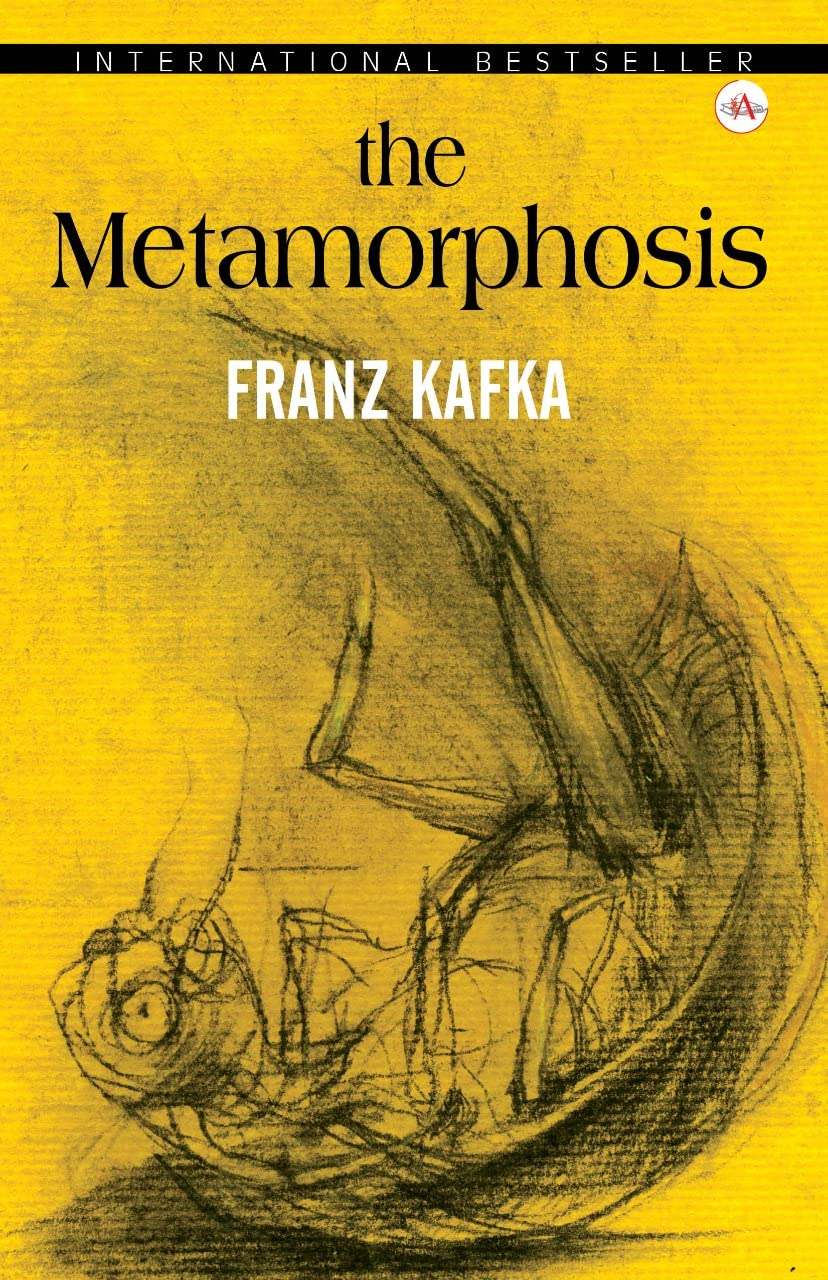
The Metamorphosis by Franc Kafka 1916 / 78 pgs. (22,009 words) Classic
Kafka’s The Metamorphosis opens with Gregor Samsa awakening one morning to find himself transformed into what the author calls a “monstrous vermin.” The novella then focuses on the reactions of Gregor and his family as they confront the reality that he is no longer the traveling salesman and sole breadwinner who supported them. This disturbing event sets the narrative in motion.
Although it’s a short novella—only about 78 pages, which I read in roughly two hours—it carries a significant emotional weight. From the beginning, I was curious about where the story would lead. The narrative develops towards an ending that feels both inevitable and deeply sad, leaving the reader with much to consider about the characters.
Despite its seemingly straightforward narration, the story provokes considerable thought. It’s easy to see why this work is hailed as a classic.
Would I recommend it? Absolutely.
Enjoy a good cup of coffee and a delightful book!
Lopaka
Interesting Notes:
One of my favorite movies is Spaceballs. There is a line that I never understood until now. After I finished The Metamorphosis, I was working on something when the line came to my head and I had that Ah Ha moment.
The line,
Colonel Sandurz “Preparing ship for Metamorphosis Sir.”
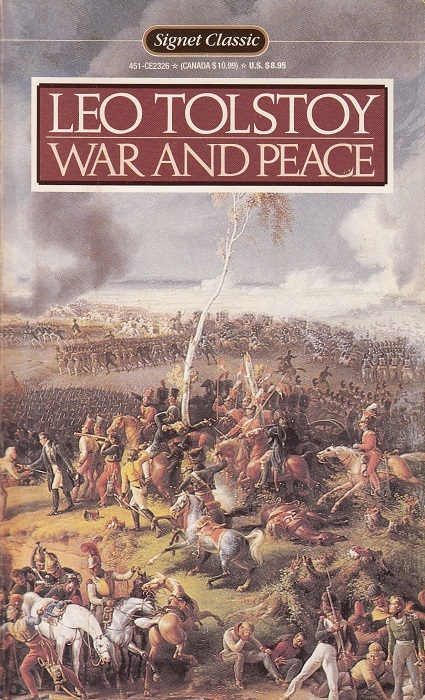
War and Peace by Leo Tolstoy (Translated by Louise and Aylmer Maude) 1869 / 1,394 pgs. (587,000 words) Classic
War and Peace is, to date, the longest novel I have ever read – and it’s a truly epic story. However, describing this book isn’t easy. It avoids simple narration and defies traditional structures. There’s no single central character; instead, the reader follows several individuals, a mix of fictional creations and historical figures. The narrative weaves around significant historical events, such as the Battle of Austerlitz, the lead-up to the French invasion of Russia, and the eventual burning of Moscow.
This novel offers more than just a story; it delves into philosophical questions of right and wrong, personal tragedies, and triumphs. It’s quite common to be following a character’s experiences, only for Tolstoy to digress into a philosophical discussion, such as debating the reasons and responsibility for Moscow’s burning before Napoleon’s arrival.
The narrative structure doesn’t follow a conventional pattern, yet somehow, it works. While reading, I sensed Tolstoy’s desire to innovate beyond the traditional novel format. Deeper into the book, I initially suspected Tolstoy’s main goal was simply to write about the burning of Moscow, using the surrounding story merely as a backdrop to convey the events of the occupation. While I was wrong about his sole focus being the Moscow fire, I was right that he structured the narrative purposefully to tell a larger story.
The story unfolds within the world of Russian aristocracy, an environment Tolstoy, as a Count himself, knew intimately. We follow numerous characters throughout the novel – some you grow to love, others to dislike. Pierre Bezukhov provides a fascinating example. He begins as the illegitimate son of a dying Count, with many hoping to inherit the vast fortune. Believing he’ll receive nothing, Pierre is unexpectedly thrust into the highest echelons of aristocracy when his father leaves him everything. This sudden change confuses Pierre, who feels unprepared for the responsibility and is still searching for his purpose in life. Much of his journey involves this search for meaning, during which others sometimes take advantage of his nature, including his wife, who gains access to much of his fortune.
Another compelling character is Natasha Rostova, a beautiful young countess. She falls in love and becomes engaged to the older Prince Andrei. As part of an agreement with Andrei’s father, they must wait a year before marrying, during which Andrei serves in the military and tours Europe. Natasha waits, though unhappily, feeling her youth slipping away. During this time, she develops strong feelings for Andrei’s friend, Pierre Bezukhov. Tolstoy intriguingly portrays this period from Natasha’s perspective, allowing the reader to feel her painful anticipation for Andrei’s return, mingled with the awareness of passing time.
As mentioned, exploring War and Peace is a vast undertaking. Readers face a few challenges, common for novels of this scale: primarily keeping track of the numerous characters and managing the book’s sheer size. Dedicating enough time is crucial; realistically, plan for at least two to three months to journey through it.
Interestingly, I read the novel on my iPad, despite owning a paper copy. The electronic format offered a significant advantage: easy translation. Tolstoy often incorporates French phrases and sentences into the dialogue – reflecting the fact that much of the Russian aristocracy at the time spoke French. While understanding the French isn’t essential to follow the plot, translating it (which was simple using the tablet’s highlight feature, far easier than juggling a dictionary) definitely enhances the reading experience and provides richer background context.
So, is dedicating the time worth it? Absolutely. I found War and Peace surprisingly readable. It wasn’t the overly complicated text I had feared – perhaps I’ve just become more accustomed to reading such books now. While the first 100 pages or so are quite dense, the narrative smooths out considerably afterwards. The main challenge truly is its length, not its complexity.
Once you reach the final page, there’s an immense sense of gratification that comes with having completed such a masterpiece. For me, it echoed the feeling I had after finishing The Stand – another classic, famously long novel.
Enjoy a good cup of coffee and a delightful book!
Lopaka
Interesting Notes
While reading War and Peace, I initially assumed Tolstoy’s primary goal was to write about the French occupation of Moscow in 1812, creating the surrounding narrative simply to support that event. However, I learned the reality was quite different.
Tolstoy originally intended to write about the Decembrists returning from exile (an event occurring much later than the novel’s timeline). But he realized he couldn’t adequately portray their return without first explaining the Decembrist revolt of 1825. To explain 1825, he felt it necessary to narrate the pivotal events of 1812, including the French invasion. Going back further, he determined he couldn’t properly set the stage for 1812 without exploring the precursor events around 1805, such as the Battle of Austerlitz.
And that is where War and Peace actually begins. By the time Tolstoy finished, he had crafted a 1,300-page epic that covered the years leading up to and including 1812, but he never reached the Decembrist events he had originally set out to chronicle. So, while the novel was conceived to eventually narrate specific historical moments, it grew into a monumental work that laid the groundwork but stopped before reaching that initial destination.
Furthermore, reading about Tolstoy’s own life, I realized how closely the character of Pierre Bezukhov mirrors aspects of Tolstoy’s own experiences and philosophical searching.
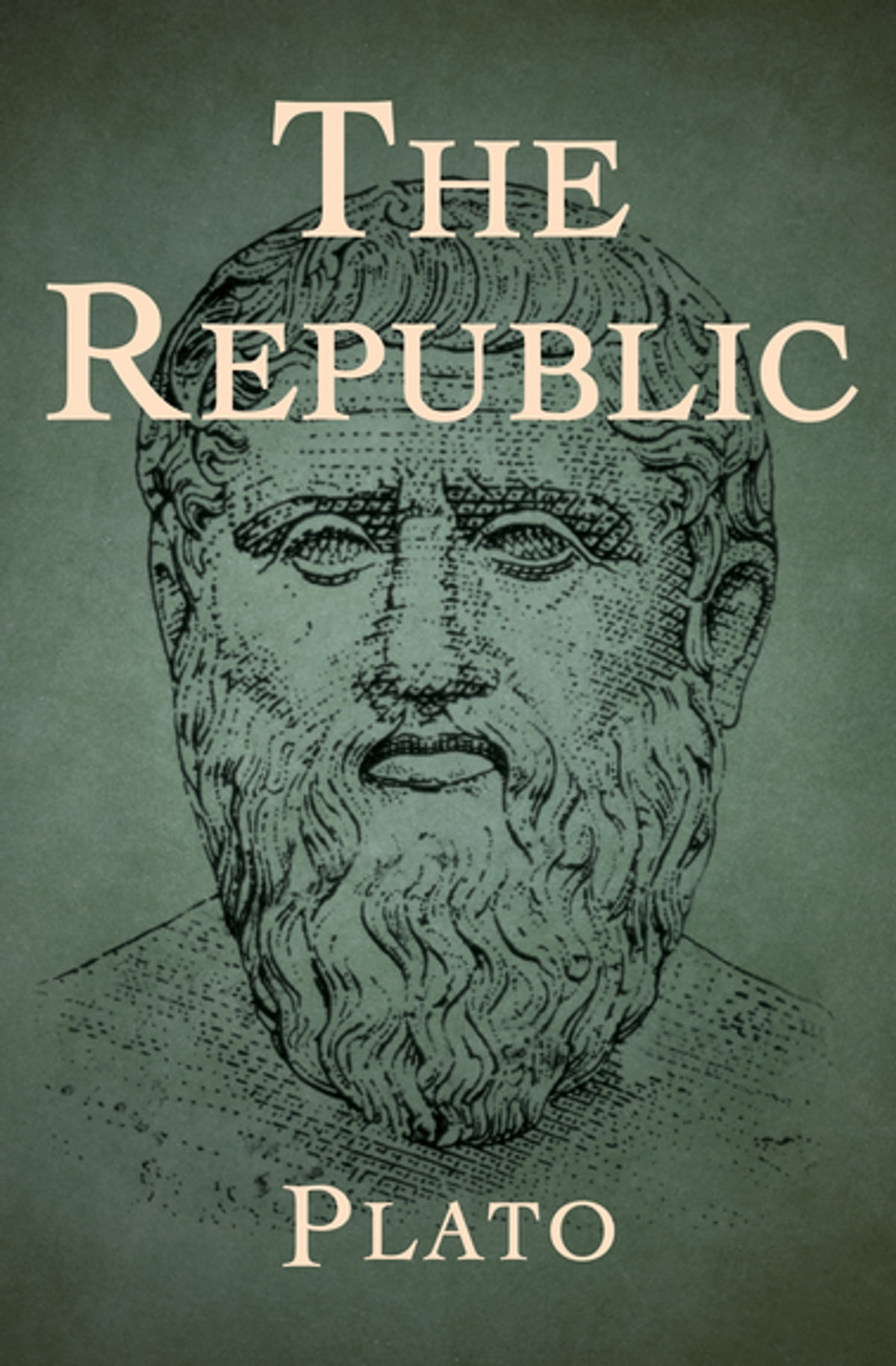
The Republic by Plato 380 B.C. / 206 pgs. (51,500 words) Classic, Political Science, & Philosophy
This book has been on my bucket list for a while. As a Political Scientist, it’s a “should” read. Also, on many must-read-before-you-die lists, this book is must-read. Interestingly, it was never mentioned or required reading in graduate school.
The Republic is broken into ten books, called chapters today. It is written in Socratic dialogue between Socrates and various people. A debate of point and counterpoint arguing what is the perfect government system. The discussions within the republic range from what is Justice to when people should marry. What poetry should be allowed to be written, and for what purpose. What type of music should be allowed. Even what education people should have.
Some highlights that I found fascinating:
An argument is that men and women should have equal education and be treated equally.
There is a fascinating debate on how warfare should be conducted and even the proper treatment of the enemy.
The relationship between the sexes.
Also, one interesting discussion was about what makes a good leader. Those who are reluctant to rule – rule quietly – are the best leaders. Those who desire and are eager to rule are the worst.
The Republic is an interesting book to read, and I often slowed down and carefully read a section to ensure I understood what was being discussed. I often watched a video on YouTube about the “book” I just finished to ensure I understood the meaning of the dialogue. The only section that got me lost was Book 8, which is the section that means the most for many readers, “The Cave.” I had to read that twice before the “light bulb” finally turned on.
The Republic is a good read. I did enjoy it and the challenge that comes with reading it. Although, I can say I’m not a fan of Socratic narration.
The Invisible Man by H.G. Wells 1897 / 192 pgs. (57,408 words) Classic/Sci-Fi
Another H.G. Wells classic. A quick read, also a straightforward story. Many details within the narration ensure the reader stays glued.
Griffin is a gifted physicist who has a passion for the study of refraction. He feels he can make anything invisible. Griffin experiments on objects around his room at first, believing it is possible to make a human invisible. He first tests on a cat. He tries it on himself when this experiment is successful, turning invisible. The horror of his results appears not after the experiment is complete. The results are not instantaneous, it is when he answers a knock on his door, and the inquiring individual on the other side runs away in fear.
The invisible man works without an aid because of Griffin’s conniving professor, who steals results and publishes them under his name. Griffin, also paranoid of people being able to replicate his work, does not leave any trace of his experiment. The other challenge that produces itself after he burns down his apartment is the world outside. The paranoia of people dealing with an invisible man creates vast challenges for Griffin to do simple things like eat and stay warm.
The story starts with the Invisible Man, wrapped from head to toe, renting a room with his boxes of tubes with various liquids trying to reverse the invisibility. The property owners look on suspiciously as the man does not interact with people and eats alone while working in his room.
This was a simple read. The novel could be finished in just one day if one sits down and enjoys it. There is not too much of a twist; however, the start does bring just enough curiosity to see how the narration would go. It would not be the first H.G. Wells novel I would recommend; it is still a good read.
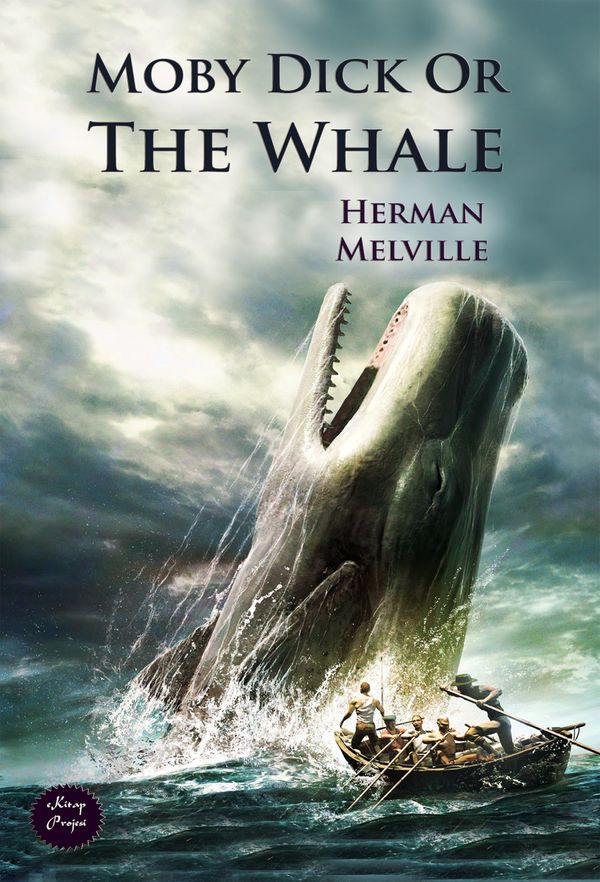
Moby Dick by Herman Melville 1851 / 378 pgs. Classic Fiction
“Call me Ishmael,” the infamous beginning of Moby Dick. The great American classic in literature. Countless great quotes come from this single book. Iconic characters that today play tropes in today’s entertainment. Specifically, Ahab, the monomaniacal Captain of the whaling ship Pequod. An individual is so focused on finding and killing the whale that he is willing to sacrifice everything, the ship, crew, and even his own life. Today, many people who have an obsession for anything at the cost of all are Ahab’s trope.
Many famous lines come from this classic novel, “Aye, aye! and I’ll chase him round Good Hope, and round the Horn, and round the Norway Maelstrom, and round perdition’s flames before I give him up.”. While reading this line, my inner geek remembered Khan and his variance of the quote “He tasks me! He tasks me and I shall have him! I’ll chase him ’round the moons of Nibia and ’round the Antares Maelstrom and ’round Perdition’s flames before I give him up.”. However, the keen eye knows he read this book because it can be seen on the Botany Bay book shelf. Yes, Star Trek II, is a modern telling of Moby Dick.
To write all the quotes would be my entire review. However, that is not why you are here, dear readers. Moby Dick is a narration by Ishmael, a sailor that desires to experience the Whalers’ life. In the beginning, Ishmael tells his story as a sailor and how the sea is always calling to him. Throughout his narration, he gives the story of many of the characters on the ship. The most infamous is Ahab, and how Moby Dick took his leg, and this is the seed for the fire that burns inside the Captain to hunt down the white whale obsessively.
Like many classics of the time, Melville describes and brings the reader into the world of whaleship warts and all in long narration. He describes in nauseating detail how a whale is dismembered, what parts are the most important, and those discarded after the grisly task is complete. It even goes into minute details about how a whaleship is run and the crew’s make-up. Enjoy a good cup of coffee and an excellent book!
Lopaka
NOTE: A little-known fact, Melville built the foundation for this book from the true story of Essex. That story is even more dark and gruesome than Moby Dick.
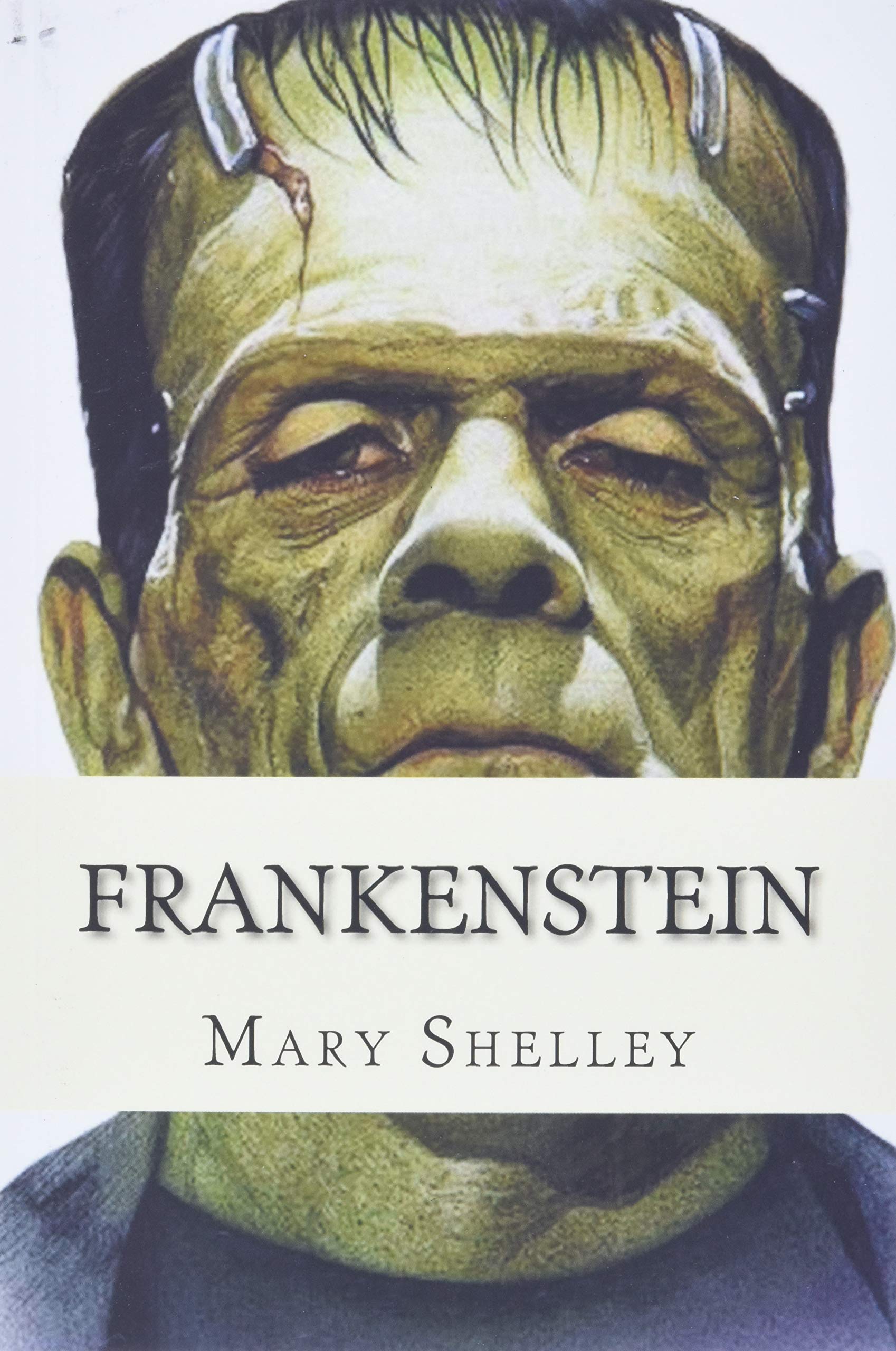
Frankenstein by Mary Shelley 1818 /240 pgs. Classic/Thriller/Sci-Fi
No castle, no digging up bodies and putting them together, and no lightning! Igor is not even a character in the story. Don’t allow all this to fool you; this is a thriller, and when it was written, it could also be a horror story or even a gothic novel.
Victor Frankenstein had visions of a possible future as he was creating the experiment. He wanted to cure all diseases and even cheat death. Studying pseudoscience and current scientific theories of the time, he discovered how to reanimate flesh. He worked long and created his man, and when he brought it to life, he realized the horror of his creation.
The entire story is told as a dictation. First, a ship’s captain letters to his sister in the U.K. and his current status of ship and crew stuck in the ice for the winter. Then, after witnessing a very large man on a dog sled going past his boat and following was a very frail man. After sickly Victor boards the boat, the captain proceeds to listen to his tale. In the middle of Victor’s story, the creation of the monster and the death of Victor’s young brother, William, Victor then reviews the tale that the demon tells Victor, a narration of a narration.
The tale continues, and Victor at first complies with the request of the monster to create a mate. Victor continues with philosophical thinking and internal debates that cause him to destroy the monster’s mate before she is complete, which, naturally, causes the monster to go in a rage. Then he exacts his revenge against his creator. Victor finishes his narration of the nightmare that the monster causes, and then the final words are from the captain to his sister.
Not what I was expecting. Although, it was a very delicious read. It doesn’t keep you on the edge of your seat and is a little predictable in places, and I was still curious about how it would end. I would definitely recommend this for a good read. A final note: Frankenstein is the name of the creator, the thing that we know as Frankenstein is called the demon or monster in the book.
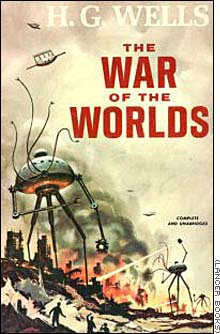
War of the Worlds by H. G. Wells 1897 /287 pgs. Classic Sci-Fi
The Martians have arrived, departing Mars for a planet to colonize because the resources of their home are diminishing. They attack the U.K., taking out a small village and working towards London for occupation.
War of the Worlds is a good read, it’s very descriptive, and H. G. Wells builds a great plot with foreshadowing the instant conclusion of the war. Even the description of the Martians and why they evolved into their current form is a form of foreshadowing if you catch it. Wells Martians are not tall skinny, oval heads with big eyes like we envision Aliens today. They are more like large oval heads with a large orifice for an ear, big eyes, and tentacles that they use to move around and eat.
The Martians destroy mankind’s defenses and take over London and many parts of the world in the book. Civilization fights back; however, our weapons compared to the heat ray are minimal. The invasion was going bad for the human race when word arrived that the Martians were building a flying device. Once that was complete, the destruction of the human race would only be a matter of time.
The sudden ending, the disease that infects and kills the Martians, something that we have built an immune over time for some people in our current time, would seem a quick way out. However, in our history, disease from Europe almost wiped out many native tribes in the Americas. His use of the Red Weeds’ eventual demise builds for the conclusion that doesn’t killjoy the ending.
It’s a fun read; however, not a grip-you-by-the-throat-page turner. I would absolutely recommend it.
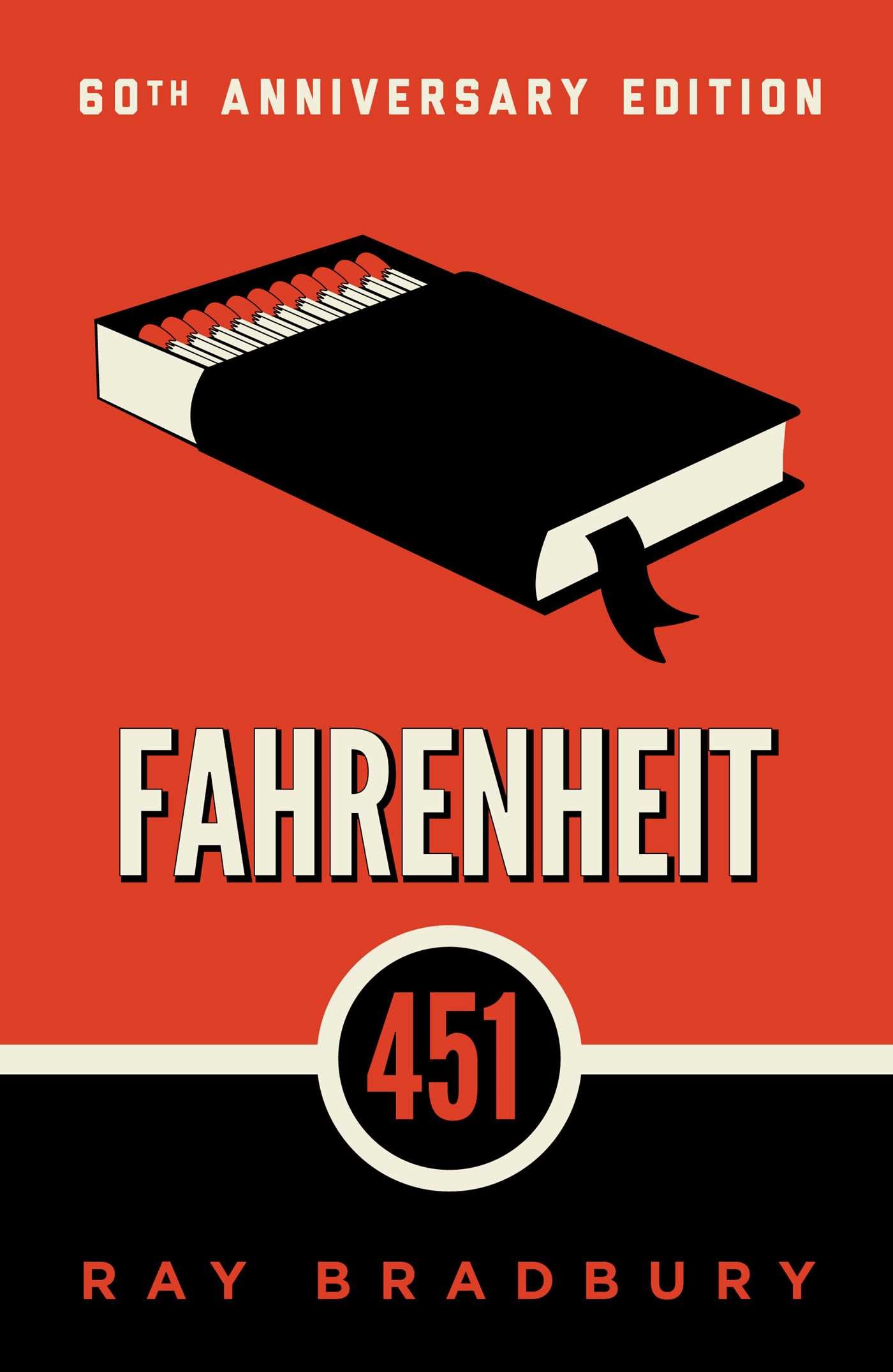
Fahrenheit 451 by Ray Bradbury1953 / 165 pgs Classic Sci Fi
Censorship is the last vestige of a society afraid of the written word and what challenges it could bring against them. Even in our community today, some novels/stories are banned for various reasons. Many people or organizations are afraid of undue influence and possible independence that the written words might create. This is what Ray Bradbury cautioned would happen eventually. He foretold that censorship, even to please a minority offended by a word or segment of any novel, is wrong. Yet, we see this today with Twain’s Adventures of Huckleberry Finn (1884) that many people disapprove of because of the language and choice of words, normal in its time, and how people are characterized because not everyone is written in the positive light. Because of the portrayal and language of none whites, John Steinbeck’s Tortilla Flat was criticized in his time even though it’s today considered one of his classics.
Everything that is happening today to make everyone happy was what Fahrenheit 451 warns against. Millions of books are banned because they don’t portray the happiness that everyone wants. Anyone that’s offended, the book was banned. Firefighters don’t put out fires. They burn books as many political and religious groups have done in the past, like the Nazis in 1933 and the burning of the Library of Alexandria by various groups.
Bradbury’s classic is a warning of where we could go as a society when we allow censorship for various reasons. Just because a book doesn’t agree with philosophy doesn’t mean that it should be banned or censored to appease. As mentioned in the novel, books have 3 points that many don’t want to be utilized, “1. The Quality of Information in the story. 2. The Leisure to digest it. 3. The right to carry out the actions based on what is learned.” – Ray Bradbury
Bradbury also warned of getting lost in the simplicity of life. In the novel, society is lost in simple stories/music that is streamed into their ears. They don’t see what is going on around them as they want to remain happy and not do any critical thinking. Wonder what Bradbury would think if he saw everyone lost in tablets and phones. Simple entertainment like Youtube and instead of diving into a story and see what the author tells desire to wait for a movie to come out.
This book should be required reading, especially today! It is a haunting read and simple story that makes one reflect on what is happening and where we could be going.



 nyghteulen