• Lopaka’s Favorite Books
  • Lopaka’s Review Guide
  • Reading Lists
  • Stephen King List
  • Who is NyghtEulen?

nyghteulen

nyghteulen

Category Archives: History

The Nine

05 Friday Dec 2025

Posted by Lopaka in History, Reading

≈ Leave a comment

Tags

book-review, books, historical-fiction, History, holocaust

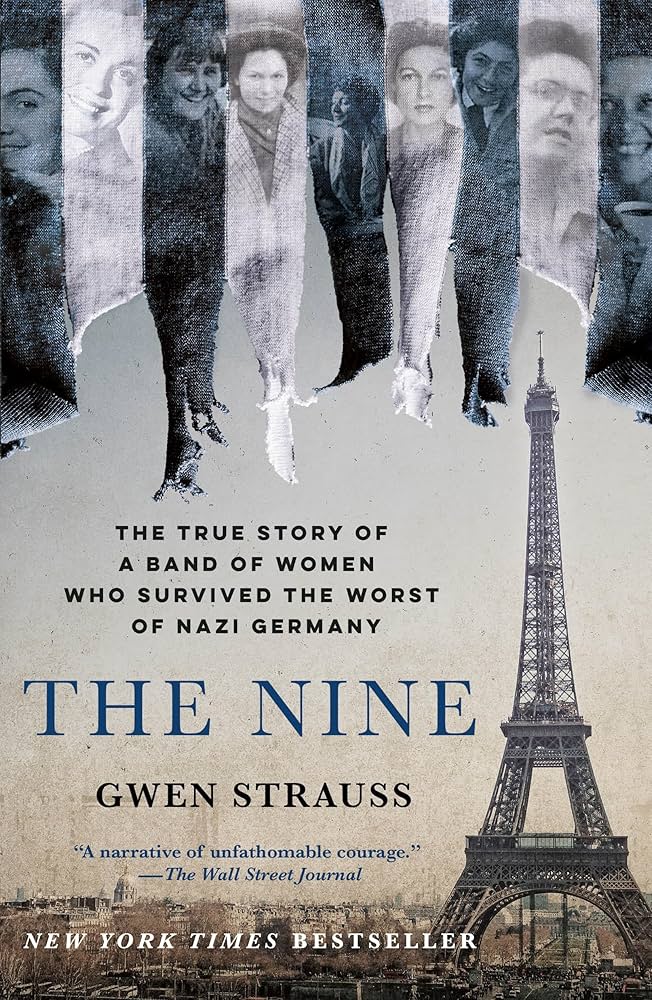
The Nine by Gwen Strauss
2021 / 317 pgs. (84,000~ words) History

This is a deeply emotional narrative. It is a true account of the lives of nine young women, aged 18-26, who served in the French Resistance, were captured, and then sent to the Ravensbrück concentration camp—only to escape during a death march at the end of the war.

The book is not just about their survival; it is a deep dive into who each of these women were. It explores why they joined the Resistance, how they were captured, and the torture they endured at the hands of the SS. It details how they kept their spirits and morale as high as possible in the camps, and how they formed their bond, as they didn’t all meet until they arrived at Ravensbrück.

There is also a wonderful narration of their escape—journeying through village after village, constantly fearing discovery by German soldiers or the SS, which would mean execution. The final section covers their lives after the war and how they were treated—or often forgotten—by the French Government despite their service.

The story is fascinating because, while many have heard of the Holocaust, people often forget the sheer variety of people put into concentration camps. The book mentions several groups often lost to history: the asozial (prostitutes, homosexuals, Sinti and Roma, and common criminals). It describes how this group survived in the same block and how they interacted.

As a person who has visited Dachau, this book really brings into perspective the number of people that Nazi Germany didn’t want in society.

Would I recommend it? Absolutely. It’s a really good book. Just be mentally prepared for what these women went through to survive. It can be heartbreaking.

Enjoy a good cup of coffee and a delightful book!

Lopaka

Churchill’s Shadow Raiders

13 Saturday Sep 2025

Posted by Lopaka in History, Military and War, Reading

≈ Leave a comment

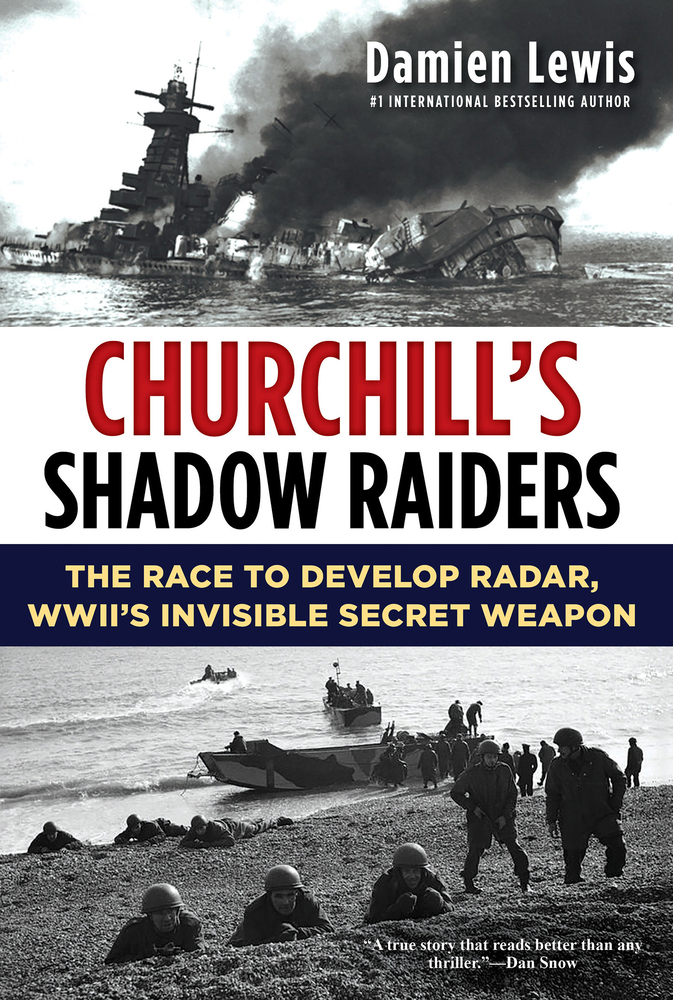
Churchill’s Shadow Raiders by Damien Lewis
2019 / 350 pgs. (104,000 words) Military and War, History

The birth of the British Airborne Commando Operations, Operation Colossus, the very first British airborne operation, a mission to parachute into Italy and destroy a key freshwater aqueduct. It explores the challenges the team faced and how the mission ultimately ended in failure when their extraction failed, leading to the entire team’s capture.

However, the idea wasn’t over. The battle of Briton was an air battle and RADAR was the key that helped the British survive. The story then shifts to a critical intelligence-gathering raid in France. Understanding that German RADAR technology was a major threat, commandos were sent to capture parts of an advanced Würzburg radar system and return them to the UK. This mission proved to be a major success, providing intelligence that would have a great impact on the future Operation Overlord (D-Day).

Would I recommend it? It’s a good book for those that are interested in the subject. Having a RADAR background, the book sparked my interest. If you are not interested in military history, it might not be for you.

Enjoy a good cup of coffee and a delightful book!

– Lopaka

Such Men as These

01 Tuesday Apr 2025

Posted by Lopaka in History, Military and War, Reading

≈ Leave a comment

Tags

aviation, History, military

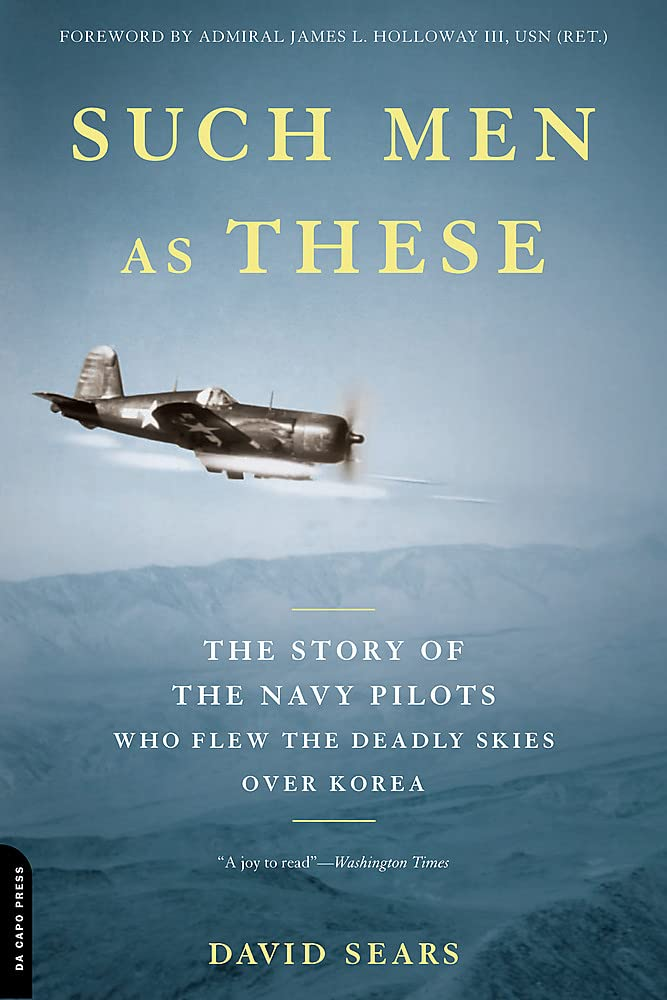
Such Men as These by David Sears
2010 / 396 pgs. [336 Narrative] (118,272 words) Military Historical

James Michener’s assignment from the Saturday Evening Post to report on the Korean War ultimately yielded the notes that formed the basis for his famous book, The Bridges at Toko-Ri. Inspired by Michener’s work and potentially his notes, David Sears crafts a fascinating narrative focusing on the challenges and contributions of the U.S. Navy’s Task Force 77 during the Korean War (1950-1953). The book offers a compelling account of the Navy’s response, weaving in Michener’s own experiences and the war’s impact on him.

The conflict began on June 25, 1950, when North Korea invaded South Korea. The United States military, facing a conflict it hadn’t anticipated, was largely unprepared. World War II had concluded only five years earlier, leading to a significant drawdown of active-duty forces and meaning much of the technology employed in Korea was leftover from the previous war. Consequently, from the Navy’s perspective, the demands of the conflict fell heavily upon reserve forces rather than the depleted active component.

Such Men as These recounts numerous experiences of naval personnel, particularly pilots assigned to Task Force 77. One particularly striking story involves Ensign Jesse Brown, the first African American Naval Aviator, and Lieutenant (Junior Grade) Thomas Hudner, who received the Medal of Honor for his valiant attempt to rescue the downed Ensign Brown.

While the book doesn’t delve deeply into the specific air combat tactics of the war, it excels at capturing the human element. It effectively covers the experiences of those serving with Task Force 77 throughout the conflict.

Would I recommend this book? Absolutely. Such Men as These is a great read and does not disappoint. However, readers should know what to expect: if you are seeking detailed analyses of battles and military tactics, this might not be the book for you. But if you are interested in the powerful, human stories of Naval Aviators and personnel serving under extraordinary circumstances during the Korean War, this book is an excellent choice.

Enjoy a good cup of coffee and a delightful book!

Lopaka

A Final Thought: On a personal note, I have worn the POW/MIA bracelet for Lt. Orville M. Cook, USNR, for over 30 years. He was an AD-3 Skyraider pilot shot down over North Korea on July 18, 1951, and is mentioned by name in the book. While I appreciated seeing his name included and learning about the context before and after his loss, I was naturally hoping for details on his specific final mission, which weren’t present. His story, and its partial inclusion, underscores the book’s focus on the broader human tapestry of Task Force 77, even if it means some individual threads aren’t fully explored.

The Longest Day

15 Friday Sep 2023

Posted by Lopaka in History, Military and War, Reading

≈ 1 Comment

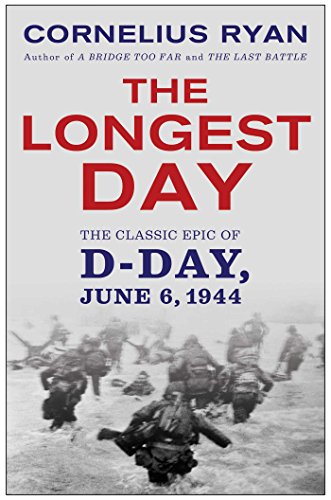
The Longest Day by Cornelious Ryan
1959 / 277 pgs. (88,000) Miliary & War, History

6th June 1944, the invasion of Europe by the Allies at Normandy, France, also marks the end of the German occupation of Europe. On 6th May 1945, the war in Europe would be over. This book is a narration of the events of that historical day. The Longest Day is not as detailed as Six Armies in Normandy, butit is still an excellent narration that does not disappoint. The movie The Longest Day is based on this book; as one reads it, much was captured in the movie as narrated. Mr. Ryan breaks down the event into three parts.

Part One – The Wait    

The wait starts two days before the invasion. The story focuses on Rommel trying to secure the beachhead as he knew that if he could stop the attack there, it would spell out a disaster for the Allies and set them back. Eisenhower made many decisions about when the invasion would start based on weather reports that were never good for the conditions the allies would prefer—also, the long wait for the troops as they waited for the order. What is interesting is the details mentioned that many other books leave out. For example, Rommel was going to meet Hitler on 6th June to convince the Feurer to release the Panzers in Pas-de-Calais, for Rommel knew they were the best chance for the Germans to stop the invasion force. Another detail was Operation Gambit, the British minisubs X30 and X32 sitting off the coast to help guide the landing craft to the beach.

Part Two – The Night

The beginning of the invasion. The landing of the Paratroopers from the British and American forces, many of them were scattered all over Normandy during the night drops. Many British landed in the swamps and were never found. The landing at St-Mere-Eglis with the Germans shooting at the 82nd as troopers descended into the town and illuminated by the fire the French were trying to extinguish. Even the Paratrooper that landed on the church and had to listen to the bells clang all night until the Germans finally lowered us. Gliders landing and crashing with troops on board. The taking of Pegasus Bridge by the British.

Part Three – The Day

This is the moment that most people know: the invasion of the beach. Ryan describes the E-Boat attack that sunk the Norwegian Destroyer Svenner—the sinking of the USS Corry by a sea mine. The LST and Higgens boats challenged landing on the beach. At Utah Beach, the troops disembarked at the wrong spot, and Gen Roosevelt said infamously, “We’ll start the war from right here!” How the British and Canadians faced less resistance. The fight at Omaha Beach was the bloodiest part of the invasion.

Like many writings about historical events, this book has parts other books do not mention, like Operation Gambit. It is less detailed than Six Armies in Normandy or At Dawn We Slept. It is still a great read, and if anyone asks for a delightful book about D-Day, I recommend The Longest Day.

Enjoy a good cup of coffee and a delightful book!

Lopaka

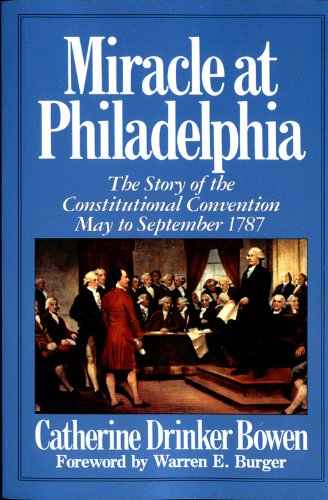
Miracle at Philadelphia

19 Sunday Mar 2023

Posted by Lopaka in History, Political Science, Reading

≈ 1 Comment

Miracle at Philadelphia by Catherine Drinker Bowen
1966 / 310 pgs. (86,500 words) Political Science/History

It doesn’t look like a page turner. It’s a story that not everyone will or desire to devour. Most people would care less about this story. They received all the education they needed on the birth of the nation in school. Understandable, many individuals, including my students don’t feel they need to learn more about the government then what they were taught in primary education.

Like every book, don’t judge it by its cover. This book is about the birth of the United States Constitution. It goes week by week and over many details that were taken from diaries and notes from those that were there. It also changes the narrative that we are told in school about the Great Compromise. We learn about the Virginia Plan and the New Jersey plan, the lectures on how the founders debated on these two plans and how the New Jersey plan was instrumental in the creation of the bicameral system we use today.

However, the Virginia plan already had a Bicameral system proposed.  Most of the convention was debating the many details of the Virginia proposal. Many details were argued, for example do we have a Federal Government, that operates on states or a National Government that operates for the individuals. Interestingly, Democracy, that we practice today, was feared by many at the convention because they thought of it as rule by a mob, not the people. Shays Rebellion was still fresh in the minds of the delegates during the debates.

The New Jersey plan was introduced 15 June 1787 as an alternative to everything that was being debated and a method to fix the Articles of Confederation.  However, this plan was destroyed by James Madison in a speech on the 19th of June and the New Jersey Plan was voted down. In our history books, it was the two plans that created the Great Compromise, however, Richard Sherman proposed the Compromise on the 11th of June. Its details like this that our history books erroneously tell and then it’s twisted into the narrative.

This books goes into many more details about the coming together of the convention, how it is conducted, and also after the vote and finally the ratification process. I really enjoyed many of the details Bowen spelled out that exposed many of the thoughts and even range of debates on why the US government is build the way it is and also what many feared and predicted would happen with our government in the future.  One of my favorite quotes comes from Dr. Rush who wanted to establish a post graduate school and said

“Why…should young men study Greek particles and the conformation of the ruins at Palmyra when they should be acquiring ‘those branches of knowledge which increase the convenience of life, lessen human misery, improve our country, promote population, exalt the human understanding, and establish domestic and political happiness’” –  Catherine Drinker Bowen

Would I recommend this book? Yes, if you are interested in this subject. I enjoyed it; however, this is in my field of education. I can’t say everyone would enjoy this narrative.      
 
Enjoy a good cup of coffee and a delightful book!

Lopaka

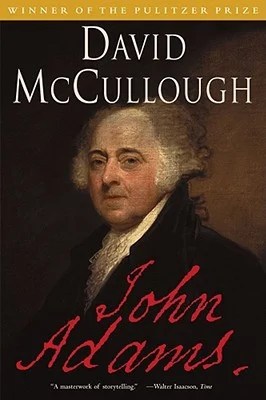
John Adams

30 Friday Dec 2022

Posted by Lopaka in Biography, History, Reading

≈ 2 Comments

John Adams by David McCullough
2001 / 781 pgs. (188,00 words) Biography and History

Stunned is how I felt as I devoured every word of this masterpiece. Like Truman, this biography is very detailed and not a bore to read. Each paint stroke builds the picture that forms one of the great founding fathers of the United States; it also begs one to question why we do not know more about John Adams.

Honestly, when I started this book right after I finished Cycle of the Werewolf, I found myself reluctant as my knowledge of the Revolutionary/Colonial period of US history is weak compared to the W.W.II era. When I started, there was a feeling of dread and hesitance. David McCollough won the Pulitzer with John Adams and Truman. However, I was still unsure if I would enjoy reading John Adams with the same level of enjoyment as I did with Truman. All the feelings I experienced were put to pasture in the book’s first few pages.

This biography starts with the birth of Adams and a little background of his family in Quincy, Massachusetts. It builds from how his father raised him to Adams attending and graduating from Harvard. His eventual marriage to Abigail and the love that flows from them in letters they wrote to each other while he was away. McCullough even builds the events around Adams, like the Boston Massacre, how Adams successfully defended the British soldiers, and Adams’s essential involvement in the Declaration of Independence.

McCullough builds a wonderful picture as, naturally, the story progresses throughout the American Revolution and how the untold story of Adams going to France to help Franklin with the French. However, of his own volition, Adams goes to the Netherlands to negotiate trade and secure a loan from the Dutch. Congress eventually appoints him as minister to the Netherlands.

John Quincey’s picture is painted simultaneously, showing how travel with his father builds his reputation and experience. What is fascinating, and is eloquently shown by McCullough, is the events of times and how they changed the United States and people’s perspectives. For example, when Napoleon invaded Russia and seized the city, John Quincy was minister to St. Petersburg. Another example, John Quincey, was a Senator when President Jefferson sent to the Senate for their approval of the treaty that was eventually known as the Louisiana Purchase. Finally, who was Secretary of State when Spain negotiated the sale of Florida for $5,000,000? The Adams of the Adams-Onis Treaty, John Quincey.

The novel continues into John Adams’s times as the 1st Vice President of the United States, to his hatred of Alexander Hamilton, and John Adams the 2nd President of the United States. Also, the famous relationship between John Adams and Thomas Jefferson, eventually to the moment infamous in American History, their death on July 4th, 1826, the 50th Anniversary of the signing of the Declaration of Independence.                            

There is much more that I am not writing about, as this review would be very long. The rating should say how much I enjoyed this novel. I would absolutely recommend this if you were fascinated with the Presidents of the United States. This novel brings a very different light and appreciation for John Adams. 

Enjoy a good cup of coffee and a delightful book!

Lopaka

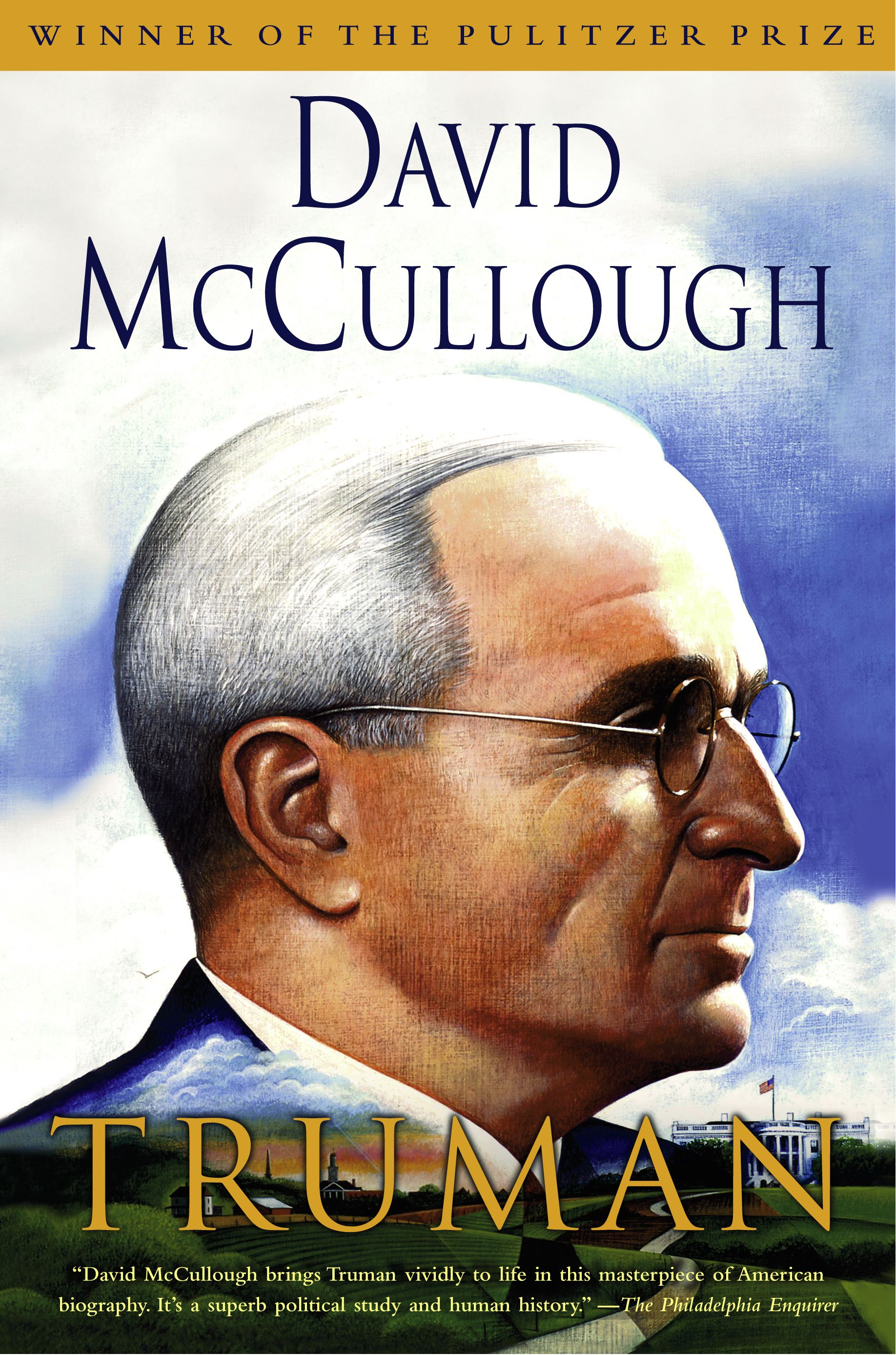
Truman

27 Sunday Nov 2022

Posted by Lopaka in Biography, History, Politics, Reading

≈ 3 Comments

Truman by David McCullough
1993 / 1,120 pgs. (280,000 words) Biography, Politics, and History

Truman, what an outstanding annals and page turner. Many times, I found myself wanting to continue devouring another page beyond my mandatory hour obligation. All confession, I started this novel with a skeptical mindset if I would enjoy reading a vast biography. I was very pleasantly amazed at how much I genuinely enjoyed reading Truman.
  
This biography is a telling of Harry S. Truman from the day of his birth to his death and the real impact he had on the United States. It does not start off with the simple, Harry was born on 8 May 1884. McCullough starts with events that happen to Harry’s grandfather and father which would impact Harry throughout his life. The author builds a narrative that shows how actions of those, that even before you were born, could have a profound effect on our lives even almost a hundred years after the fact.

McCollough then builds from Harry growing dealing with having to wear glasses to wanting to attend West Point. Showing how Truman’s love of history and reading and how that would influence and even impact decisions and relations with political leaders during his presidency.

The underlying narrative with Truman which is well known today is how everything for Truman came later in his life than what normal people would expect with life experiences. For example, he went to fight in France during World War I as a Captain at the age of 33. Most of those under his command were between the ages of 18-23. Harry Truman was also the only President that deployed to France and served in combat in the first world war. He did not marry his love of his life, Bess Truman until he was 35 years old. 

There are many details of Truman’s time as a Presiding Judge, his relationship with the political influential family Pendergast. The same family that eventually helped Truman become Senator which, after his election, Senator Truman started the Truman Commission that monitored spending and corruption with New Deal Programs. Finally, how and why Truman became Vice President knowing that he would have to take over for Roosevelt because many, including Roosevelt himself, knew that the President wouldn’t live through his fourth term.

Naturally, I can expound more, this is a massive and detailed biography, however, I’ll give some of the juicy tales that I really enjoyed and showed the true Harry Truman like we’ve never knew before.  Harry wrote to Bess everyday and in one of his letters, while he was President, he called Bess his “Juno, Venus, Minerva, and Proserpina.” I’m not trained in the classics and had to look up Proserpina and it was a perfect name for Bess.

As an airman, we’ve also loved the fact that Truman signed the National Defense Act of 1947 that among its many actions created the United States Air Force.  He signed in on board “The Sacred Cow”, the presidential aircraft.  However, why he signed it on the plane is never explained. He was on the plane to fly home to see his dying mother and delayed the plane for an hour so he could sign the legislation. Once it was brought to him, he signed it on the plane and flew home, however, sadly, his mother died before he arrived in Missouri.  

This biography won David McCollough the Pulitzer Prize. He also received the Pulitzer for another biography, John Adams. I would absolutely recommend Truman. This is a masterpiece 

Enjoy a good cup of coffee and a delightful book!

Lopaka

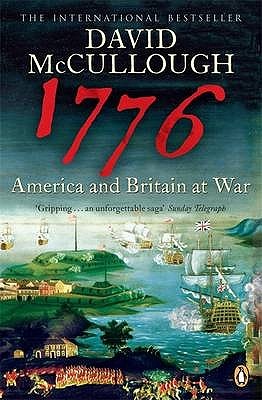
1776

02 Sunday Oct 2022

Posted by Lopaka in History, Military and War, Reading

≈ 1 Comment

1776 by David McCullough
2005 / 294 pgs. (96,500 words) Military, War, and History

1776 is a very fascinating book that primary focuses on the first full year of the Revolutionary war. It starts with King George III address to parliament on 26th Oct 1775 where he states the a declaration of Independence will be the eventual goal of the British Colonies, this is eight months before the Declaration of Independence is signed on 4th of July, 1776.

The narration of the book goes into the decision to give overall command of the Continental Army to George Washington and all the fascinating trials and defeats that Washington partakes in just 1776. Details that modern history classes don’t tell that would really show the true miracle that the United States won the war in the first place. 

Just a sample of this is the endless Enlistments that would expire and soldiers that Washington desperately needed would return home. Washington’s Army pulling out of many engagements and retreat for much of the year causing questions to arrise within the Army and even Congress whether the command of the Army should be handed to Washington’s deputy commander General Charles Lee, although this wouldn’t be a question after Lee is captured by the British on 12th December 1776. 

Another highlight of the book is the importance that Colonel Henry Knox and even a young Alexander Hamilton would have on the Revolutionary Army in 1776.

For anyone interesting in the history of the Revolutionary War, this is a definitely a wonderful read.  I would recommend it.          
  
Enjoy a good cup of coffee and a delightful book!

Lopaka

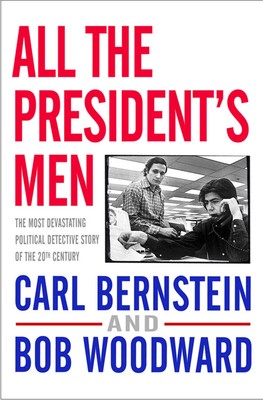
All The President’s Men

07 Sunday Aug 2022

Posted by Lopaka in History, Politics, Reading

≈ 1 Comment

All The Presidents Men by Carl Bernstein and Bob Woodward
1974 / 368 pgs. (92,000 words) Political/History

When I started this book, I thought it was a play-by-play of what happened at Watergate and how the President of the United States fell from grace. I was delightedly wrong in my interpretation of the subject of the book. While the Watergate break-in in 1972 serves as the background of the book and is the focus of the circle of events, the book is the experience of Bernstein and Woodward as they navigate in their investigation of the break-in.

The book naturally starts with the break-in and wiring of the Democratic National Headquarters at the Watergate Hotel. When Bernstein is called to write about the break-in, he is upset because he hoped he was finally moving away from reporting these common cases. Little did he know what he was about to uncover.

Woodward is teamed up with Bernstein at the start, and both do not want to work together. As the story grows, so does their friendship. The book builds from the discovery of a phone number for H Hunt at the White House in a phone book for several of the thieves. Also, one individual, McCord, was prior CIA and FBI. These simple facts start to grow the case from a simple break-in to how high the conspiracy goes.

The book also builds on all the trials, errors, and tribulations that Bernstein and Woodward experience as this continues the investigation into Watergate, including the few times they felt their lives were in danger. The most famous individual in the case of Watergate, Deep Throat, is introduced in the book, although it doesn’t reveal who he was.

The novel does not end with Nixon resigning. It ends at the state of the Union, 1974 when Nixon stated he would not resign. The follow-on book, The Final Days, goes into the events that lead up to Nixon’s resignation. That will be read later.

Enjoy a good cup of coffee and a delightful book!

Lopaka

Profiles In Courage

14 Thursday Jul 2022

Posted by Lopaka in History, Politics, Reading

≈ 1 Comment

Profiles in Courage by John F. Kennedy
1955 / 226 pgs. (73,255 words) Political/History

A remarkably interesting expose on the word Courage. Senator John F. Kennedy, later President of the United States, while recuperating from back surgery, underwent a project to build a case of what Courage is in the political world. He researched Senators that when the time came for a critical decision knowing what their party and constituents desired as opposed to their eventual actions.

In each case, when the Senator committed the action, the cost was great. Several were ostracized from their respective political party. One Senator was nearly lynched in Virginia. One has gone down in history as a pro-slavery Senator because he gave one of the most famous speeches supporting the Great Compromise of 1850 that admitted California and prevent the disillusion of the Union for 10 more years. Safely, part of this compromise was greater power for slave owners and the continuation of the horrific practice. However, he was an ardent abolitionist until that speech, even freeing slaves.

The core of these profiles is Senators that decided on the greater of the United States as opposed to what their states desired. Most of the profiles are senators that served right before the civil war. The cases are around the Nebraska-Kansas Act and the Great Compromise of 1850.

Kennedy did note that some of these cases are controversial today. Many of those profiled are still viewed today in a negative light. He does not argue we should look at each person differently today, knowing more of the background for their decisions. We should admire the Courage of their actions to put the betterment of the nation first, knowing that it could cost them everything, including their lives.

A few of the profiles of special note are:

  1. Sam Houston, was the hero of the Texas Revolution and its first president. Also, the first Senator for the State of Texas, voted against the Kansas-Nebraska act knowing he would be recalled to Texas. Became the 7th Governor of Texas and fought against succession and after Texas voted to leave the US, he resigned.
  2. Edmond G. Ross of Kansas, even with enormous amounts of pressure from the legislative branch in Kansas, the Republican Party, and even fellow Senators, voted against removing President Andrew Johnson from office, he was the key vote in the end.
  3.  Daniel Webster of Massachusetts and the 7 March Speech forever destroyed his political career and reputation while he was trying to keep the nation together and prevent a civil war.

Many of those profiled were Senators that are lost to history such as Ross of Kansas, yet their stories are very fascinating. When reading what Ross endured before he delivered his vote is enormously powerful and should be taught in schools about what Courage and Sacrifice in the political arena truly is.

I would recommend this to anyone that enjoys reading about history and politics. I thoroughly enjoyed it.

Enjoy a good cup of coffee and a delightful book!

Lopaka

← Older posts

Recent Posts

  • Dune Messiah
  • The Nine
  • How to read Literature like a Professor
  • The Forever War
  • Churchill’s Shadow Raiders

Categories

  • African American
  • And so it begins…
  • Biography
  • Classic
  • Dark Fantasy
  • Detective
  • Dystopian Future
  • Epic Fantasy
  • Fanasy
  • Fiction
  • Graduate Class Reading
  • History
  • Horror
  • Leadership
  • Military and War
  • Music Reviews
  • Philosophy
  • Political Science
  • Politics
  • Psychological
  • Random Thoughts of a Wandering Mind
  • Reading
  • Running
  • Sci Fi
  • Textbook
  • Thriller
  • Travel
  • Western

Meta

  • Create account
  • Log in
  • Entries feed
  • Comments feed
  • WordPress.com

Blog at WordPress.com.

Privacy & Cookies: This site uses cookies. By continuing to use this website, you agree to their use.
To find out more, including how to control cookies, see here: Cookie Policy
  • Subscribe Subscribed
    • nyghteulen
    • Join 27 other subscribers
    • Already have a WordPress.com account? Log in now.
    • nyghteulen
    • Subscribe Subscribed
    • Sign up
    • Log in
    • Report this content
    • View site in Reader
    • Manage subscriptions
    • Collapse this bar
 

Loading Comments...